

Technical writers know the pain of “tribal knowledge” all too well. Small teams often share unwritten rules about tone, formatting, terminology, and compliance expectations. Over time, those unwritten norms become invisible — but new writers, contractors, and especially AI tools need those rules documented.
The good news: modern AI systems can help you extract a style guide directly from your existing content and use it to identify what’s missing in your documentation.
In this short from the webinar “Leveling Up: From AI Table Stakes to AI Automation,” host Melanie Denise Davis (“The AI Wrangler”) talks with AI expert and trainer, Bill Raymond, about how teams can retroactively build a usable style guide by leveraging AI. Raymond explains that modern AI tools — such as Microsoft Copilot, ChatGPT, Claude, and Gemini — can connect directly to a team’s existing documentation, analyze patterns, and generate an initial style guide from published content.
He emphasizes that this draft is only a starting point: writers can iterate by correcting tone, removing unintended patterns (like sarcasm), and adding organization-specific rules such as compliance requirements and approved citation sources. Once refined, the guide can be downloaded and used as a formal reference.
Raymond also notes that once AI understands the team’s content and style, it can help identify gaps, compare coverage against competitors, and generate practical roadmaps—such as what to produce in the next two weeks or two months—making AI a powerful partner in turning tribal knowledge into a strategic content advantage
Here’s a short review of some of the advice he shared during the show.
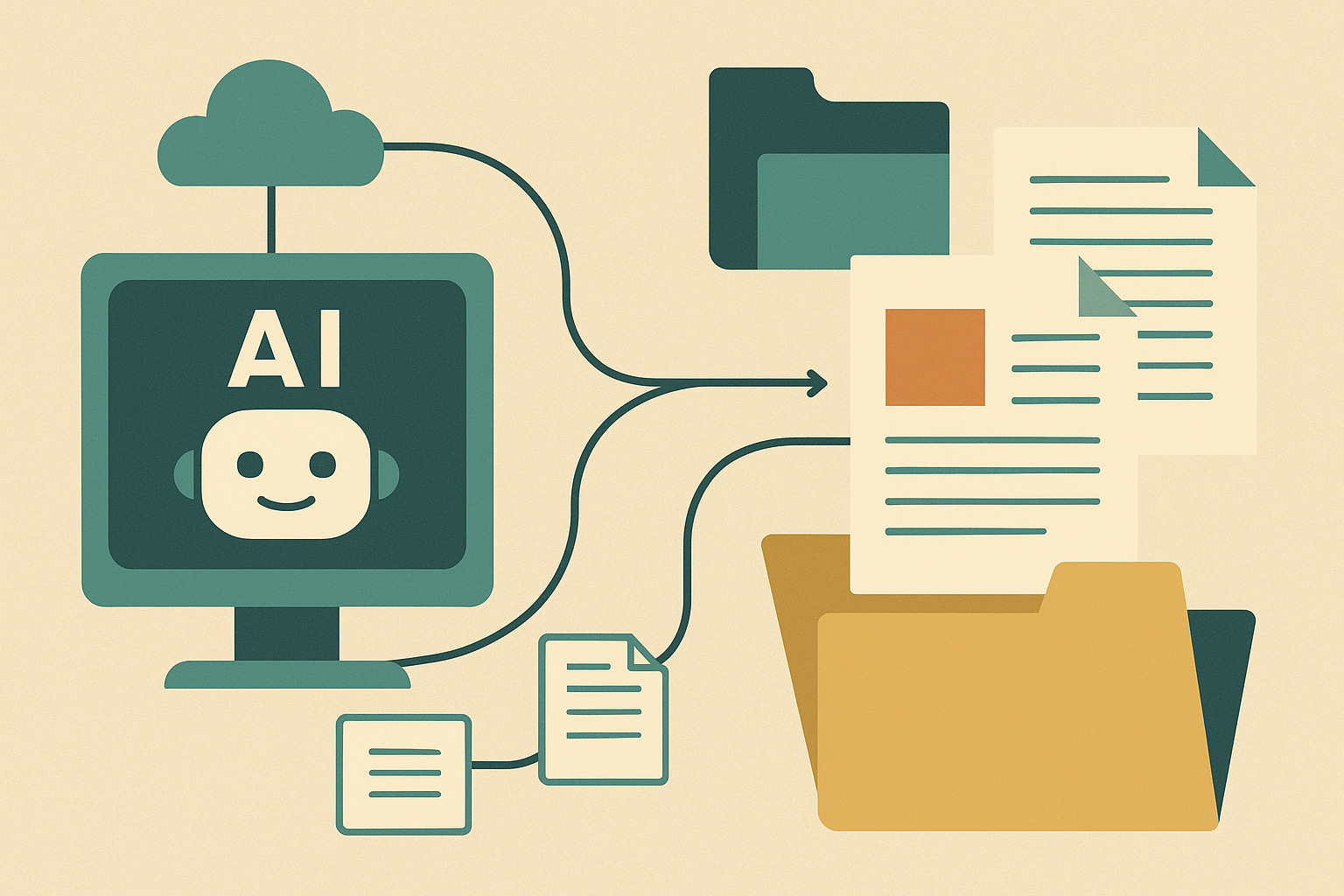
Connect AI to Your Existing Docs
Today’s leading AI tools — such as Microsoft Copilot, ChatGPT, Claude, and Gemini — can all connect to your documentation repositories. Once connected, the model can read your published content and begin to infer the patterns your team follows.
If you’ve never created a formal style guide, you can give the AI a simple instruction:
“Review these documents and create a style guide based on them.”
The model will scan your content and produce an initial draft. It won’t be perfect, but that’s the point — you now have something concrete to refine.
Iterate and Correct the AI’s Draft
AI-generated style guides sometimes surface unexpected rules. If the model finds a sarcastic sentence or two in your archives, it may conclude that sarcasm is part of your brand voice.
With a chatbot, you can interrogate and correct it:
“We don’t use sarcasm. Remove that rule.”
“We are a compliance-oriented organization. Add requirements for legal citations from our approved sources.”
This iterative process lets you shape the AI’s output into an accurate reflection of your team’s expectations. When you’re satisfied, you can export the document as your official corporate style guide.
Use the Style Guide and AI Together to Identify Gaps
Once the AI understands your style, your content, and your rules, you can take the next step: ask it what’s missing.
Because the model now has full visibility into what you’ve published, it can answer questions like:
“What topics are competitors covering that we are not?”
“What gaps exist in our current documentation set?”
With those insights, you can begin structured brainstorming. For example:
“Given a two-month timeline, what can I realistically create?”
“What could I produce in the next two weeks?”
“What should be completed by the end of two months?”
The model will generate a prioritized, reasonable plan based on your resources — whether you’re a team of one or many.
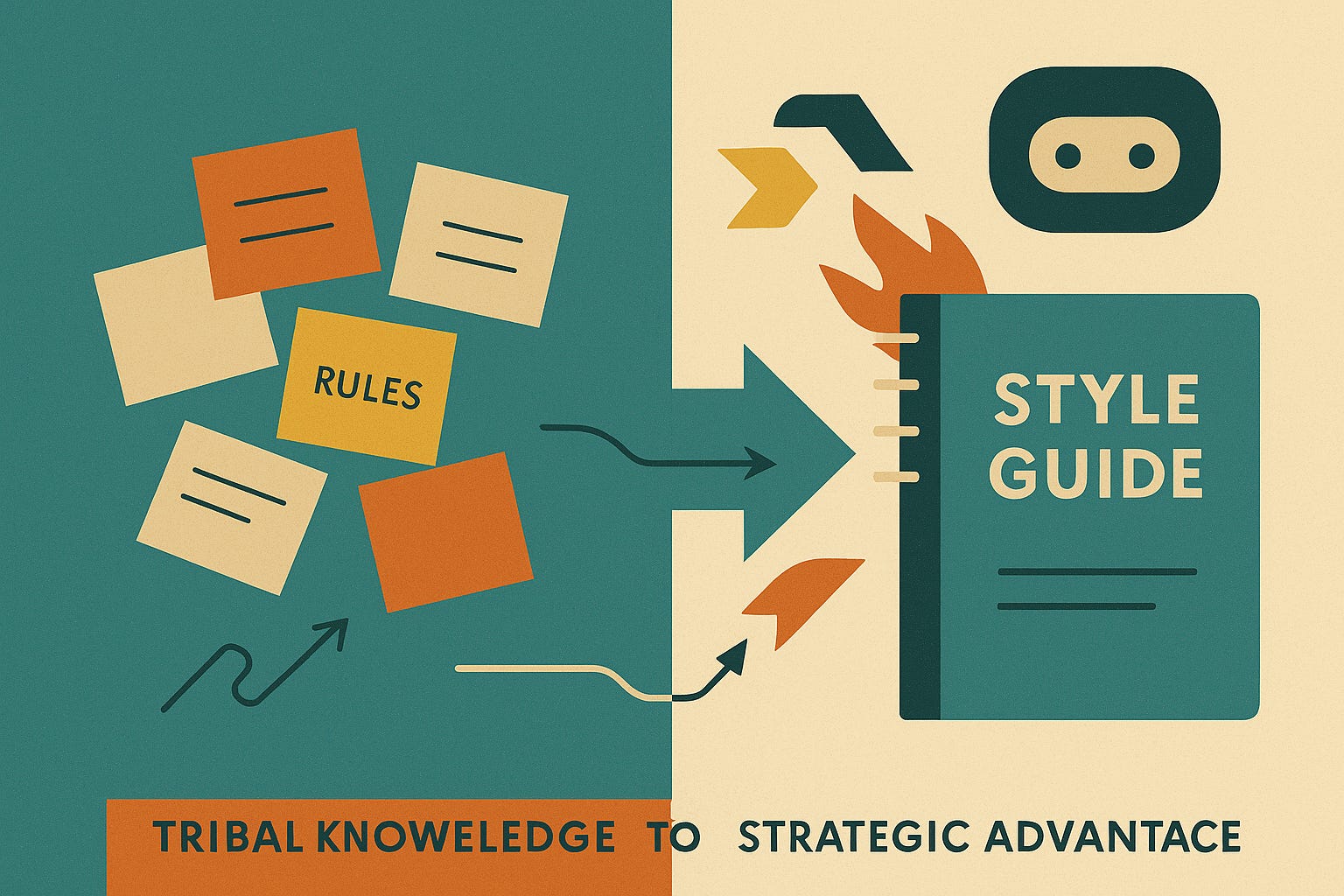
From Tribal Knowledge to Strategic Advantage
AI can help you transform undocumented norms into a structured, maintainable style guide. And once that guide exists, the same AI can surface content gaps, suggest improvements, and help you plan your next steps.
By letting your published work teach the AI what “good” looks like — and then refining it — you turn your accumulated content into a source of clarity, consistency, and strategic insight for your technical writing practice. 🤠


