

If you’re a technical writer who has been told to “start using AI,” there’s a good chance this instruction arrived the same way most bad ideas do: casually, optimistically, and with absolutely no adjustment to your workload.
You were already juggling three releases, a backlog of outdated content, an SME who responds exclusively in emojis, and a publishing system held together by hope and duct tape. Now you’re also supposed to “use AI” — presumably in the five spare minutes between standup and your next fire drill.
When AI fails to deliver miracles under these conditions, leadership often concludes that AI is overrated. This is unfair to you, and frankly, unfair to the robot.
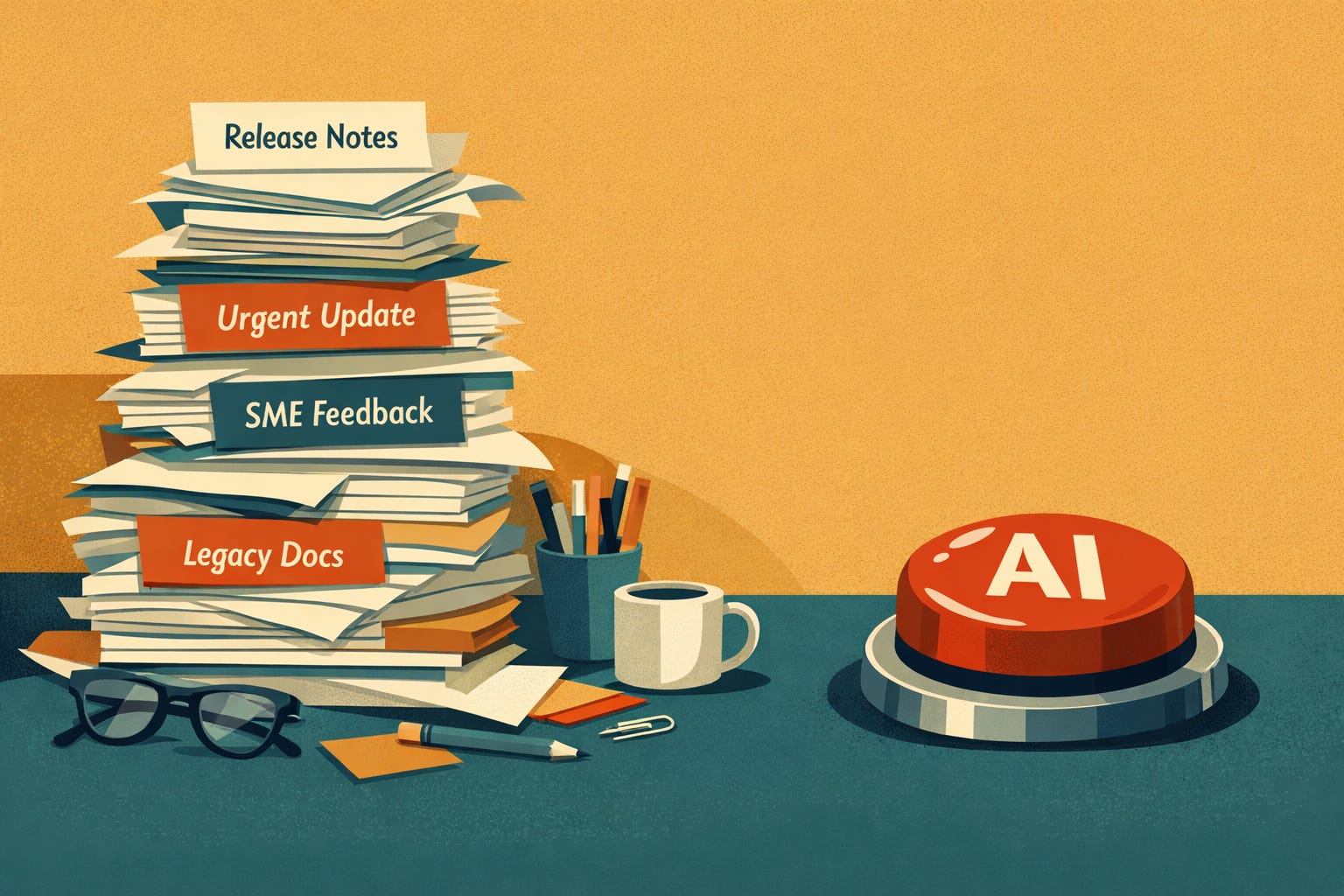
AI Isn’t a Magic Button — It’s a Process Multiplier
AI does not save time by default. It reallocates time.
To use AI responsibly in technical documentation work, you need time to:
Experiment with real content, not toy examples
Learn which tasks benefit from AI and which ones absolutely do not
Validate output, because “confidently wrong” is still wrong
Adjust workflows, prompts, review steps, and quality checks
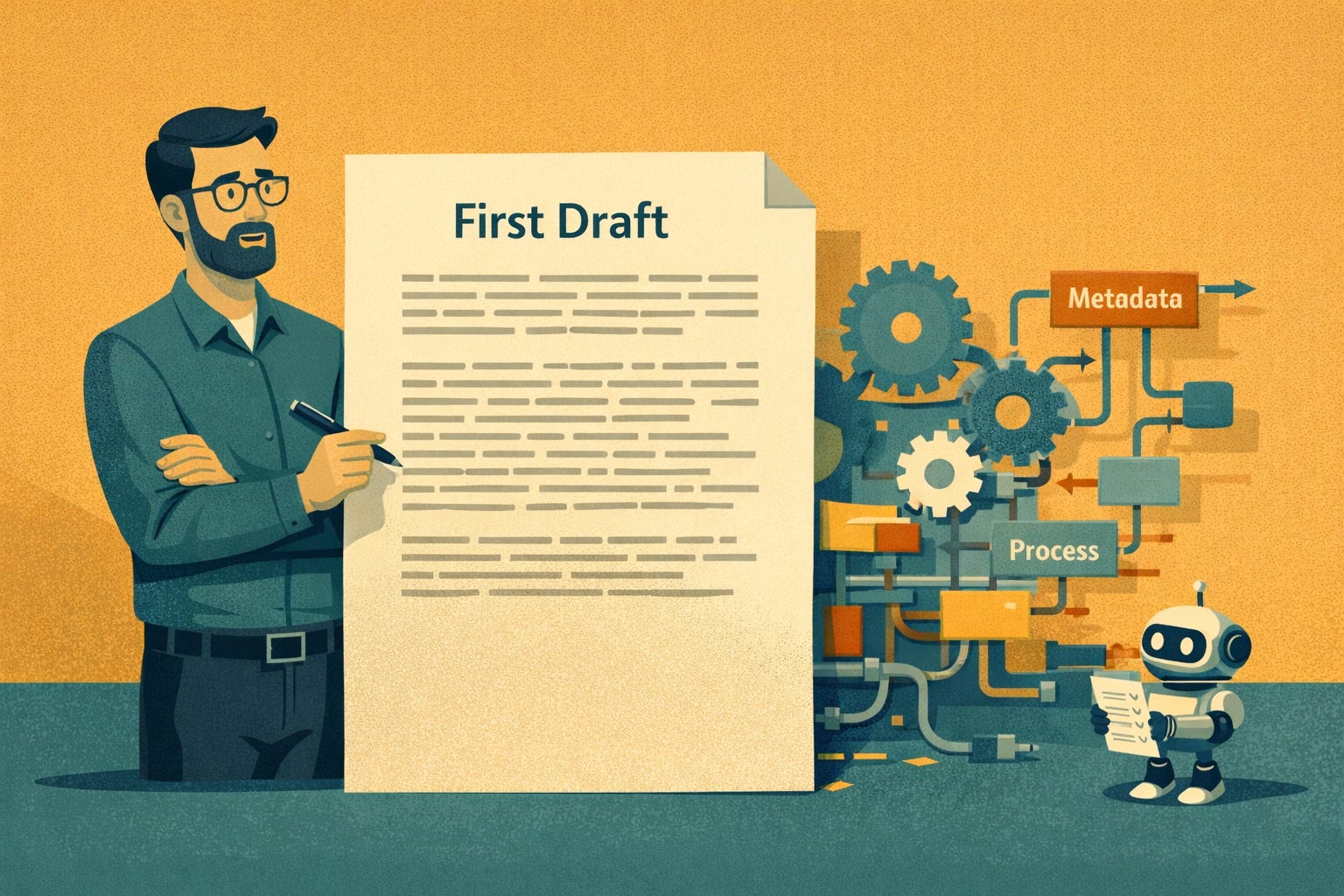
If none of that time exists, AI use collapses into exactly one activity: drafting text faster.
Drafting is fine. Drafting is useful. Drafting alone is not transformation.
What Actually Happens Under Time Pressure
When documentation teams operate under constant time pressure, AI adoption tends to play out in a very predictable way. Writers reach for AI to generate first drafts because it offers the quickest visible win and creates the feeling of progress. The problem is that speed at the front of the process often pushes effort to the back.
Review cycles grow longer as someone has to verify facts, check tone, and untangle confident-sounding mistakes. Quality concerns begin to surface, not because AI is inherently flawed, but because it is being asked to compensate for a lack of time, structure, and planning.
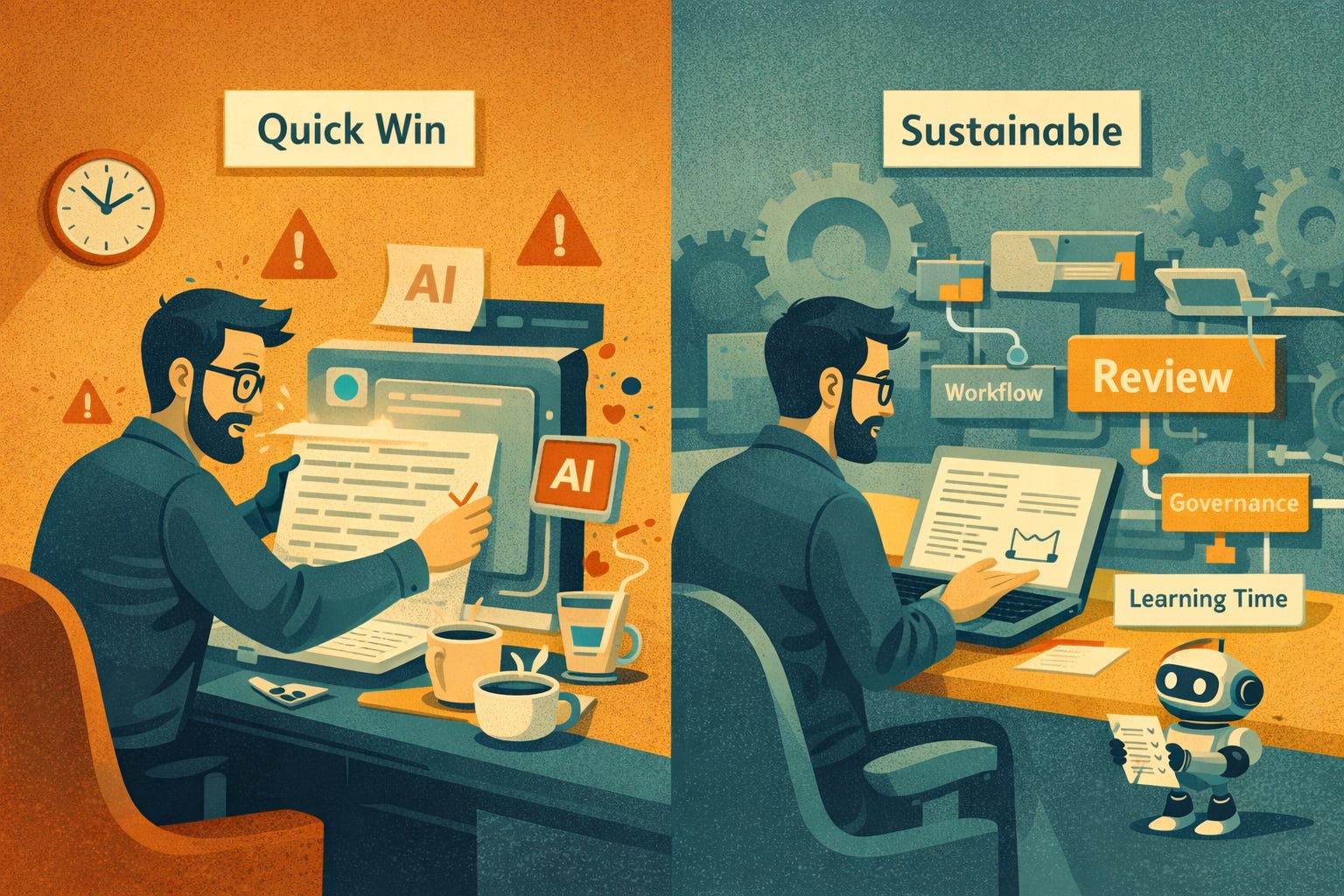
As these issues accumulate, trust in the tool starts to erode. Conversations quietly shift from “How can we use this better?” to “This is risky,” and then to “Let’s limit where this can be used.”
Almost no one pauses to ask the more uncomfortable question: whether the real problem is that writers were expected to redesign workflows, adopt new practices, and safeguard quality without being given the time to do any of that work properly.
Instead, AI becomes the convenient scapegoat. Workloads stay the same, pressure remains high, and the system continues exactly as it did before—just with one more abandoned initiative added to the pile.
Why This Isn’t a Personal Failure
If you feel like you “don’t have time for AI,” that does not mean you are behind, resistant, or doing it wrong. It means your organization has not yet made room for change.
AI adoption requires slack in the system. Not endless slack. Just enough breathing room to think, test, and improve without breaking production.
Without that space, AI becomes another demand layered onto an already impossible job. And no technology (no matter how hyped) can fix that.
The Real Conversation We Need to Be Having
The question is not, “Why aren’t writers using AI more?”
The question is, “What work could we stop doing, simplify, or delay so writers can safely integrate AI into how documentation actually gets produced?”
Until that question is answered, AI will remain a side experiment — interesting, occasionally helpful, and permanently underpowered.
And the robot will continue to be blamed for a problem it did not create.
In the book Prediction Machines, the authors argue that in order for corporations to adopt an "AI-first" strategy, they must explicitly define which strategies will be demoted to second, third, and fourth position. Likewise, for technical writers to adopt an AI-first approach, they need to be given permission to (temporarily) demote other activities and priorities.