

One of the biggest reasons product docs becomes outdated has little to do with writing. When a topic has a clearly identified owner, people know who reviews it, who approves changes to it, and who’s responsible for keeping it up-to-date.
When that responsibility isn’t clear, updates start slipping.
👉 The engineering team assumes the technical writers will make the changes.
👉 The technical writers assume the product managers will request them.
👉 The product managers assume the engineering team will mention what changed before the release ships.
Everyone assumes it’s somebody else’s job. Meanwhile, customers keep reading instructions that don’t match the product.
I’ve watched plenty of organizations throw money at new authoring tools, AI initiatives, content strategies, and style guides while leaving this basic governance problem untouched.
There’s an easier place to start.
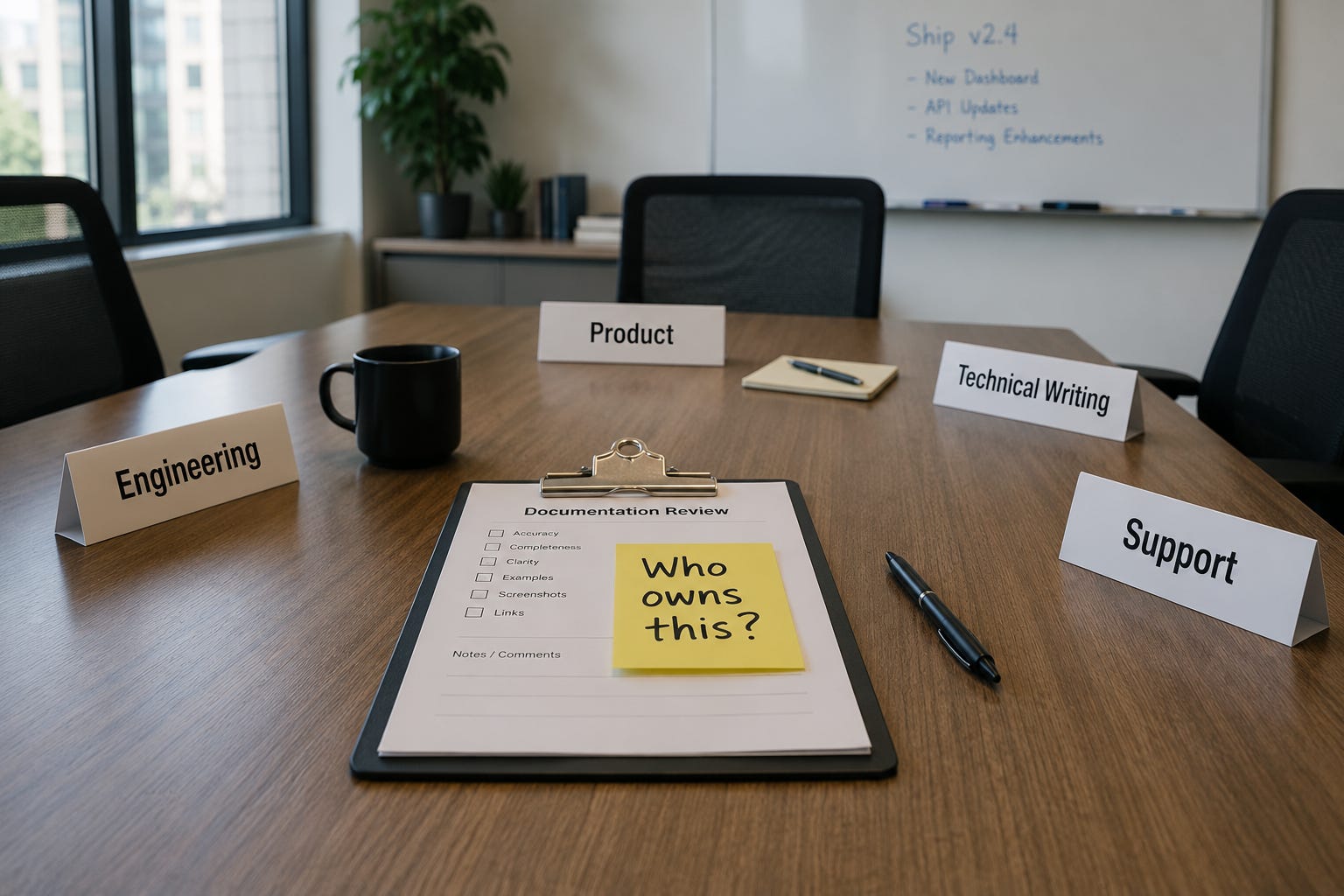
Who’s Responsible For This Topic?
If you ask three people and get three answers, you’ve found the problem.
The same responsibility issues happen with knowledge bases, support articles, training materials, websites, and internal process documentation. People usually aren’t ignoring the content issues; instead, they’re probably just waiting for someone else to own the update process.
Before you rewrite a single page, figure out who’s on the hook for every topic. Then make sure everyone who creates, reviews, or relies on that content knows who that person is.
You can buy new software, adopt AI, rewrite your style guide, and reorganize your information architecture. None of those things fixes unclear ownership. 🤠