

Here is the part many writers would prefer to discuss only in low light, after a drink, and with access to a fainting couch: readers may not value human writing nearly as much as writers value the idea of human writing.
That is not a small emotional inconvenience. It is a professional one.
If readers consistently prefer clear, frictionless AI prose, then a lot of sentence-level writing starts to look less like a rare craft and more like a commodity. That should get the attention of anyone whose job involves producing words for a living.
So yes, technical writers should care.
The Quiz That Made Writers Flinch
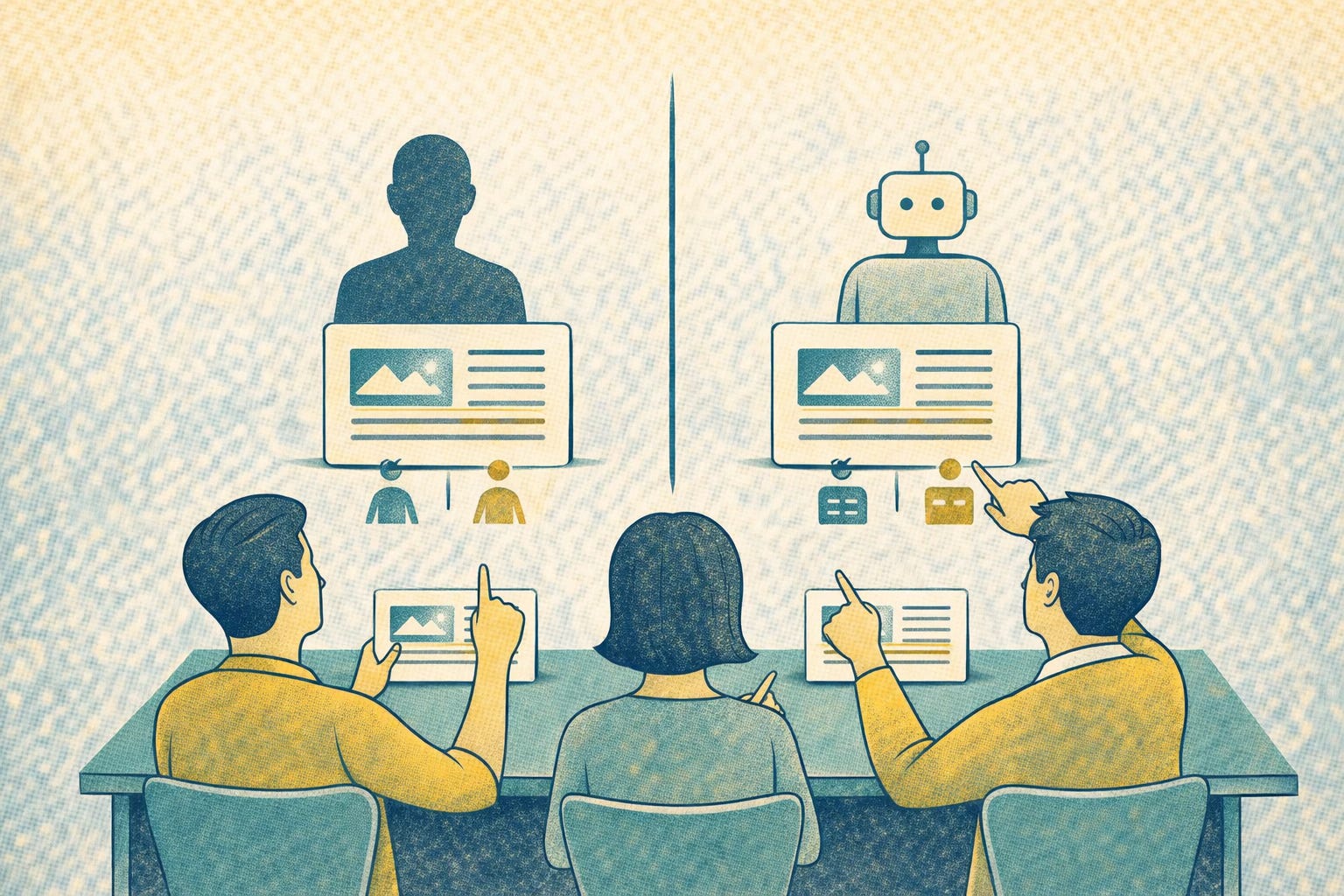
In a New York Times blind quiz discussed by Reid Hoffman, readers were asked to judge short passages without being told whether a human or a machine wrote them. Hoffman, for anyone mercifully untouched by years of Silicon Valley self-congratulation, is the co-founder of LinkedIn, a PayPal alum, a venture capitalist at Greylock Partners, and one of the most visible public cheerleaders for AI. That makes his interest in the results especially worth noting. He’s not some neutral birdwatcher peering at the AI phenomenon through binoculars; he’s standing in the aviary feeding the things.
By the public summaries of the quiz, more than 86,000 participants took part, and readers slightly preferred the AI-written passages overall.
That result may sting, but it is not as shocking as writers might hope.
I saw a smaller, thoroughly unscientific version of the same pattern with my own Facebook audience. When I shared short passages and asked people to guess whether a human or AI wrote them, they often could not tell the difference. More awkwardly, they tended to prefer the AI-created version. No grant funding. No journal publication. No one in a lab coat. Just enough evidence to make a person who has spent years trying to write well stare at the ceiling like it personally betrayed him.
Why The Machine Often Wins
Research outside that quiz points in a similar direction. A 2024 study in Scientific Reports found that readers could not reliably distinguish AI-generated poetry from human poetry and often rated the AI poems more favorably. The likely reason was not that the chatbot had become a secret poet. It was that the AI poems were easier to process, easier to understand, and less demanding.
Readers often reward prose that glides.
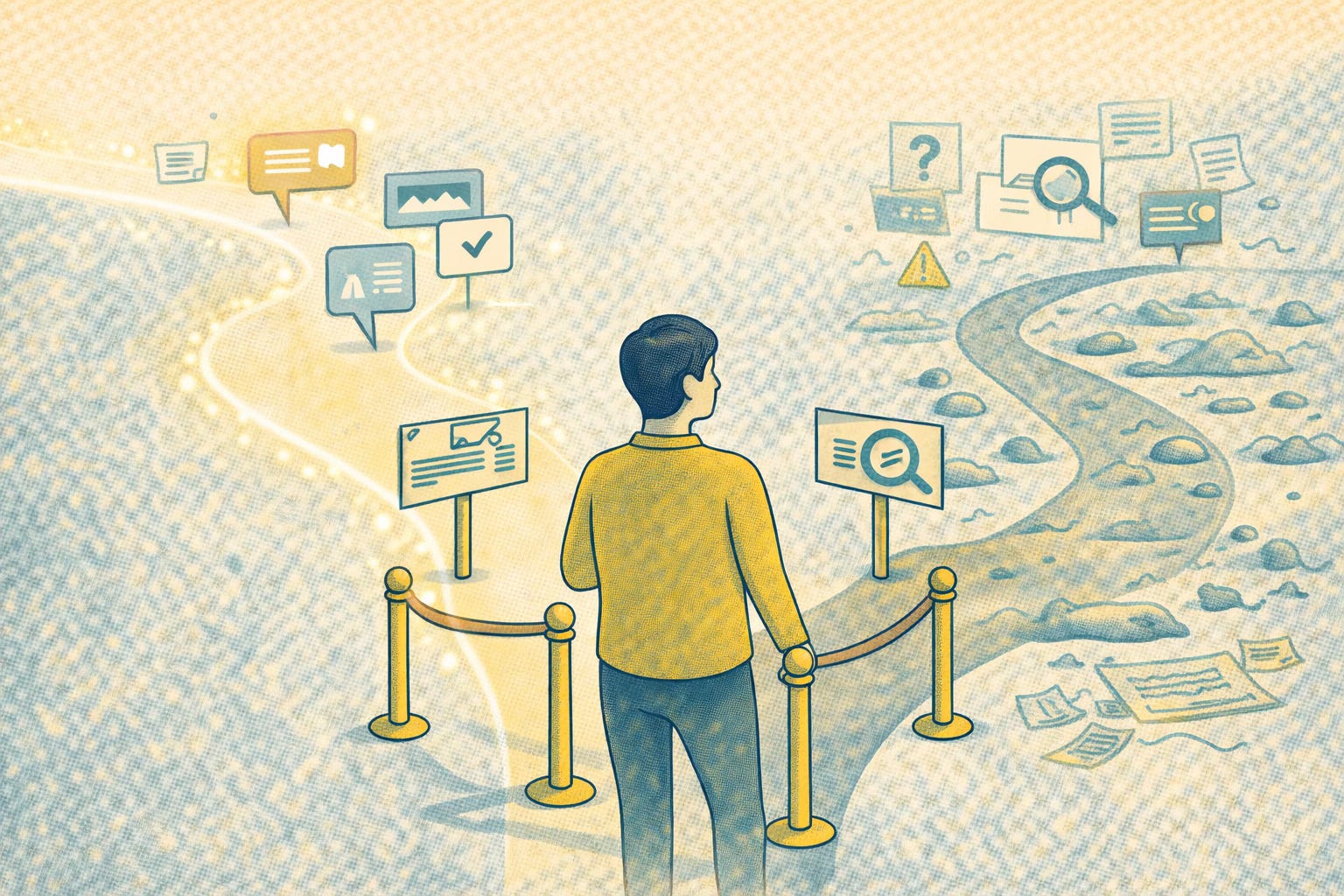
That fits a broader body of research on cognitive ease. A 2024 Science Advances study found that readers were more likely to choose simply written headlines over more complex ones. This is because most people are busy, distracted, mentally overbooked, and trying to absorb information while life bangs pots together in the background. The easier language path usually wins because it asks less from them.
This is where the illusory truth effect matters. The illusory truth effect is the tendency for repeated or easy-to-process statements to feel more believable, even when they are false. In plain language, if something sounds smooth, familiar, and well packaged, the brain may start treating it like truth’s respectable cousin.
Learn more: Encyclopaedia Britannica provides a solid overview in its discussion of misinformation and disinformation.
AI is exceptionally good at producing fluent prose. It likes symmetry. It likes polished transitions. It likes sentences so tidy they could be folded into thirds and filed under “Looks Correct.”
It is the beige cardigan of writing: soft, dependable, broadly acceptable, and just interesting enough to get invited back.
Human prose, by contrast, often has sharp edges. It swerves. It startles. It sometimes arrives wearing a leopard-print scarf and saying the one thing everyone else was too polite to say. AI tends to iron that out. For many readers, THAT ironing reads as quality.
The Risks Hiding In Plain Sight
If this trend continues, the biggest risks are not simply that AI will write more. The deeper risk is that it may quietly reshape how people think, judge, and communicate.
One problem is style flattening. If AI keeps producing the kind of prose readers reward, organizations may start converging on one dominant style: calm, polished, generic, and emotionally pre-sanded. Over time, readers may begin to equate “familiar machine smoothness” with “good writing.” That narrows the range of what sounds credible and leaves less room for originality, tension, or voice.
Researchers have already found evidence that AI-assisted writing can reduce diversity across outputs, making different authors sound more alike and nudging writing toward more standardized styles.
Related: The homogenizing effect of large language models on human expression and thought
Another Problem Is Quiet Influence Without Obvious Fingerprints
Research shows that human-AI interactions can amplify bias and that people are often unaware of how much AI shapes their decisions. Put plainly, the machine may be steering the shopping cart while the human still thinks they’re choosing the aisle. The danger is not only that AI writes well. It is that AI can make certain framings, assumptions, and values feel natural, neutral, and obvious simply because they arrive wrapped in such clean prose.
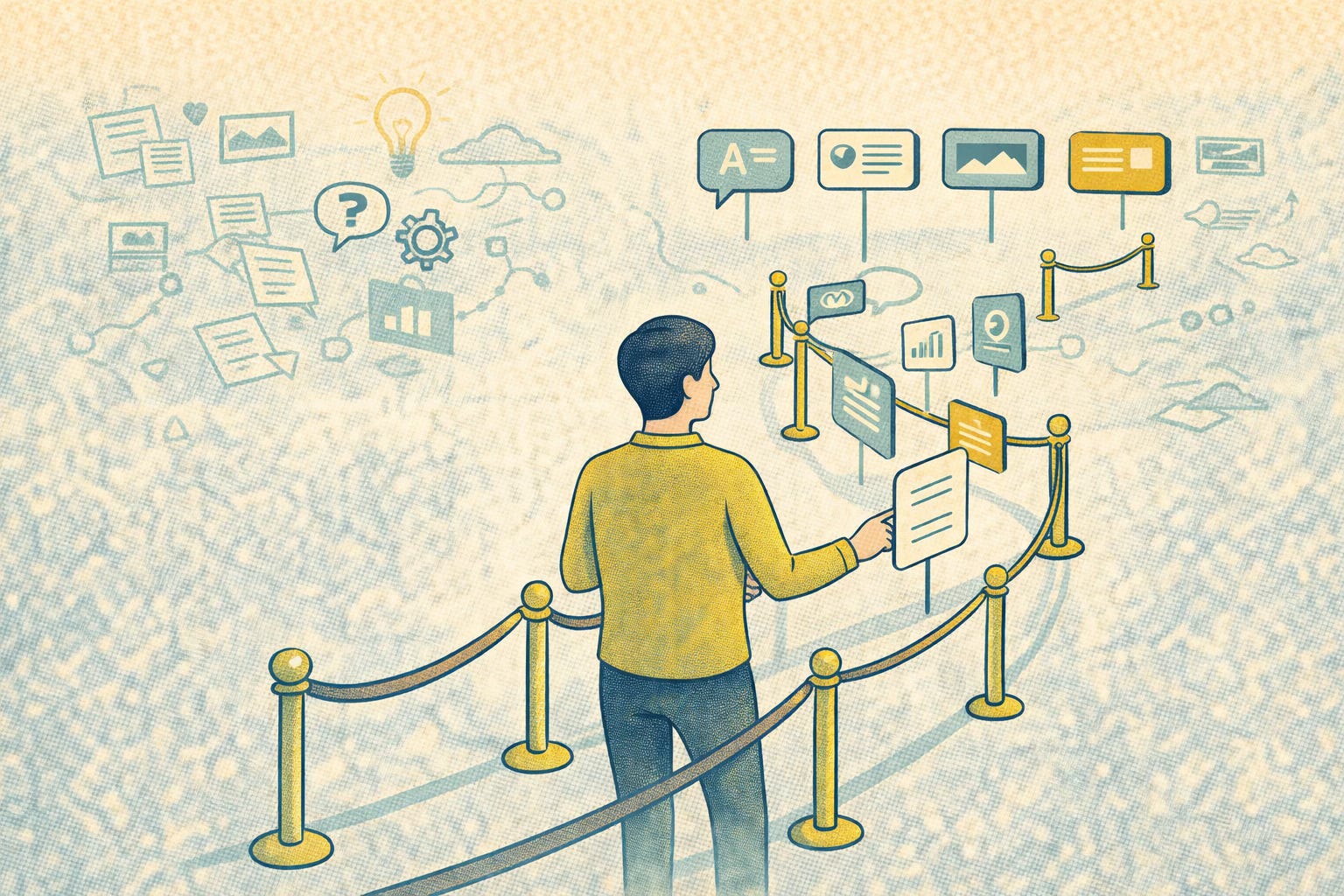
A related problem is reactive writing. In AI-assisted writing, the human can slip into a habit where the machine proposes and the person reacts. At first, that feels efficient. After all, who does not enjoy starting with a draft instead of a blank page? But over time, that pattern can change the writer’s role. Instead of deciding what to say and then finding the best language, the writer starts responding to options the machine already framed. That can weaken originality, reduce exploration, and create a false sense of ownership. The writer feels in charge, but the machine has quietly placed velvet ropes around the thought process.
That is one of the biggest negatives here. The loss is not just stylistic. It is cognitive. Writers may do less independent thinking, challenge fewer assumptions, and settle more quickly for the first plausible formulation. The result is cleaner prose, perhaps, but also narrower reasoning and a creeping sameness of thought.
And Then There Is Credibility Inflation
AI text can sound more authoritative (read: more credible) than it deserves. A sentence can be coherent, elegant, and completely wrong all at once. If readers increasingly reward fluency, society risks giving polished nonsense a free pass. In technical communication, that is not a charming quirk. That can mean unsafe instructions, inaccurate guidance, compliance problems, support failures, and a lot of preventable misery.
Why This Matters For Tech Writers
Readers do not come to documentation hoping to be transported to a non-stop bubble bath of delight or a first-class lounge of emotional renewal. They come because they need to install something, fix something, configure something, or stop something from bursting into flames.
In that world, clarity wins. Structure wins. Concision wins. Consistency wins. AI is getting very good at those surface-level qualities.
That is the uncomfortable part.
The reassuring part is that tech writing has never been just about tidy sentences. Good writers do not only produce readable prose. We decide what belongs, what’s missing, what needs verification, what warnings matter, what terminology must remain consistent, and what sequence of information will actually help a reader succeed. We do not just write. We impose order on complexity and protect users from confusion, risk, and bad decisions.
That is why the profession still matters.
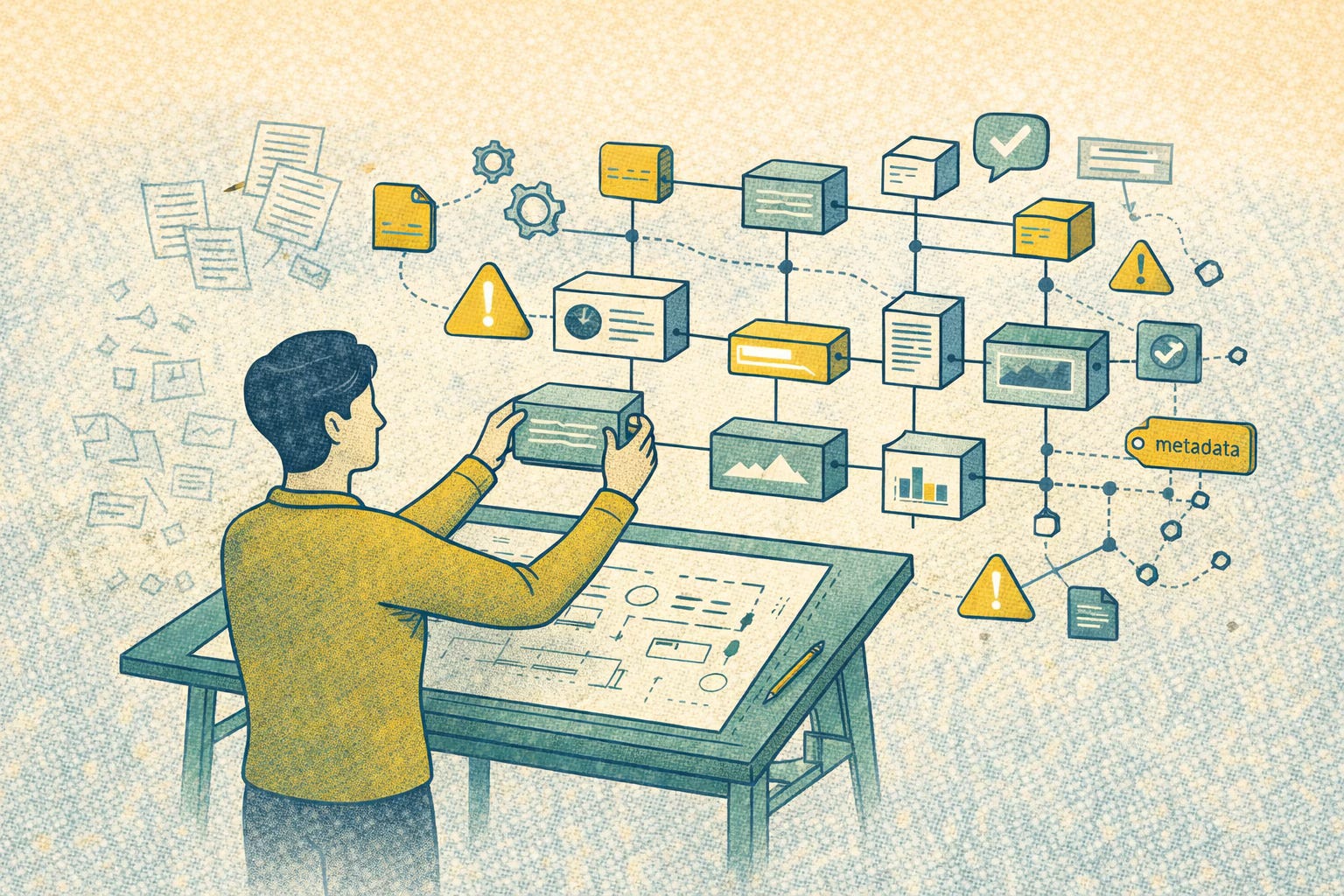
If sentence-level fluency becomes cheap, then the value of technical writers shifts even more toward judgment, source validation, information architecture, governance, metadata, reuse strategy, and audience understanding.
The future advantage is not “I can write a paragraph.” The future advantage is “I can design, verify, maintain, and govern a trustworthy content system that does not accidentally mislead the customer.”
That may sound less glamorous than the old fantasy of the writer as a tortured genius communing with meaning. But it’s far more useful — and usefulness has a way of surviving even when prestige gets wobbly.
The Larger Social Cost
The broader social question is whether we are training ourselves to prefer writing that feels easy over writing that is thoughtful. If so, we may end up with more readable text and less memorable thinking. More polished surfaces. More intellectual applesauce. More reassuring sentences and fewer surprising ones.
That may be perfectly fine for FAQs, support summaries, and release notes. It is less fine for journalism, education, persuasion, and public discourse, where friction is sometimes the very thing that makes people stop, think, and notice they are being handed a synthetic approximation of certainty.
The Part That Still Belongs To Humans
So yes, technical writers should pay attention to this research.
Not because the robots have become profound. They have not. They have become very good at sounding competent in ways many readers reward. That matters.
But readers still need humans to decide what is true, what is complete, what is risky, what is missing, and what to do when the machine’s beautifully upholstered paragraph is wrong in a way that could ruin somebody’s afternoon.
And that is still human work. 🤠