

Search is no longer about links
Technical writers are watching the same shift everyone else is watching: search engines are turning into AI-driven answer engines. Instead of sending users to web pages or help sites, these systems increasingly synthesize and deliver answers directly inside search results pages and chat interfaces.
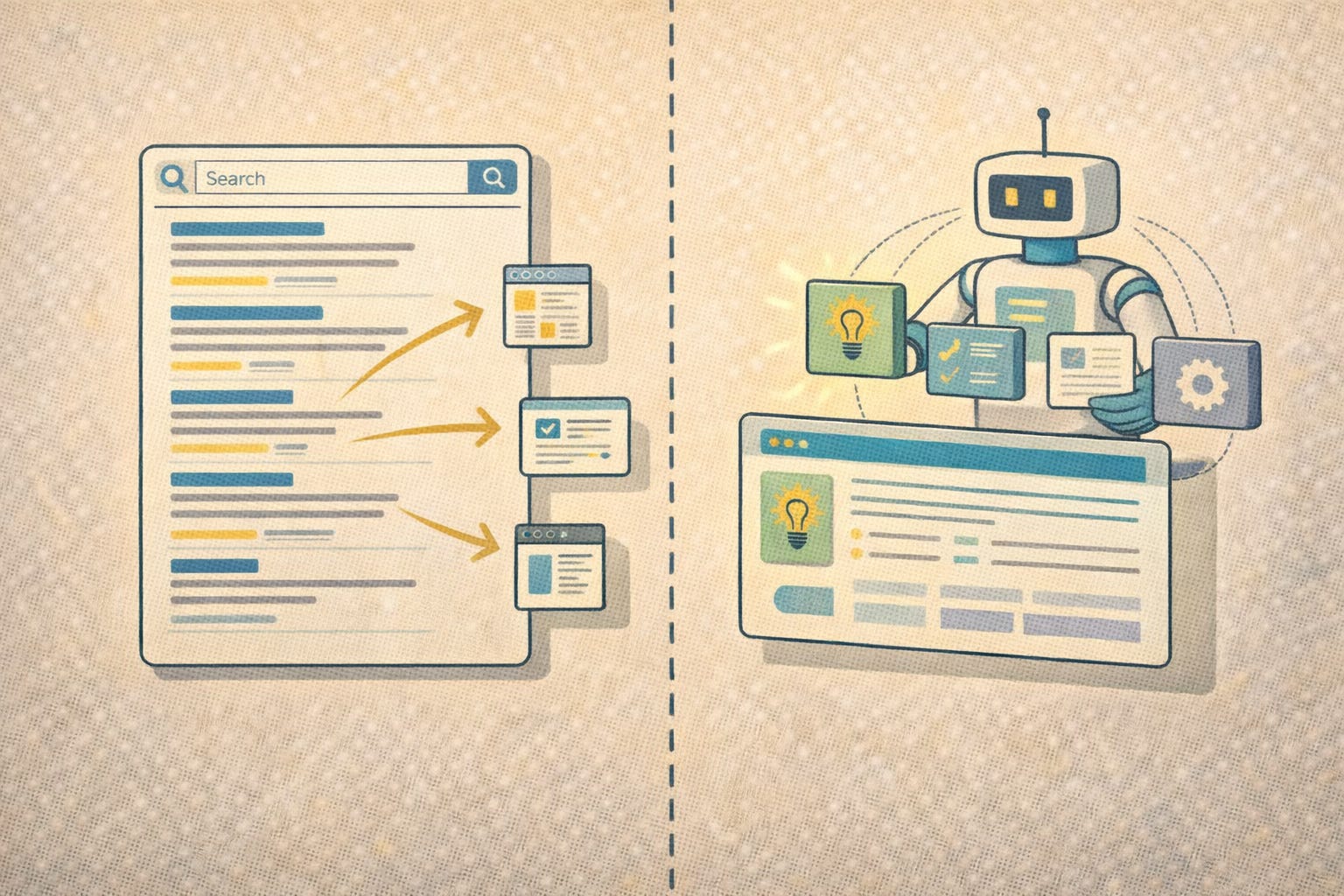
For publishers who depend on referral traffic 📈, this raises alarms. For technical writers, it raises a different — and potentially more interesting — question:
If AI systems are now the primary readers of our content, are we writing in a way machines can actually understand?
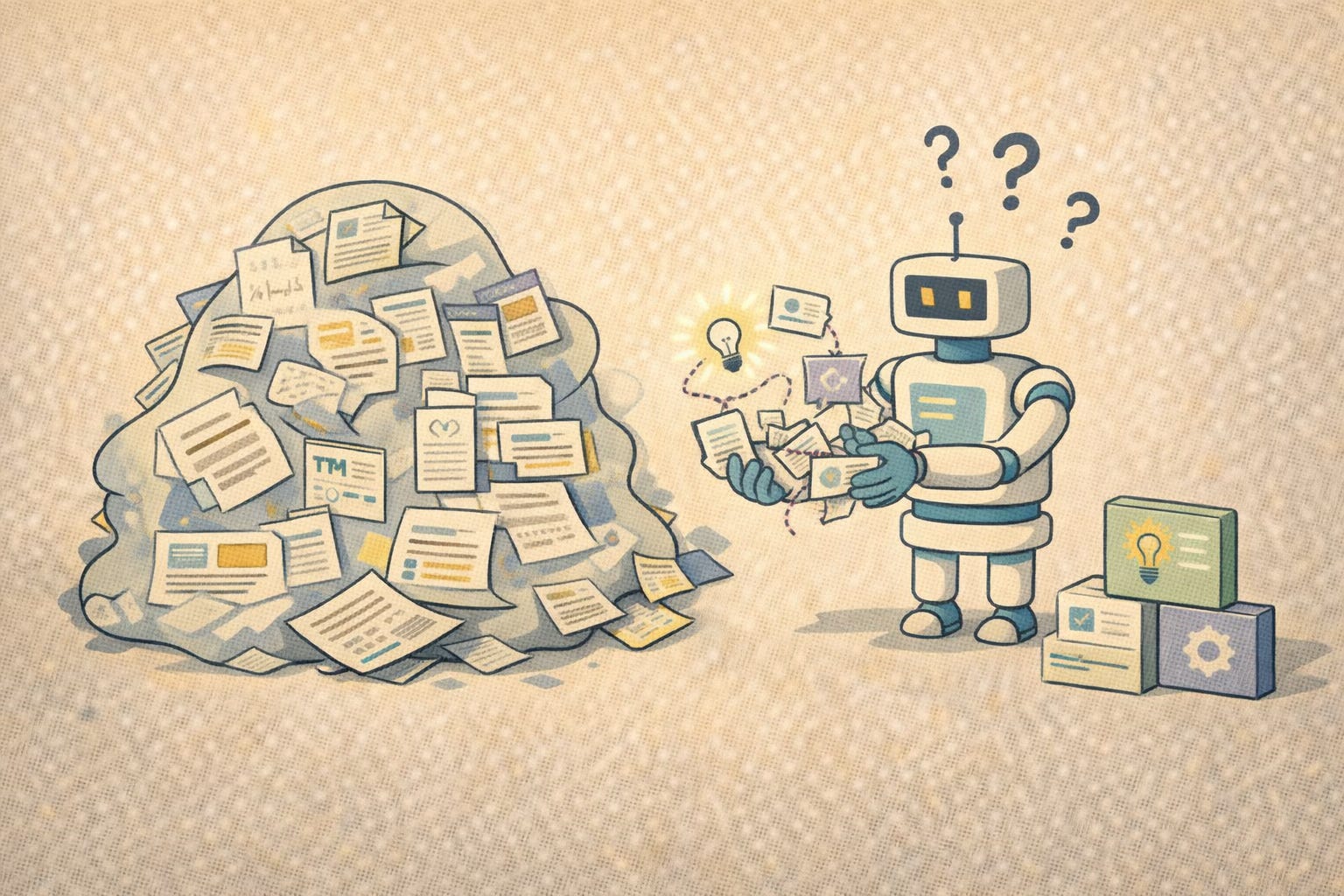
Uncomfortable Truth: AI Can’t Make Sense of Unstructured Content Blobs
Large language models perform best when they can identify intent, scope, constraints, and relationships. Unstructured prose forces them to guess. That guessing shows up as hallucinations, incomplete answers, or advice taken out of context.
👉🏾 PDFs, long HTML pages, and loosely structured markdown were designed for human reading, not machine reasoning.
They obscure:
What task the user is trying to complete
Which product version applies
What prerequisites or warnings matter
Whether an instruction is conceptual guidance or procedural truth
When AI search engines ingest this kind of content, they flatten it. The result they provide may sound fluent, but it’s dangerously lacking in the precision department.

Why DITA Suddenly Matters More Than Ever
Unlike writer-first approaches like Markdown, the Darwin Information Typing Architecture (DITA) is not about formatting efficiency. It’s about encoding meaning.
At its core, DITA provides:
Clear separation of intent from presentation (enabling single-source publishing)
Contextual boundaries machines can recognize
Reusable, addressable content components
In an AI-mediated search world, those qualities turn into strategic assets.
A DITA task is not just text. It is a machine-processable declaration that says:
This content explains how to accomplish a specific goal, under defined conditions, using known inputs, with expected outcomes.
That is exactly what AI systems need to deliver reliable answers.
What Breaks When Structure Is Missing
When documentation lacks structure, humans compensate. AI systems cannot.
Without explicit signals for intent, scope, and constraints, AI search engines guess.
That guesswork creates real failures:
Intent collapse
Conceptual explanations bleed into procedural steps. AI delivers how when the user needs why, or why when the user needs now.Context loss at extraction time
AI rarely delivers whole pages. It extracts fragments. When structure is weak, prerequisites, warnings, and conditions get separated from the steps that depend on them.Troubleshooting misfires
Recovery guidance buried in narrative text looks the same to an AI system as setup instructions. Users already in failure mode get sent back to the beginning.Audience mismatch
Beginner guidance and expert shortcuts look identical when audience and experience level are not explicit.
The result is content that sounds correct but fails in practice; often at the exact moment a user needs precision. Not exactly the great experience customers desire.
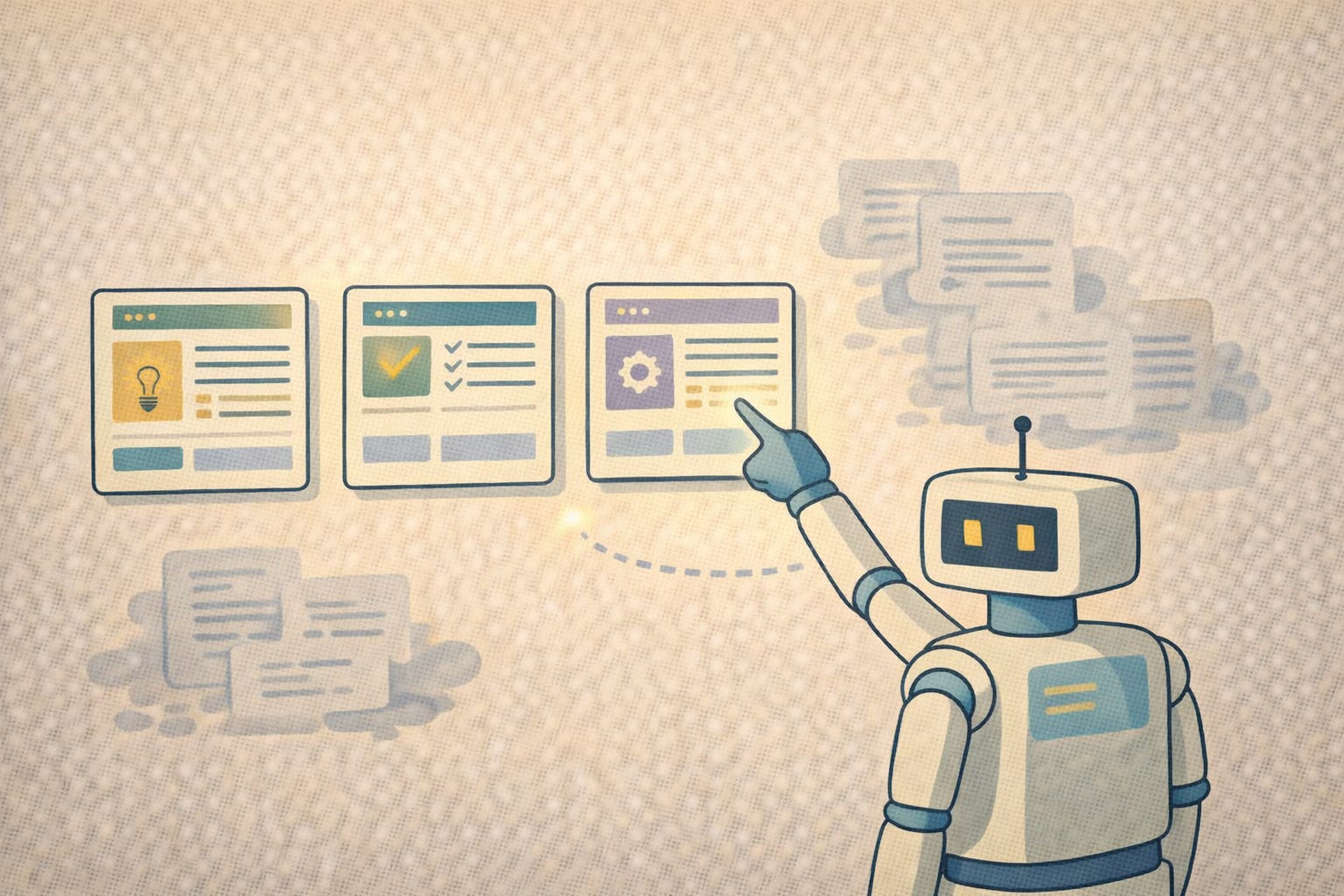
How Structure Replaces Guesswork with Intent
AI search systems are not looking for eloquence. They are looking for signals.
DITA provides those signals by design:
Information typing declares why the content exists.
Topic boundaries declare what problem a unit solves.
Metadata declares who, when, where, and under what conditions the content applies.
Modularity preserves meaning when content is reused, extracted, or recombined.
This allows AI systems to select content based on intent rather than probability.
Selection is the real breakthrough. Generation is just the surface effect.
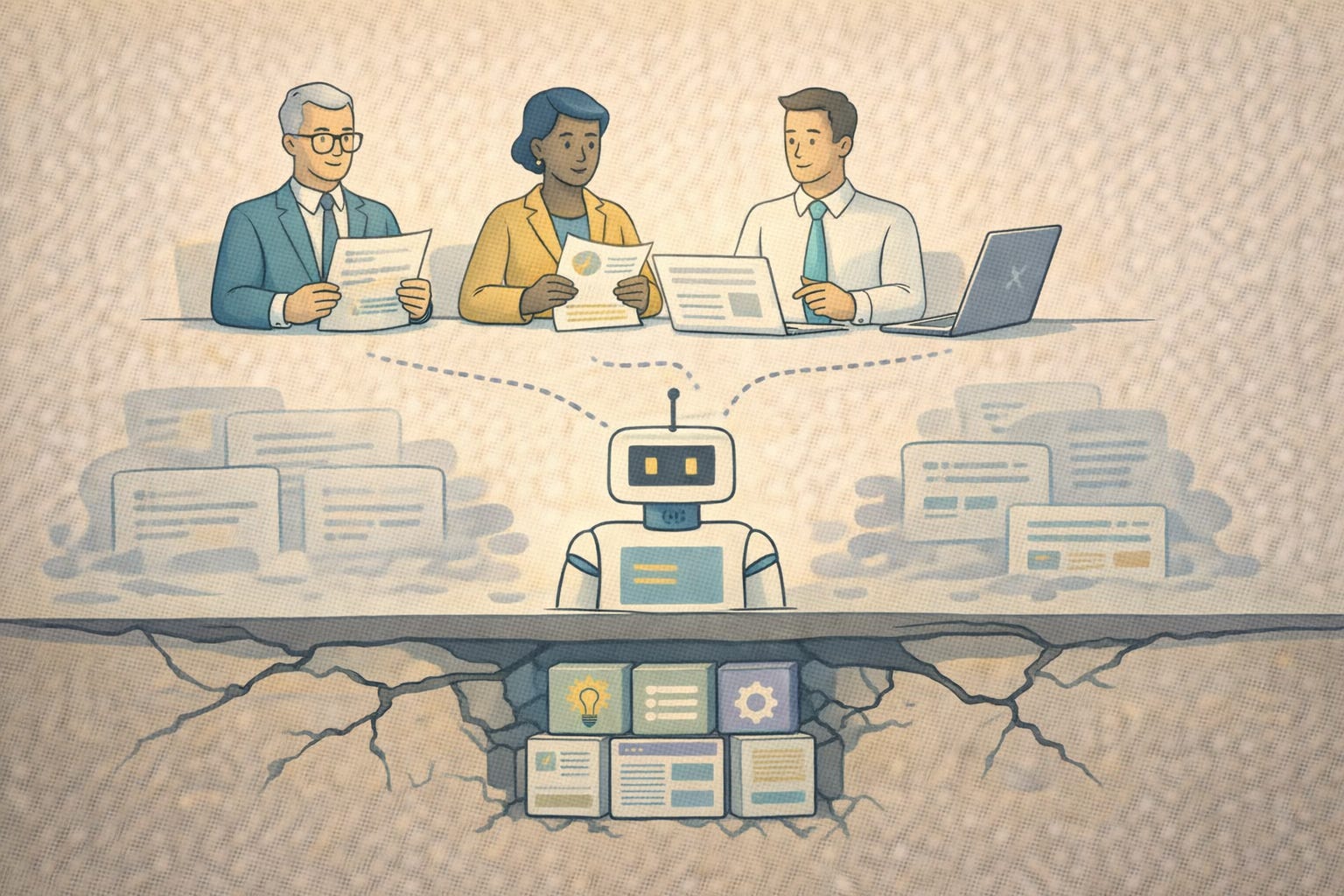
Why This Is a Management Problem, Not Just a Writing Preference
For documentation leaders, this shift changes the business conversation.
When AI becomes the primary interface:
Visibility depends on machine comprehension, not page ranking
Content quality affects product success, not just support deflection
Hallucinated answers create legal, safety, and compliance risk
Poor structure increases support costs and damages trust
Structured content reduces all of those risks by making intent explicit and constraints enforceable.
This is not about adopting DITA because it is “more rigorous.” It’s about making content legible to the systems now responsible for delivering it.

What “AI-Ready Documentation” Actually Means
AI-ready does not mean “written by AI.”
It means:
Purpose is explicit
Tasks are distinguishable from concepts
Constraints are preserved when content is extracted
Meaning survives content reuse
DITA already encodes those principles. That is why it fits naturally into AI-driven search and answer systems.

The Strategic Shift for Technical Writers
Technical writers are no longer just producing content for people to read. They are designing intent-aware knowledge systems that machines can reason over.
Every time you choose a topic type intentionally, enforce structural discipline, add meaningful metadata, break monoliths into purpose-driven components, you increase the likelihood that AI delivers the right answer instead of a plausible one.
When AI becomes the search interface, structure stops being overhead.
It becomes the advantage. 🤠