

Phenomenology is the study of lived experience. It asks what something feels like from the point of view of the person experiencing it. Not in a melodramatic “tell me about your journey” sort of way, but in a practical sense: What does the world look like to the user as they move through it? What do they notice, assume, misunderstand, fear, overlook, or need?
That should sound familiar, because tech writers are supposed to care about exactly those things — and more.
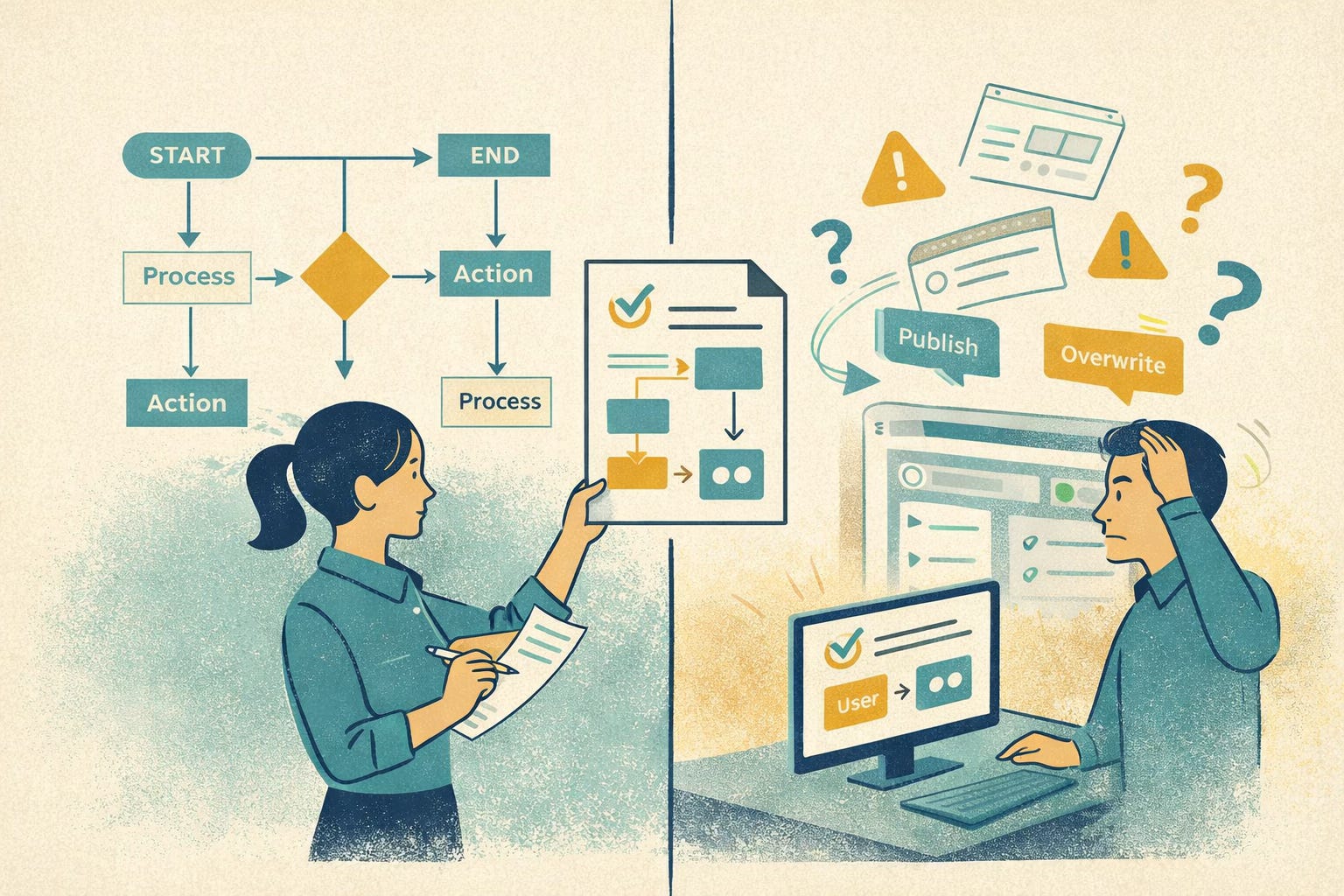
A system may be logically designed. A workflow may be technically correct. A product team may insist the interface is “clear.” Meanwhile, the user is staring at a screen wondering whether clicking Save will publish the document, overwrite the document, summon legal, or end civilization as we know it. Phenomenology asks us to take that user experience seriously.
We need phenomenology because documentation is not just about describing how a system works from the inside. It is about helping someone navigate how that system appears from the outside, in real conditions, with limited context, imperfect memory, and a growing suspicion that every button has been named by a committee with boundary issues.
This matters because users do not experience products as architecture diagrams. They experience them as moments: confusion, hesitation, recovery, success, error, relief. Good documentation meets them there. It anticipates where they are likely to get lost, what they are likely to misread, and what they need in order to move forward with confidence.
In practical terms, phenomenology reminds us to pay attention to the user’s point of view, not just the system’s logic. It encourages us to write for the reality of use, not the fantasy of design. And that is important, because a procedure is only “clear” if it is clear to the person trying to follow it while three deadlines, two warnings, and one expired permission token are breathing down their neck.
Good documentation does not just explain the product. It respects the experience of using it. That is why phenomenology matters. 🤠