

On September 4, 2026, The Seattle Times and Newsday sued OpenAI and Microsoft in federal court. The complaint accuses two of AI’s biggest players of using the newspapers’ articles to “train, fine-tune, and ground” the language models behind their products.
Training, fine-tuning, and grounding are different ways published content can shape what an AI system says.
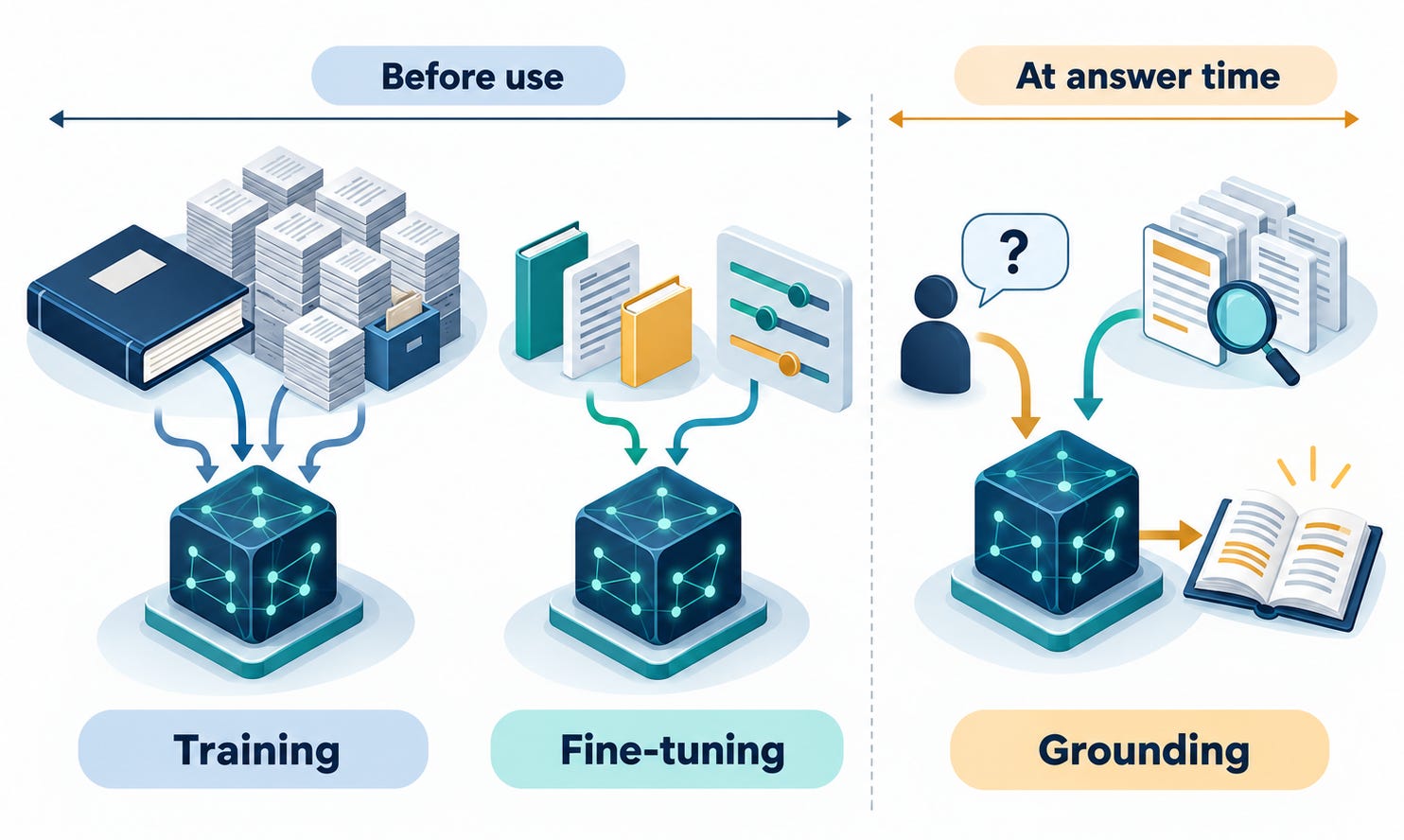
Training is like studying for a closed-book exam. Before anyone uses the model, it processes a huge body of text and learns statistical patterns it later draws on to generate responses.
Fine-tuning is additional training that adjusts how a model behaves on a narrower task or subject.
Grounding is more like an open-book exam. When someone asks a question, the system looks up relevant documents, and the model composes its answer from them rather than from training alone.
The legal complaint ties grounding to retrieval-augmented generation and treats it as a separate source of copying. Documentation can enter AI systems through all three: as training data, as fine-tuning material, or as content retrieved when someone asks a question it can answer.
What The Newspapers Say Happened
The complaint alleges that those leading AI companies relied on automated bots to circumvent the papers’ paywalls and illegally copy hundreds of thousands of articles, then used that material to train and operate ChatGPT and Microsoft Copilot. In one example cited in the complaint, a model reproduced 88 consecutive words from an article in The Seattle Times’ Pulitzer Prize–winning coverage of the Boeing 737 MAX crisis when prompted with nothing more than the newspaper’s name and the article’s headline, publication date, and URL.
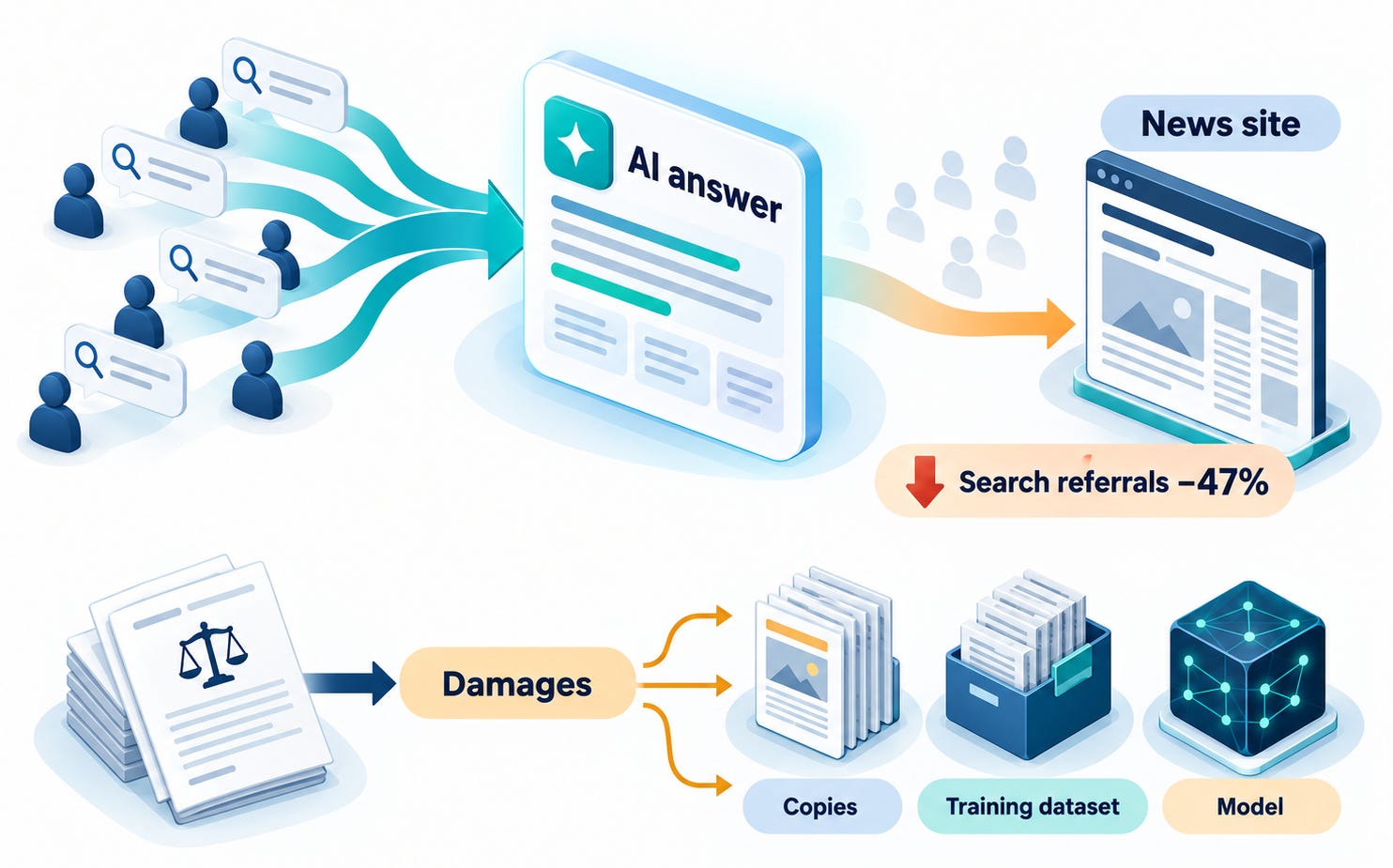
AI-generated answers are already reducing the need for some users to visit the websites that supplied the underlying information. The newspapers also argue that AI answers are replacing visits to their sites, citing a 47 percent one-year drop in search referral traffic to midsize newspapers. They seek damages and the destruction of copies of their work, along with the destruction of any training datasets and language models that incorporate it.
An OpenAI spokesperson said the company’s models are trained on publicly available data and “grounded in fair use,” an apt choice of word. Microsoft said it was surprised by the suit and willing to discuss solutions.
None of the allegations has been tested in court. The case has since been linked to other OpenAI copyright cases in the same court and put on hold until the court rules on requests in those cases to resolve key issues without a trial.
