

Everyone’s busy watching AI crank out paragraphs like a caffeinated intern with access to every Reddit thread ever written. A prompt goes in. A troubleshooting guide comes out.
Someone in leadership sees this and immediately begins wondering if the tech writers can now be — wait for it — “reallocated.” That’s corporate-speak for “We have no idea what you actually do.”
Here’s the problem with that: technical documentation was never primarily about typing sentences. The real work has always been deciding what matters, how information connects, what order things belong in, which warnings will save somebody from catastrophe, and which missing prerequisite is about to turn a software deployment into a small electrical fire in the server room.
AI won’t eliminate tech writing, but it is exposing what tech writing actually is.

The Great Decoupling
For decades, writing and architecture were welded together. If you wanted documentation, someone had to manually draft every sentence. Writing and thinking looked like the same activity because they happened in the same place.
AI broke that relationship.
The easiest way to understand this is to stop thinking about documentation and start thinking about construction.
For years, we were expected to design the blueprint and lay every brick ourselves. Want a 50-page manual? Congratulations. Please hand-place 20,000 words while also managing review cycles, fighting SharePoint permissions, and wondering why the product changed three days before launch and nobody bothered to inform you.
Now AI shows up as an automated bricklayer capable of laying ten thousand bricks a second. That sounds impressive (until you realize what happens when you unleash an automated bricklayer without a blueprint).
Suddenly there’s a staircase leading into a hedge. The bathroom opens directly into the kitchen. A wall suddenly appears across the driveway.
The machine builds quickly. It just doesn’t build intelligently on its own. That’s the real shift. Drafting has become cheap. Architecture has become valuable.
Your Company’s AI Is Only As Smart As Its Documentation
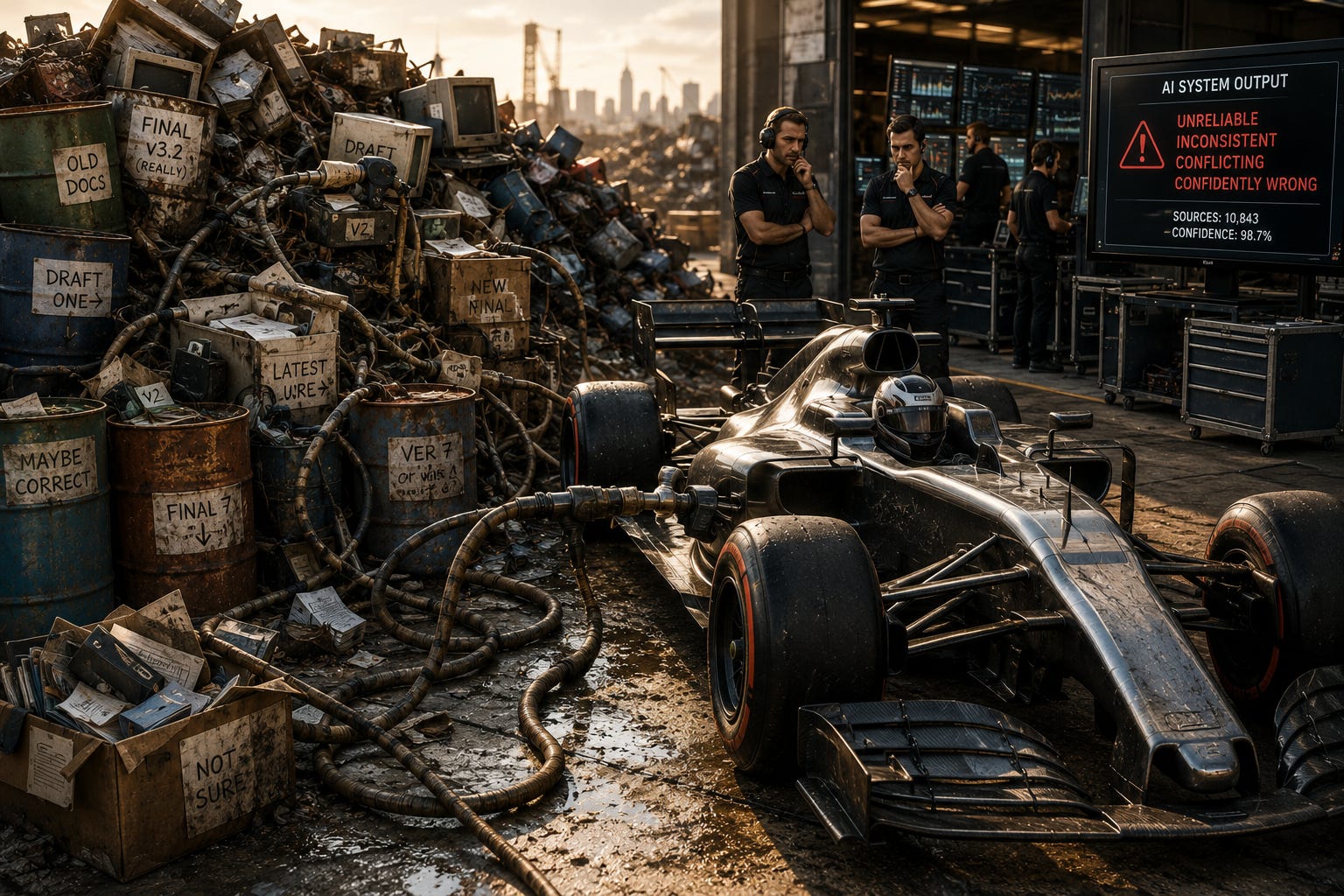
Organizations keep spending on AI while feeding it a digital landfill full of outdated PDFs, random Google Docs, unstructured help articles, inconsistent terminology, duplicate procedures, and seventeen different ways to describe the same button.
Then everybody acts shocked when the chatbot tells customers to restart the refrigerator before updating the payroll software.
AI systems don’t magically create truth. They retrieve information from whatever source material exists. If the source material is a mess, the AI becomes a highly confident confusion machine.
This is why information architecture suddenly matters to executives who previously thought metadata was some kind of skin condition.
Technical writers aren’t just producing content anymore. They’re building the operational knowledge layer that AI systems depend on to function safely.
And honestly, some of us have been trying to explain this for twenty years while being treated like the office people who “make the PDFs prettier.”
The New Career Split
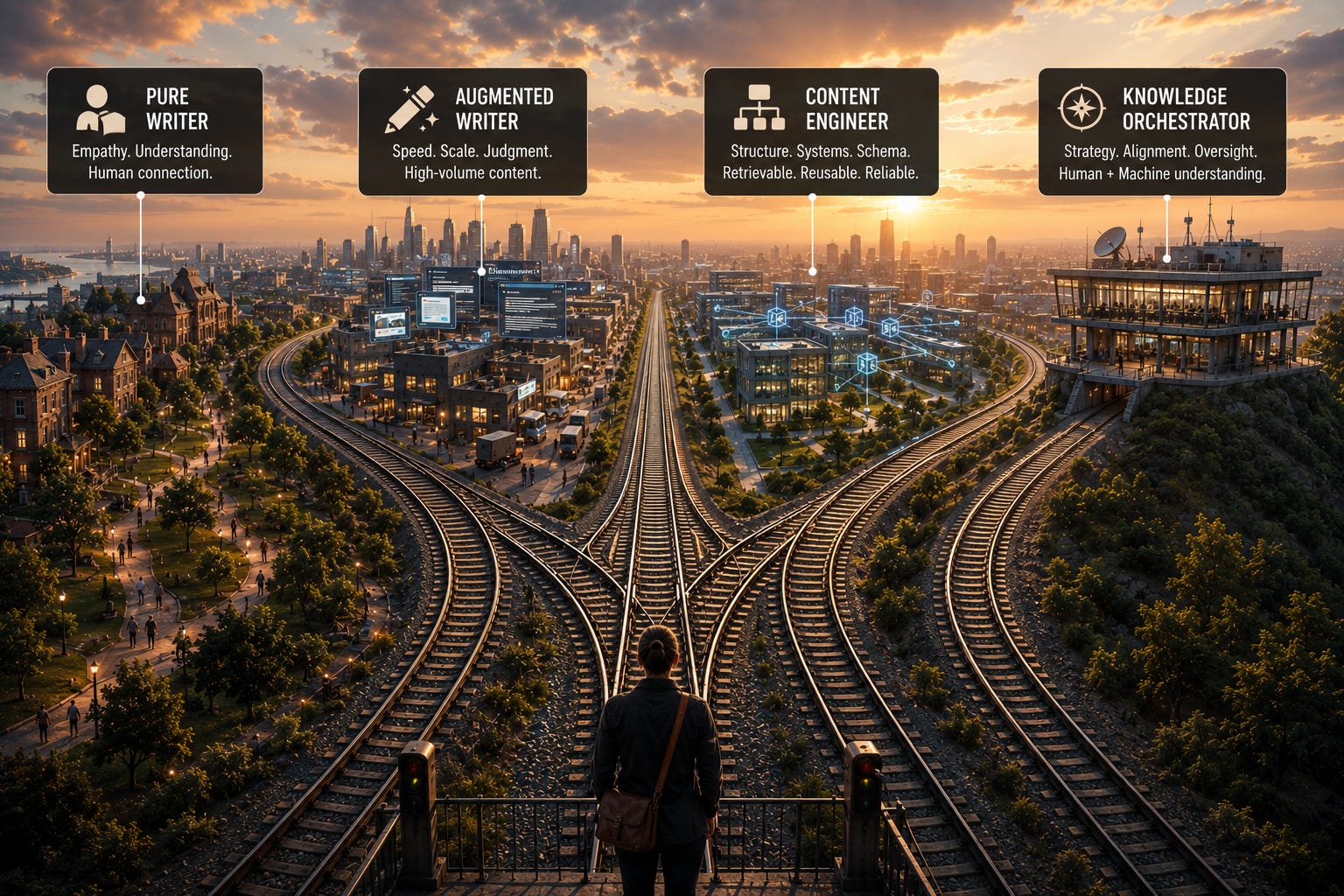
Although my crystal ball 🔮 is cracked (and my psychic powers are limited), I predict tech writing is no longer one profession moving in one direction. It’s splitting into several paths. Four, for now.
The Pure Writer
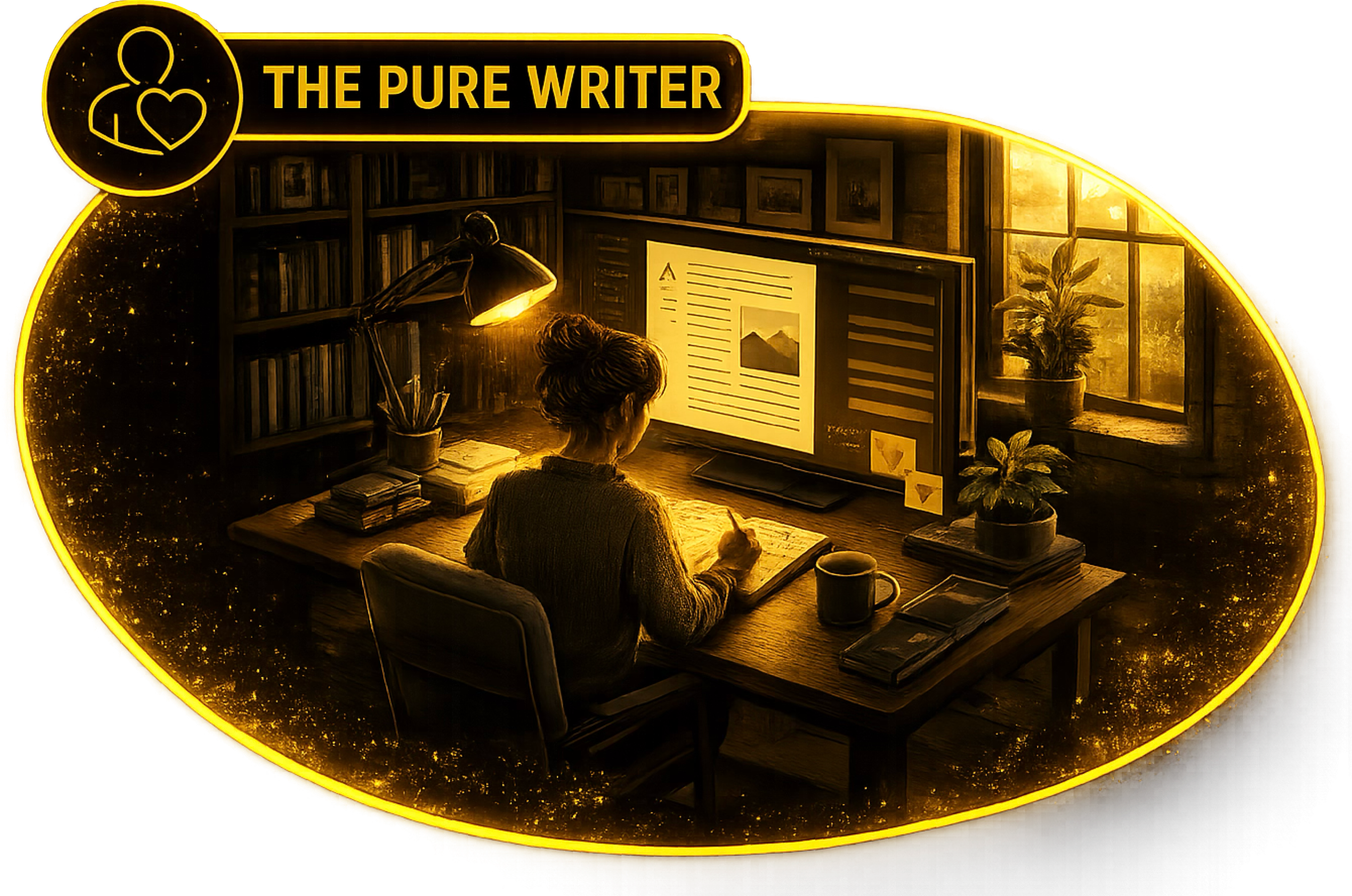
The Pure Writer isn’t working to generate words with AI. Instead, they’ll focus on the parts of communication lifecycle where human judgment matters most. They’ll create onboarding experiences, conceptual content, narratives, and guidance that require empathy, audience awareness, and deep understanding of human behavior.
Their value isn’t measured by how quickly they produce words. It’s measured by how effectively they help people learn, make decisions, overcome uncertainty, and build confidence.
It’s measured instead by how effectively they help people learn, make decisions, overcome uncertainty, and build confidence. They’ll be the ones who excel at interviewing subject matter experts (think forensic interviewing), uncovering hidden assumptions, understanding audience needs, and translating complexity into meaningful human experiences.
AI can help generate prose, but it cannot fully replicate judgment, empathy, cultural awareness, or the ability to understand what people are feeling when they encounter information. The Pure Writer focuses on communication as a human craft, creating content that informs, reassures, persuades, and guides people through moments where understanding matters most.
The Augmented Writer
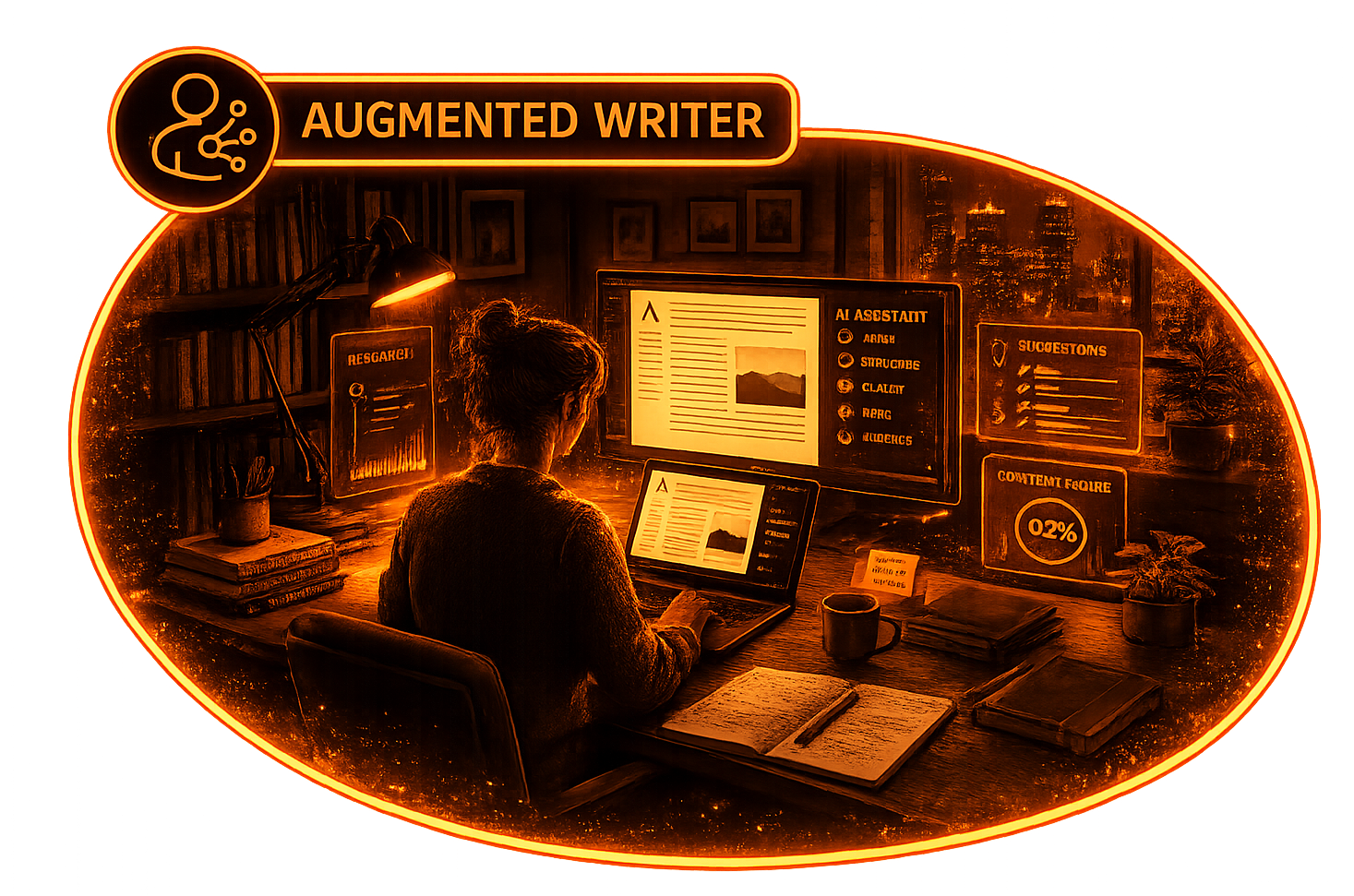
The Augmented Writer operates at the intersection of human expertise and machine-assisted production. This is the high-velocity, high-volume path. Instead of starting with a blank page, they’ll start with a prompt, a source document, or a structured dataset and use AI to generate first drafts at scale. Fast!
Their value isn’t measured by typing speed. It’s measured by throughput, editorial judgment, and the ability to transform raw information into useful content quickly. They review, refine, fact-check, and shape AI-generated output into material that meets organizational standards.
Whether producing release notes, API references, procedural content, summaries, or knowledge articles, they dramatically increase the volume of content that can be created without sacrificing quality.
The Augmented Writer understands both the strengths and limitations of AI. They know when to delegate drafting to the machine and when human review is required. Their role is less about writing every sentence and more about directing, evaluating, and improving a high-speed content production system.
The Content Engineer
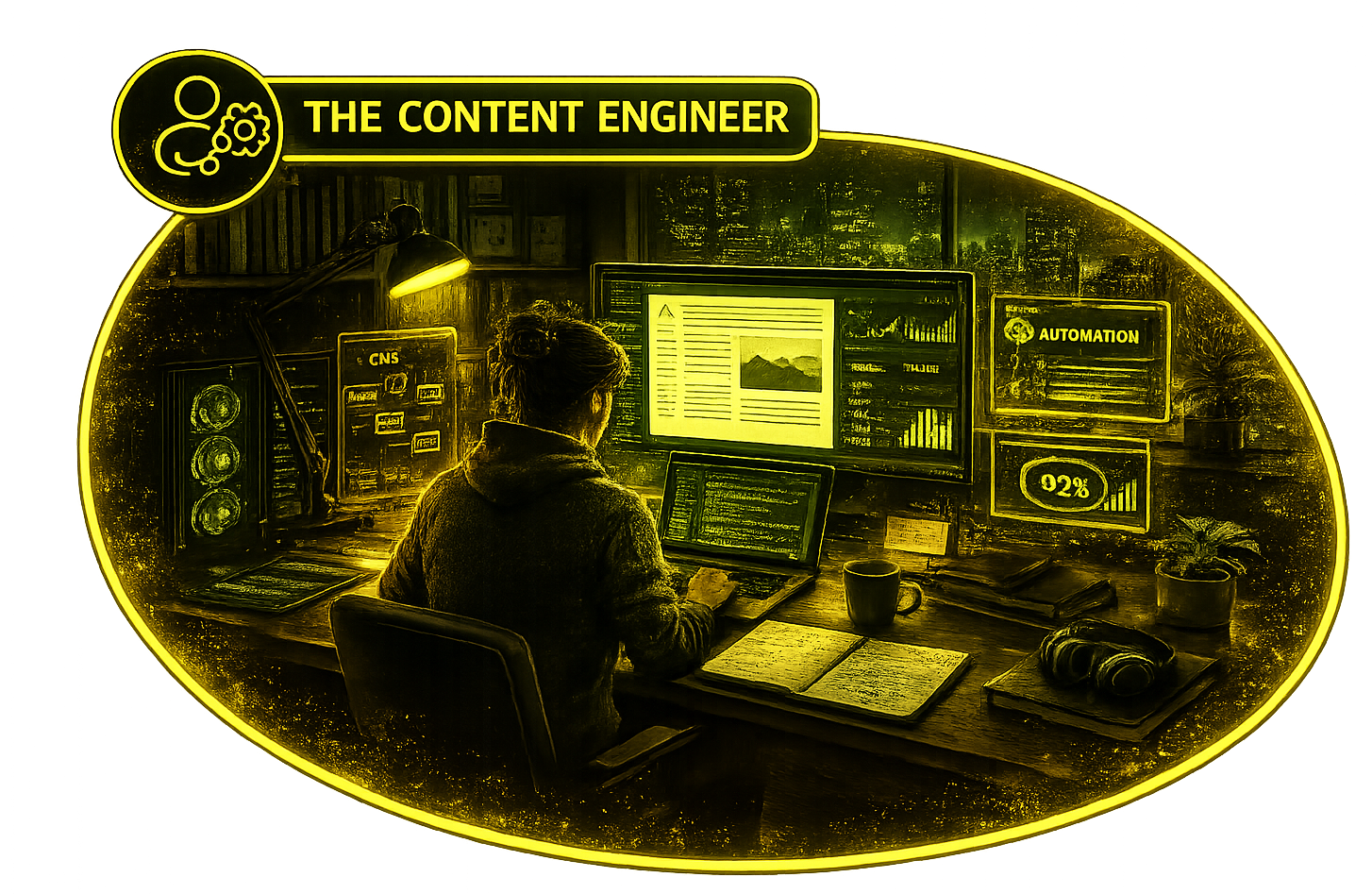
The Content Engineer focuses on the structure beneath the content. They aren’t primarily concerned with crafting sentences or refining tone. Nope. Their attention is focused on metadata, taxonomies, content models, schemas, reusable components, and the systems that allow information to move reliably through an organization.
Their value comes from creating highly structured, predictable environments where content can be assembled, reused, translated, personalized, and delivered automatically. They design the frameworks that make scale possible. They’ll ask questions such as:
👉🏾 How should this information be modeled?
👉🏾 What metadata is required?
👉🏾 Can this content be reused across multiple outputs?
👉🏾 How will a machine interpret this structure?
The Content Engineer understands that modern content is no longer just something people read. It is data that must be processed by content management systems, search engines, translation platforms, AI assistants, and autonomous agents. Their work makes those systems more efficient, more reliable, and more scalable.
While others focus on the words, the Content Engineer focuses on the architecture that makes those words usable. They build the pipes that allow information to flow.
The Knowledge Orchestrator
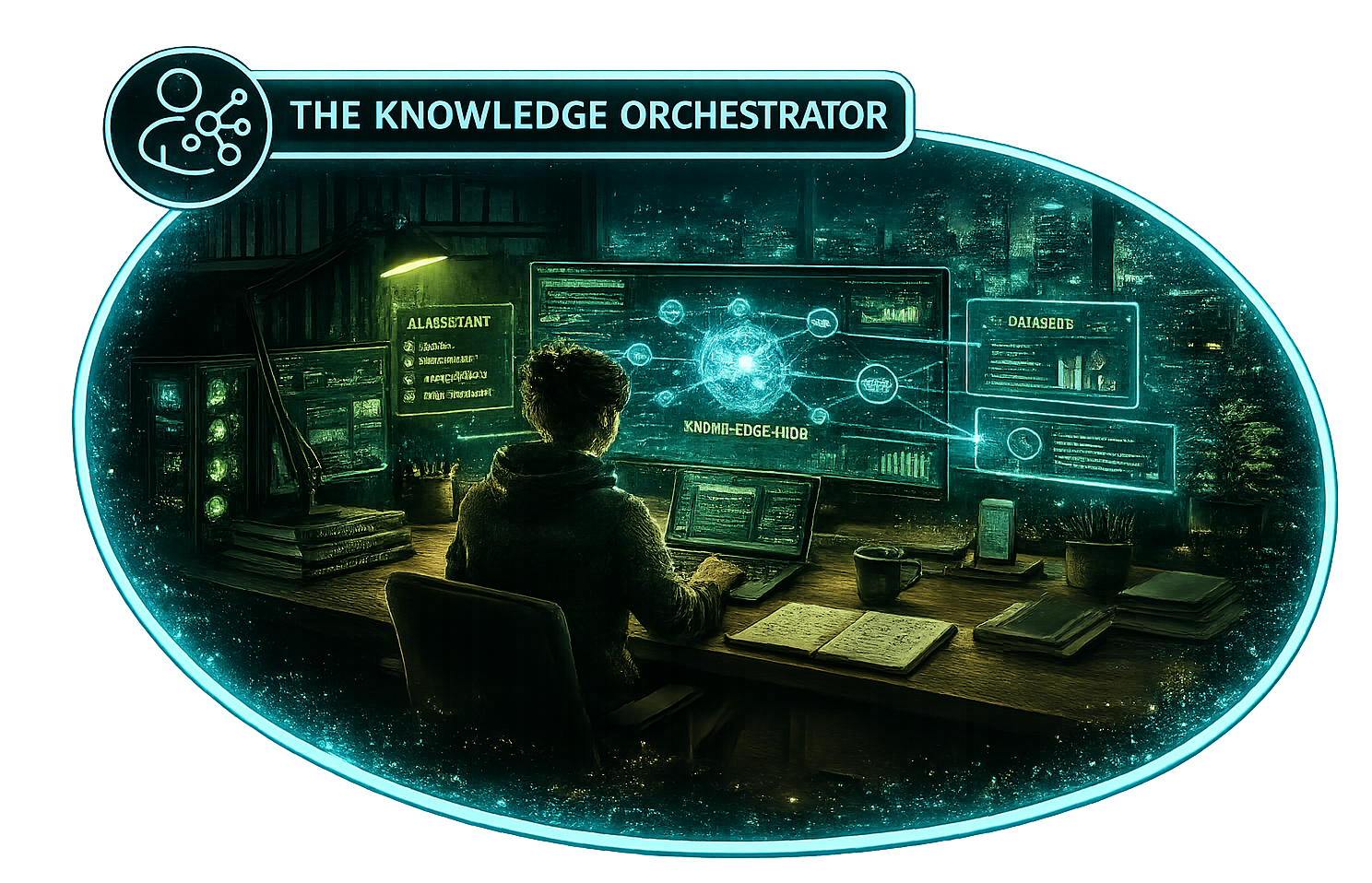
The Knowledge Orchestrator sits at the intersection of human communication and machine intelligence. They understand both what makes information clear, useful, and trustworthy for people, and also, how AI systems, search engines, knowledge graphs, and retrieval architectures consume that same information.
Their value comes from designing and governing the organization’s “truth layer”, the structured knowledge foundation that both humans and machines depend on. They’ll focus their efforts on thinking beyond individual documents and work to improve and maintain how information flows across systems, how knowledge is modeled, how ambiguity is reduced, and how meaning is preserved from source to consumption.
The Knowledge Orchestrator understands that modern documentation has two audiences: humans and machines. They design content ecosystems that support both. They analyze retrieval failures, improve information architectures, establish metadata and terminology standards, and ensure that AI systems can retrieve and apply information accurately and safely.
While others create content or build content systems, the Knowledge Orchestrator ensures that the entire knowledge ecosystem works as a coherent whole. Their responsibility is not simply publishing information. It is creating the conditions that allow people and machines to consistently find the truth.
AI Is Also Reading Your Documentation Now
Many writers still haven’t adjusted to a simple reality: People are no longer your only audience. AI agents read documentation too. Sometimes they act on it.
An AI-powered migration agent may follow your database migration instructions step by step. If your documentation omits a prerequisite, leaves an assumption unstated, or says something vague like “configure as needed,” the AI won’t stop to ask questions. It will continue with whatever interpretation it can construct.
In the past, poor documentation frustrated customers and increased support costs. Now it also can cause automated systems to make mistakes at scale. That changes the consequences of documentation ambiguity.
Ambiguity Is Now a Technical Failure
Technical writers need to understand grounding and Retrieval-Augmented Generation (RAG). The terminology sounds complicated, but the underlying idea is straightforward: AI systems perform better when the source content is clear, structured, and explicit.
When terminology varies from one document to another, when process steps are implied rather than stated, or when important conditions are buried in paragraphs of prose, retrieval systems can surface the wrong information or miss critical information altogether. This is where technical writers become increasingly valuable today.
Many ambiguities (the types we might introduce in our docs) are the kind that people can resolve through experience, context, or conversation. But these same ambiguities are much harder for machines to handle. An experienced employee may recognize that a step is missing or that a prerequisite is implied. An AI system has no such intuition. It can only work with the information it retrieves.
The quality of the answer depends heavily on the quality of the information architecture behind it.
The Skills AI Can’t Hallucinate
Several skills become more valuable as AI becomes more capable. One of them is forensic interviewing.
AI can reorganize and summarize information that already exists. And, it’s quick and fairly accurate at these tasks. However, AI systems can’t reliably uncover information that was never documented. It doesn’t know when a developer skipped a critical step because “everyone knows that.” It doesn’t recognize when an SME assumes background knowledge that new users don’t have.
Someone still has to identify missing context, surface hidden assumptions, uncover tribal knowledge, and spot potential safety risks. That work remains largely human.
Much of technical documentation assumes readers will fill in missing context. TRACE, a framework I've been developing for evaluating AI readiness, identifies five elements that are frequently left implied: Tasks, Roles, Actors, Conditions, and Events. The goal is to make operational meaning explicit so information can be interpreted reliably by both people and machines.
That distinction matters because people and machines consume information differently. People can (and do) often infer missing context from experience. Machines can’t do that. If a task, condition, or responsibility isn’t clearly expressed, an AI system may retrieve incomplete information or interpret it incorrectly.
Then there’s accountability.
AI systems don’t worry about consequences. They don’t hesitate before publishing instructions or question whether a warning is prominent enough. Nor do they wonder if a missing prerequisite could create a problem for someone (or something) else downstream.
What they do is generate output.
People (that means us) remain responsible for deciding whether that output is accurate, safe, appropriate, and complete. As organizations rely more heavily on AI-generated content and AI-assisted workflows, that responsibility becomes more important, not less.
The Shift From Drafting To Design
AI is very good at mechanical content production. It can generate first drafts, summarize documents, transform formats, adjust tone, and handle many of the repetitive tasks that consume a writer’s day.
The higher-value work remains firmly human. Someone still has to design the information architecture, establish metadata and taxonomy standards, govern terminology, evaluate risk, identify missing context, and determine whether information is accurate and trustworthy.
This distinction matters because organizations don’t succeed simply by producing more (and more and more and more) content. They succeed when people and systems can find, understand, and apply the right information at the right time. Period.
For many tech writers, that has always been the most interesting part of the work. Understanding complex systems, organizing knowledge, and making information usable requires judgment that cannot be delegated easily. AI hasn’t eliminated that work. If anything, it has made its importance more visible.
The New Center Of Gravity
The arrival of generative AI has not reduced the importance of technical communication. It has changed where the value resides.
For decades, writing and information architecture were tightly coupled. If you wanted documentation, someone had to write it. Today, drafting is becoming faster, cheaper, and increasingly automated. The scarce resource is no longer the production of words. It is the creation of information that can be trusted, retrieved, interpreted, and applied correctly.
Organizations need people who can uncover missing context, reduce ambiguity, model knowledge, establish terminology, govern information assets, and ensure that both humans and machines can understand what the content means.
That work has always existed. It simply lived in the shadow of drafting.
AI has pushed it into the foreground. 🤠