

If you’ve worked in or around publishing, technical documentation, or graphic design for any length of time, you’ve almost certainly encountered Lorem ipsum. It’s the text that appears when the real words aren’t ready yet.

Like many people, I assumed I knew its history. And like so many other things I have assumed I was right about before, I was oh-so-terribly wrong.
A few weeks ago, I watched a video from Rabbit Hole that set out to answer: Where did Lorem ipsum come from?
I expected a quick explanation about Latin and early printing. Instead, I spent the next half hour following one of the most enjoyable research rabbit holes I’ve encountered in quite a while.
The First Clue
The story starts with Richard McClintock, a retired Latin professor at Hampden-Sydney College. While working on university publications years ago, he noticed that one of the words in Lorem ipsum looked too obscure to be random. That curiosity led him to De Finibus Bonorum et Malorum, a philosophical work Marcus Tullius Cicero wrote in 45 BCE.
For most people, that would have been the end of the story. For me, it wasn’t.
Finding Cicero explained where the words originated. It didn’t explain how that passage evolved into the placeholder text found in publishing software, website templates, presentation tools, and design mockups.

Not Quite Latin
The version of Lorem ipsum we recognize today isn’t simply copied from Cicero. Someone edited it with remarkable care.
Words disappeared. Others changed. Letter combinations appeared that wouldn’t exist in classical Latin. Even the opening word, “lorem,” isn’t Latin. It’s what remained after part of the original sentence was removed.
Creating convincing placeholder text turns out to be harder than creating nonsense. The text has to resemble natural language closely enough that a page looks realistic, while remaining just unfamiliar enough that readers don’t become distracted by what it says.
Just for fun: Try Jeffsum — a little text placeholder generator of Jeff Goldblum awesomeness.

The Story Everyone Knew
If you look up "Lorem ipsum" you always get the same story: some unknown printer in the 1500s chopped up Cicero's writing to make a sample book. It's everywhere. But when the creator of this video actually tried to verify that claim? They couldn't find a single source to back it up.
That’s when the real research began.
Following The Evidence
Old dictionaries, typography books, vintage Letraset catalogs and library archives were searched. Following a trail of decades-old advertisements, dictionaries, typography books, library archives and vintage Letraset catalogs, the creator finally struck gold: a surviving Letraset sheet from the 1960s that blew the case wide open. Side-by-side comparison with Cicero’s original work revealed the truth.
Lorem ipsum wasn’t just copied from a single page; it was a curated remix, spliced together and edited from entirely different parts of the same book.
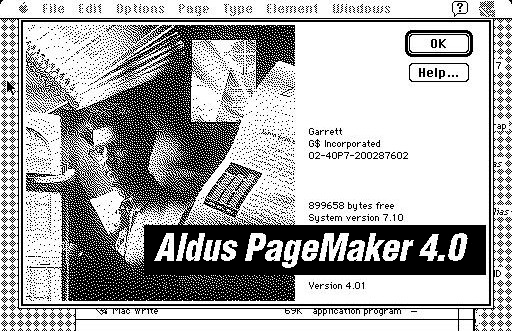
Another discovery explained why almost every designer eventually encountered those familiar words. Laura Perry, who worked on Aldus PageMaker, remembered typing the Letraset version into the software because designers already used it. That small decision introduced Lorem ipsum to millions of desktop publishing users. No committee established a standard. Nobody issued a specification. One practical decision quietly became an industry convention.
I love stories like this. We often assume familiar conventions emerged from careful planning. Ha! Sometimes they survive simply because the next person reused what the previous person had already done.
The Missing Pieces
One important question still remained. Who created the Letraset version?
Near the end of the investigation, an email arrived from one of Letraset’s earliest designers. He described how the company had worked with James Moseley, a typography historian and librarian. According to his account, Moseley selected a less familiar passage from Cicero and reshaped it into the placeholder text that eventually appeared on Letraset sheets.
Unfortunately, Moseley died before he could be interviewed, leaving a few details beyond anyone’s reach. Even so, the evidence tells a much more interesting story than the familiar “printer in the 1500s” explanation that still dominates much of the web.
Case Closed?
Not completely. Historical research rarely ends with every question answered, and this one doesn’t either. It does, however, replace a surprisingly persistent origin myth with evidence collected from books, interviews, archives, surviving artifacts, and a great deal of patient detective work.
The video comes from the Rabbit Hole YouTube channel, whose tagline is “extraordinary answers to everyday questions.” In this case, that promise fits perfectly. 🐇
Fascinating! Thanks for diving deep and sharing this story that about Lorem Ipsum placeholder type that so many of us have used thousands of time.