

Walk into any boardroom strategy session, and you will likely hear confident talk about AI transformation, data modernization, cloud optimization, and cybersecurity resilience. Slides glide by featuring governance frameworks, data lakes, zero-trust architecture, and automation roadmaps. Heads nod. Budgets are prepared to expand.
What you will almost never hear is a serious discussion about how the organization manages its product knowledge.
That omission matters! And not in a small, iterative, “we’ll fix it next quarter” way. More in a “we bought the spaceship but forgot to order the oxygen” kind of way. ☞ Duh.
Across enterprise after enterprise, the Chief Information Officer owns the data strategy but does not realize that one of the company’s most valuable structured assets is sitting within the technical documentation function. And in many cases, those assets aren’t structured at all. They rest peacefully in PDFs, like it’s 2003 and nobody has ever heard of retrieval-augmented generation.
The tool at the center of this blind spot is the Component Content Management System (CCMS). Most CIOs have never heard of these powerful content production platforms, let alone evaluated any. Yet in an AI-driven world, failing to evaluate the capabilities a CCMS can provide an organization introduces risk, cost, and strategic weakness — all the things CIOs are paid handsomely to avoid.
What a CCMS Actually Does
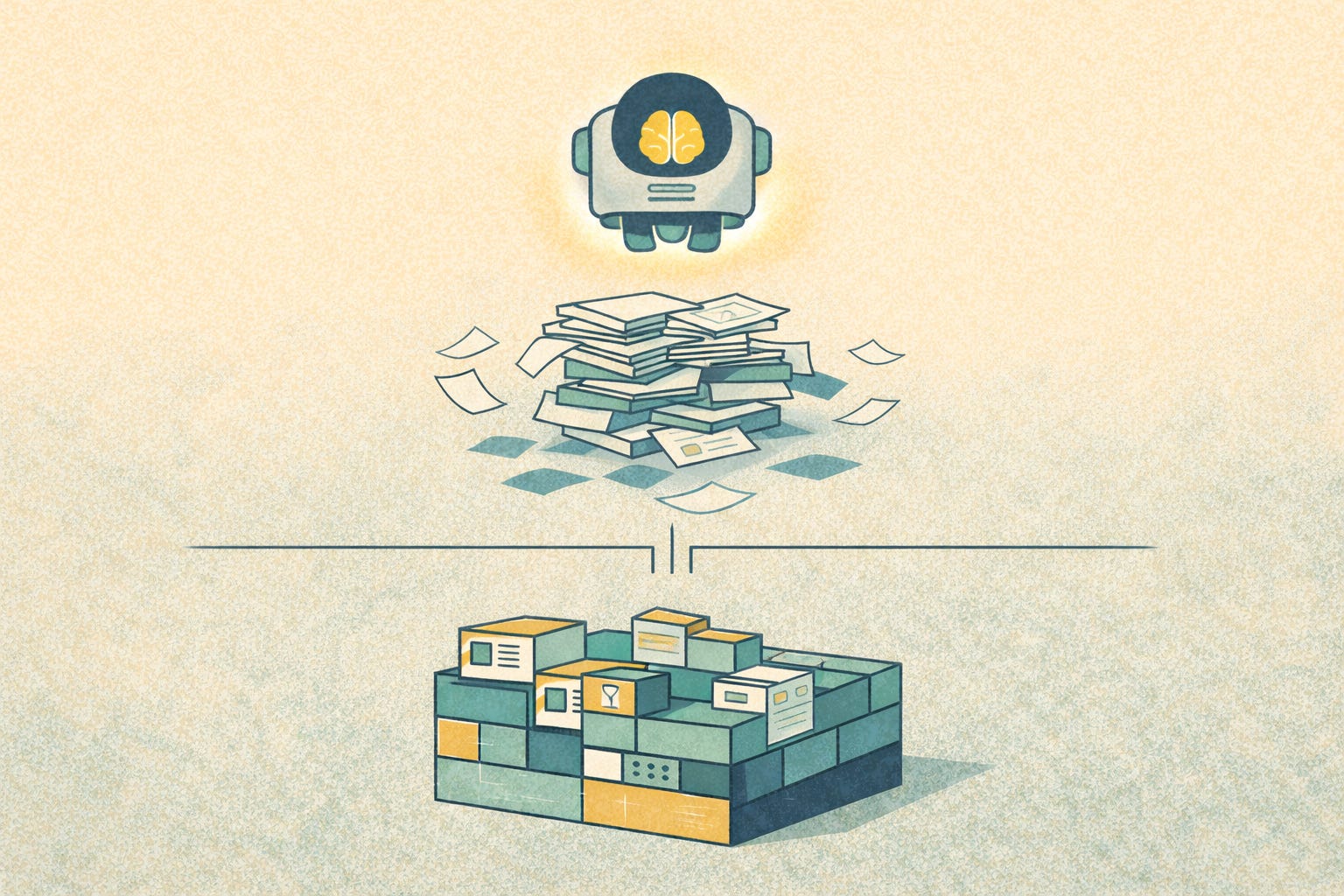
A CCMS manages content at a granular level rather than as a single document. Instead of treating a manual as a monolithic file, it stores information as modular components: procedures, concepts, reference topics, warnings, and other reusable content fragments. Those components are structured, tagged with metadata, version-controlled, and governed.
Many CCMS implementations rely on structured XML frameworks such as DITA (Darwin Information Typing Architecture), an international standard for modular documentation.
Unlike a traditional document management system or web CMS, a CCMS enforces structure. It knows the difference between a task and a concept. It tracks product versions. It manages conditional content for regional or regulatory differences. It supports automated publishing across multiple channels without duplicating source material.
In practical terms, it transforms documentation from static files into managed knowledge objects.
Which sounds abstract until you remember that AI systems cannot read your intentions. They can only read what you give them. If what you give them is a folder labeled “Final_v3_REALLYFINAL2.pdf,” you are asking for creative interpretation.

Why CIOs Rarely See It
For years, documentation systems have lived inside technical publications teams. They were viewed as operational tools for writers, not strategic infrastructure for the enterprise. CIOs understandably focused instead on ERP systems, CRM platforms, identity management, cloud architecture, and data governance.
Documentation felt peripheral. Necessary, yes. Strategic, no.
At the same time, “content management” became associated with marketing platforms and website publishing systems. The term did not signal a structured knowledge architecture. It sounded like someone arguing about font choices.
Meanwhile, the technical communication discipline quietly developed deep expertise in information architecture, metadata modeling, taxonomy design, controlled authoring, and content reuse. These pros have spent decades breaking complex systems into modular, governed components.
Related: How to run an information architecture audit and Composable architecture: Everything you need to know
As organizations now rush into knowledge graphs and AI copilots, many are rediscovering problems that documentation teams solved years ago. The difference is that this time there’s a much larger budget and far more slides. 😜
The AI Inflection Point
Generative AI has changed the stakes.
Large language models do not understand products. They generate text based on probability patterns. Without structured, authoritative source material, they guess. And guessing erodes trust fast.
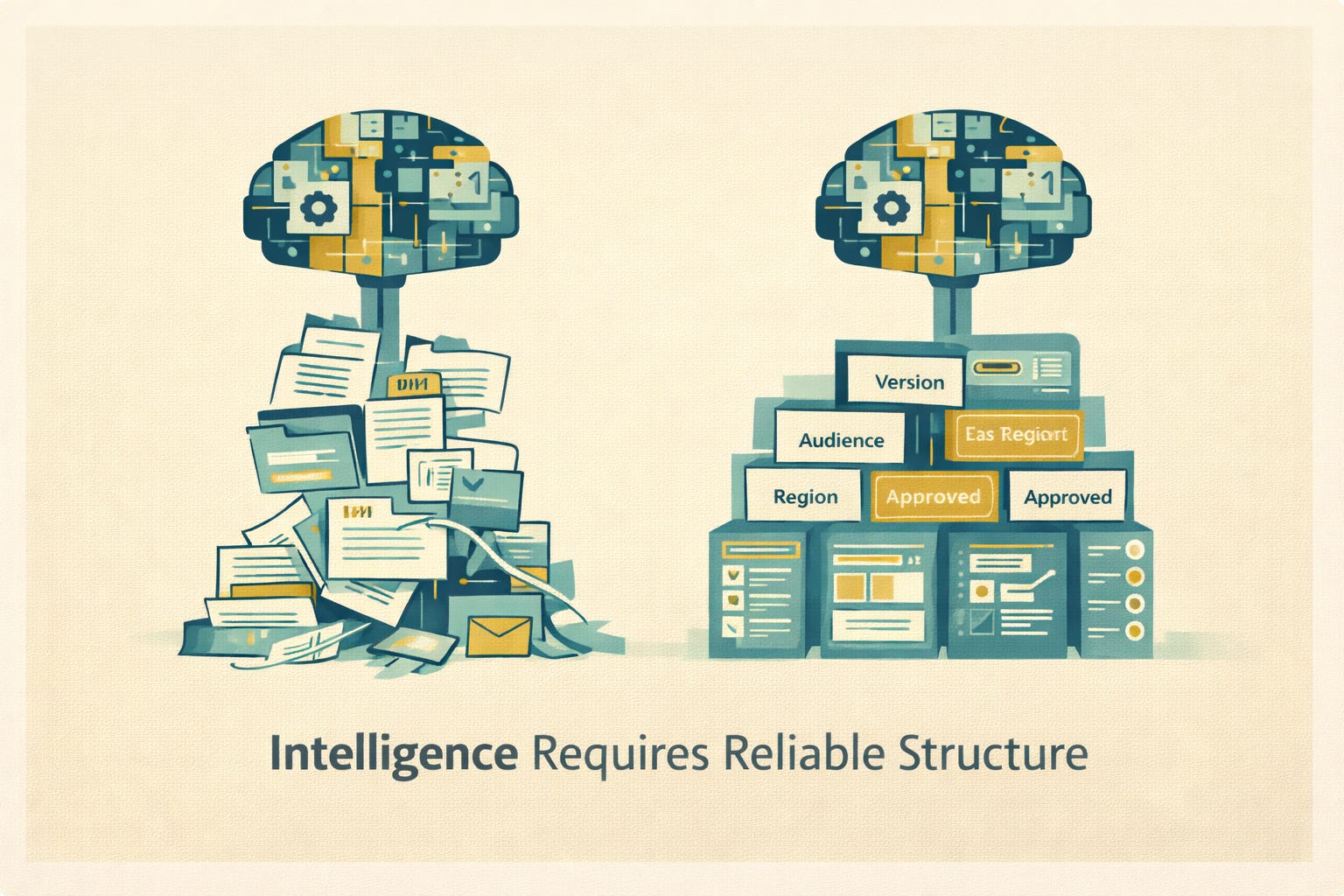
When AI systems connect to repositories filled with unstructured content — PDFs, slide decks, and loosely governed files — the results vary in quality and traceability. Retrieval becomes inconsistent. Version alignment breaks down. Regulatory context disappears like a sock in the dryer.
By contrast, when AI systems draw from structured, metadata-rich repositories, retrieval improves. The system can surface the correct procedure for the correct product version, filtered by region or audience. It can avoid suggesting features that do not exist in a particular release. It can provide answers grounded in approved content.
A CCMS does not make AI intelligent. It makes AI reliable.
And reliability, as any CIO will admit, is far less glamorous than intelligence — but infinitely more valuable when something goes wrong.
The Cost of Overlooking the Knowledge Layer
When CIOs pursue AI initiatives without addressing documentation architecture, several predictable issues emerge.
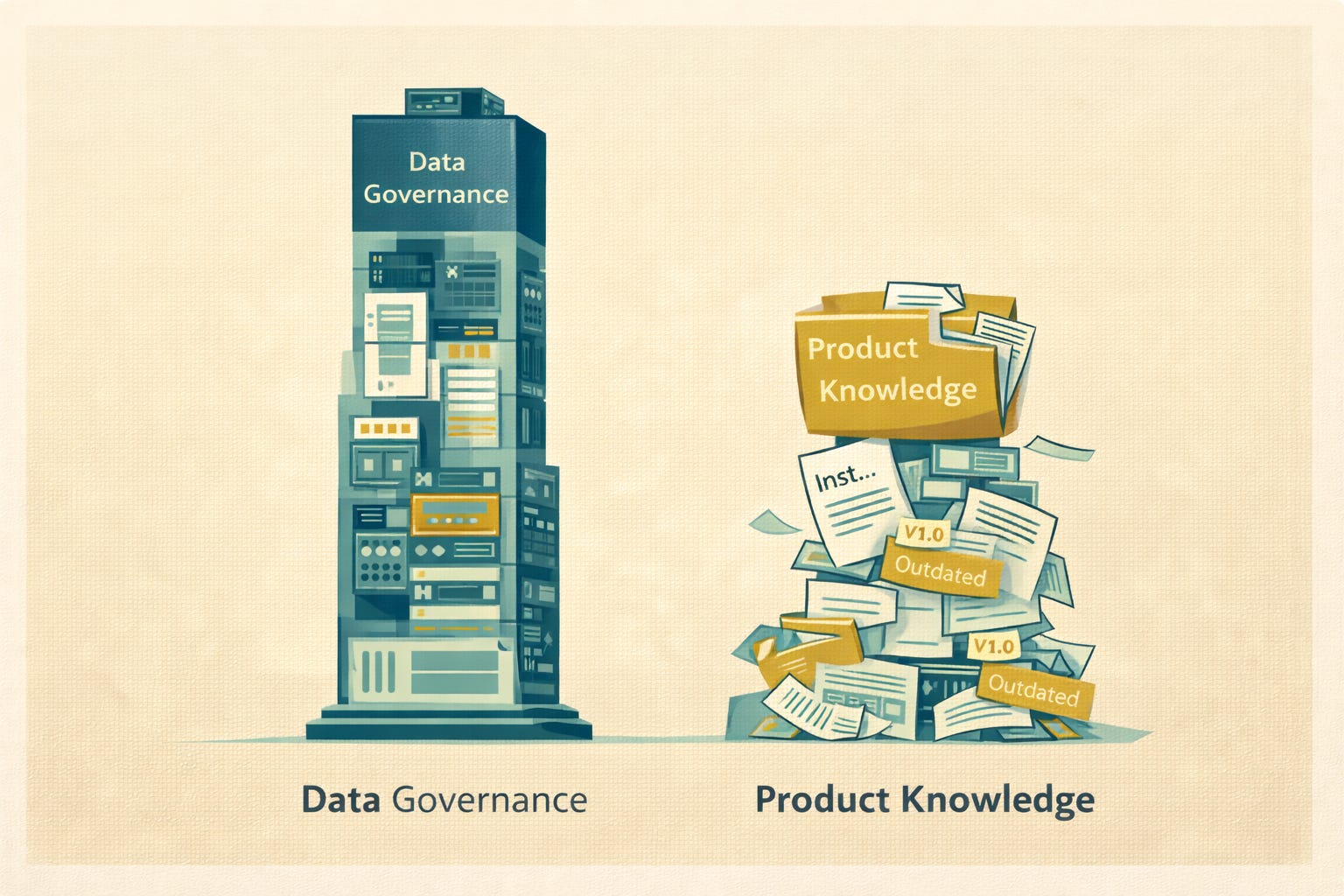
Content inconsistencies proliferate across customer touchpoints. Translation costs climb because duplicated content must be localized repeatedly. Product updates require manual, document-level revisions instead of modular reuse. AI systems pull outdated instructions because they cannot distinguish version metadata embedded in static files.
In regulated industries, the stakes are higher. Without controlled workflows, approval histories, and audit trails, proving compliance becomes more complicated than it needs to be. The organization may possess accurate knowledge somewhere, but not in a governed, traceable form. That is rarely comforting during an audit.
The irony is that CIOs often invest heavily in data governance programs while leaving product knowledge unmanaged. Yet for customers, product knowledge defines experience. Clear installation instructions and accurate troubleshooting steps shape trust just as much as uptime metrics do.
No one praises your microservices architecture if your installation guide is wrong.
The Untapped Expertise
Perhaps the most significant loss is cultural rather than technical.
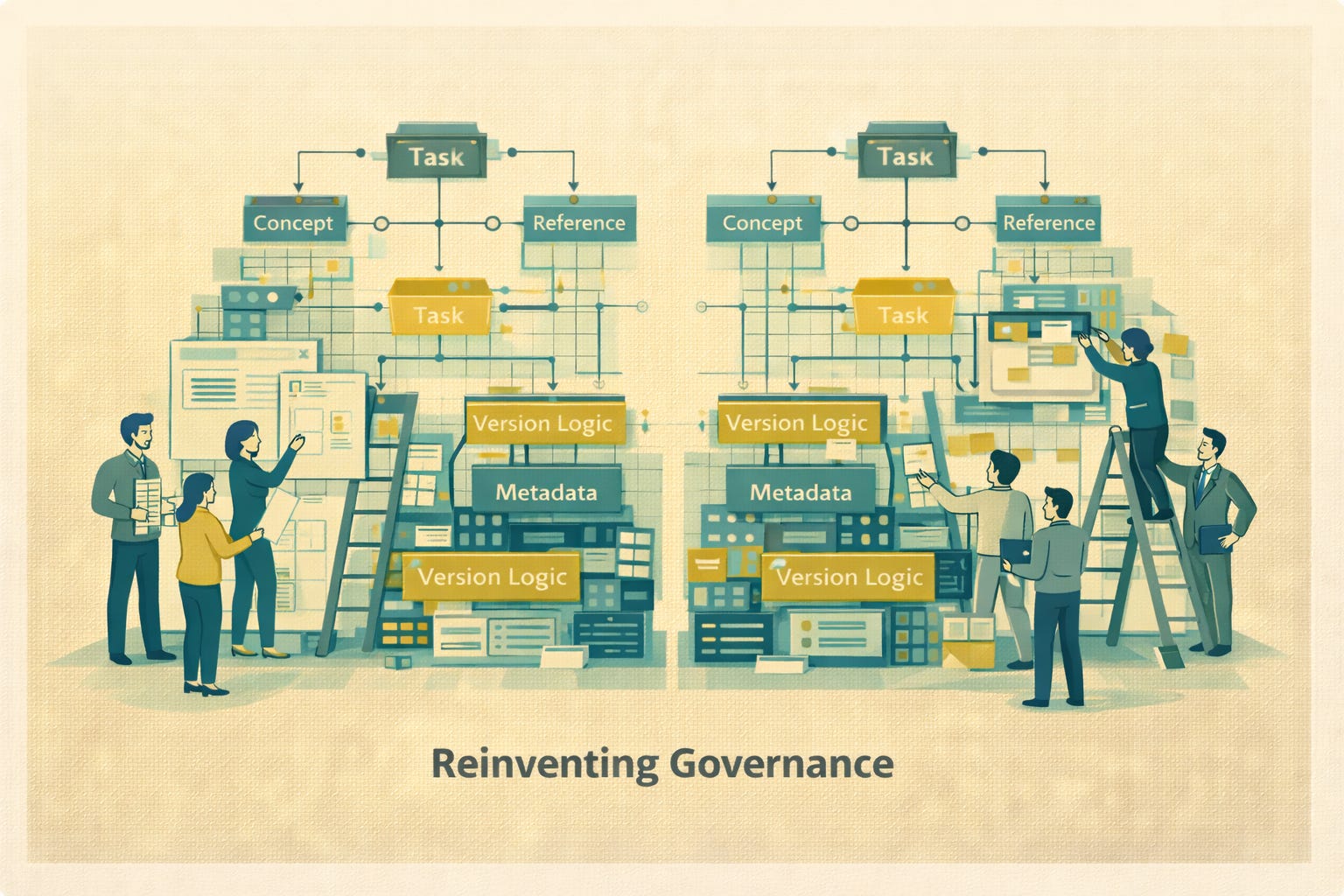
Technical communicators are trained in decomposing complexity. They define relationships among concepts, tasks, and references. They build taxonomies and enforce controlled vocabularies. They manage conditional content across product variations. They think in terms of reuse, lifecycle, and governance.
These are precisely the capabilities enterprises now seek as they build knowledge graphs and AI-driven support systems.
When CIOs fail to involve documentation leaders in knowledge architecture discussions, organizations duplicate effort. They reinvent governance patterns. They underestimate the complexity of version management. They relearn lessons the hard way.
Technical communication is applied information engineering. It just happens to produce readable sentences as a side effect.
It’s Time For a Strategic Reframing of Documentation
The question is not whether an organization produces documentation. Every product company does. The question is whether that knowledge is treated as structured data or as static publishing output.
In an AI-impacted environment, the distinction determines how effectively the organization can scale automation, maintain consistency, and reduce risk.
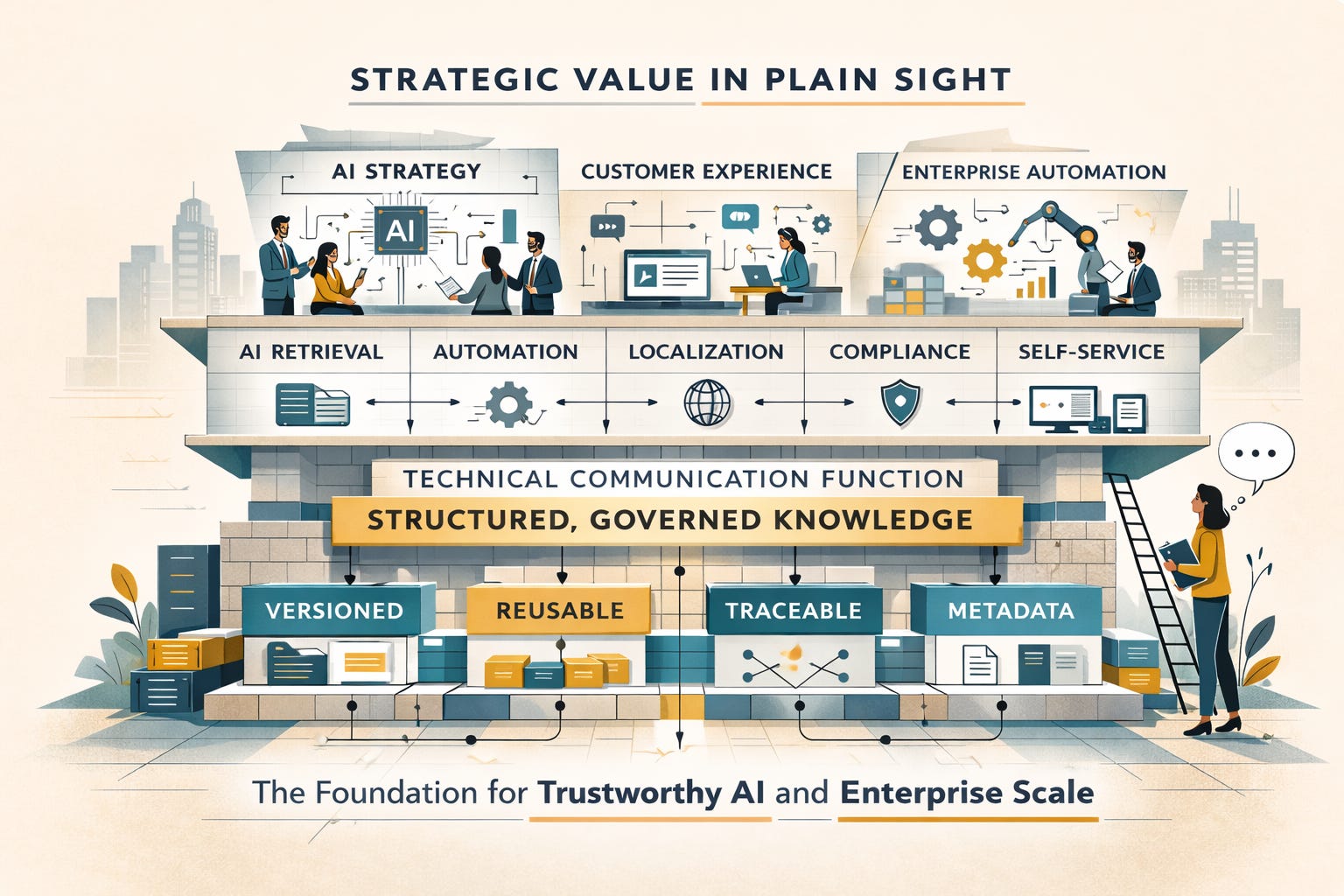
CIOs who bring structured content systems into the enterprise architecture conversation gain leverage. They create a governed source of truth for AI retrieval. They reduce duplication across product variants. They lower localization cost through reuse. They strengthen compliancetrengthen compliance posture through traceability. They align customer self-service with product reality.
Those who ignore this layer may find that their AI initiatives stall not because the models are inadequate, but because the source knowledge is fragmented and structurally unsound.
The infrastructure for trustworthy AI does not begin with the model. It begins with structured, governed knowledge.
For many enterprises, that foundation already exists within the technical communication function. It simply has not yet been recognized as strategic.
Which is a shame. Because while everyone else is debating which AI model to buy next quarter, the real competitive advantage may be quietly waiting in the documentation department — patiently structured, meticulously versioned, and wondering when someone in the C-suite will finally notice. 🤠