

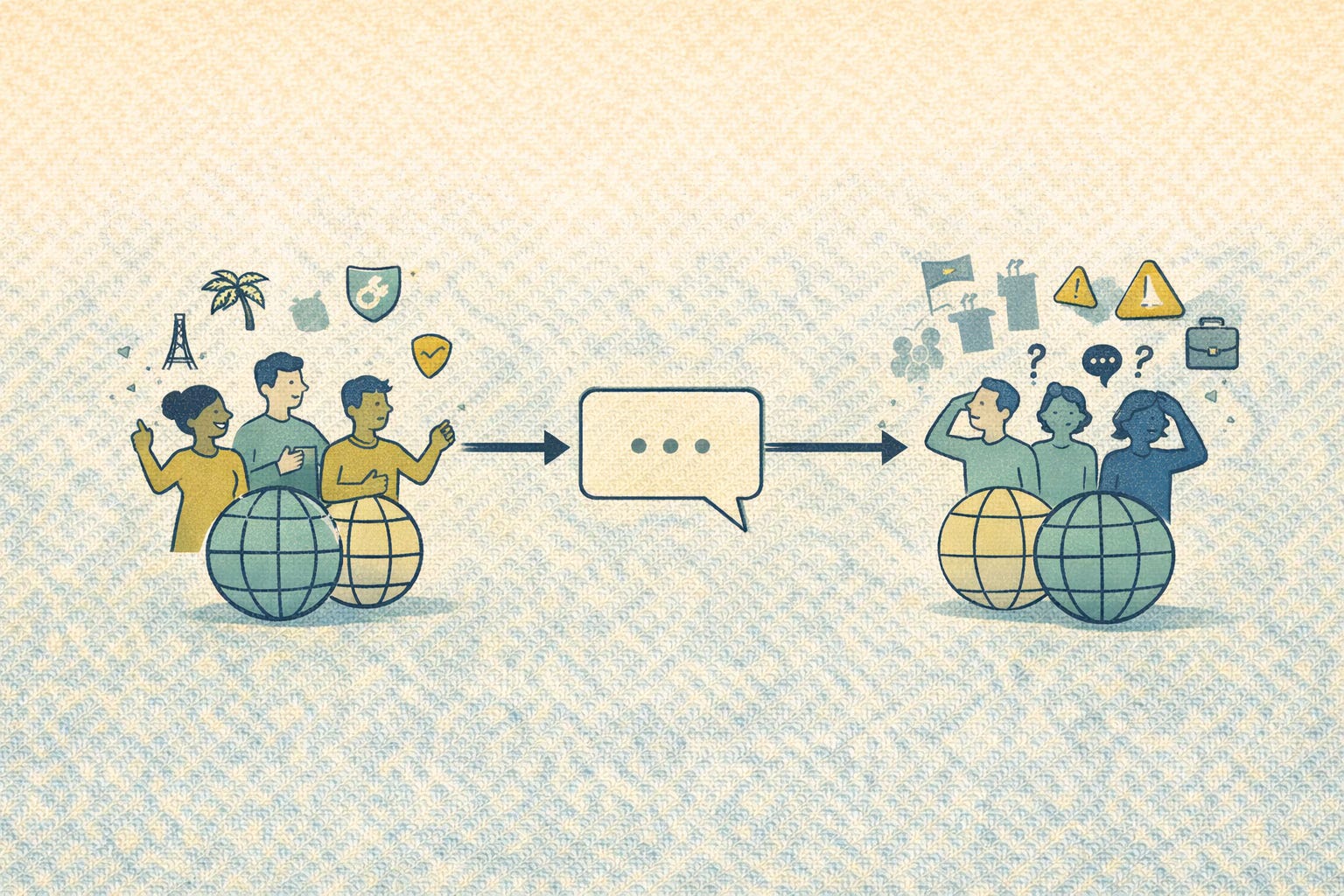
Transcreation and translation might seem interchangeable at first glance, but they serve distinct purposes and are not synonyms. While translation is the process of converting text from one language to another, transcreation goes a step further by adapting the message to resonate culturally and emotionally with the target audience.
This distinction is crucial, especially in technical communication, where the goal is not just to convey information but to connect with diverse audiences effectively to support positive customer experiences.
“Transcreation is the process of re-developing or adapting content from one culture to another, while transferring its meaning and maintaining its intent, style, and voice.” — Patrick Nunes, Director, Global Communications & Design at Rotary International
(Source: The Language of Localization)
The importance of transcreation becomes evident when considering how different cultures interpret language and symbolism. Transcreation matters any time the literal words can be translated correctly, but the meaning people take away changes because of culture, current events, or local associations.
Why Transcreation Matters
Cultural Sensitivity: It ensures that content is culturally appropriate and avoids potential misinterpretations or offenses.
Emotional Connection: By adapting tone and style, transcreation helps in forging a deeper emotional bond with the audience.
Brand Consistency: It maintains the integrity of the brand message across different markets, ensuring a uniform global presence.
The Role of Human Judgment in Transcreation
In the age of AI and machine learning, the role of humans in the translation and transcreation process remains indispensable. While AI can handle literal translations, it often misses the nuances that a human translator can catch, such as cultural references, idiomatic expressions, and emotional tone.
“Human judgment and understanding of cultural nuances are irreplaceable in ensuring content is both accurate and resonant.”
Humans bring a level of cultural expertise and emotional intelligence to the table that machines are yet to replicate. Whether it’s choosing the right metaphor or understanding the socio-political implications of a color, these decisions require a depth of understanding that goes beyond algorithmic capabilities.
Including Transcreation in Your Content Production Pipeline
For organizations, especially those in the corporate training and presentations industry, integrating transcreation into their content strategy can significantly enhance the effectiveness of their communication. Here are some steps to consider:
Early Integration: Involve transcreation experts early in the content development process to ensure cultural nuances are considered from the start.
Collaborative Approach: Work closely with localization teams to align on terminology and style guides that reflect both the company’s values and the cultural expectations of the target market.
Continuous Evaluation: Regularly assess the impact of transcreated content on audience engagement and adapt strategies as needed to improve effectiveness.
As companies continue to expand globally, the need for effective communication across cultural boundaries becomes more pronounced. Transcreation offers a pathway to achieving this goal, ensuring that messages are not only understood but also felt by audiences worldwide. For those in the corporate training and presentations industry, embracing transcreation can lead to more meaningful interactions and successful global engagements.
Transcreation and Technical Documentation
Tech writers tend to hear transcreation and assume it’s some sort of marketing mumbo-jumbo. Then a localized UI string accidentally turns into a political dog whistle, a sexual innuendo, or a phrase that reads like a threat in another language.
Suddenly it becomes a documentation problem.
What is the Difference Between Transcreation and Translation, Anyway?
Transcreation is translation plus intent. Translation aims for linguistic accuracy: the words mean the same thing. Transcreation aims for outcome: the message lands the same way for the target audience, in their culture, in their moment, on their terms.
That difference matters because “correct” translations can still fail.
A slogan, button label, error message, or safety warning can be perfectly translated and still produce the wrong reaction because the phrase carries local baggage. Maybe it matches a divisive election slogan. Maybe it echoes a recent tragedy. Maybe it sounds childish, rude, or overly intimate in a culture where formality signals trust. Users understand the words, but they misunderstand the context — and they blame your product.

Why You Might Need Transcreation
Picture a US company that prizes consistency above all else. The brand team wants every market to see the same campaign, hear the same promise, and recognize the same logo and slogan. Marketing insists the wording must not change during translation because “changing the words changes the meaning,” and they want unified communications across regions.
So the slogan is translated from US English into French as literally and faithfully as possible—because that feels like the safest way to preserve intent.
The problem is that “meaning” is not only the dictionary definition of the words. It is also what those words already signal to the people reading them. In France — like the United States — politics can be divisive, and certain phrases carry heavy associations.
Now imagine the English-to-French translated slogan happens to match (or strongly resemble) the slogan of a French political party during a heated election. Your French audience can understand the translation perfectly. But many will not interpret it as a neutral brand message. They may assume the company is making a political nod, taking a side, or trying to look clever by borrowing local political language.
A $10 Million Mishap: HSBC’s Expensive “Assume Nothing” Campaign
HSBC’s “Assume Nothing” story is a useful example of why transcreation matters when a brand tries to scale a short, punchy English message globally.
In the mid-2000s, HSBC ran international advertising built around the tagline “Assume Nothing.” The intent was positive: don’t stereotype customers; understand them as individuals and as local markets. But when that line was pushed into other languages, reports at the time said it ended up being rendered in some markets as “Do Nothing,” which flips the meaning from active curiosity to passive inaction (an especially bad look for a bank trying to project competence and initiative).
What makes this a transcreation lesson (not just a “bad translation” anecdote) is that the failure sits at the intersection of tone, intent, and cultural interpretation. Even if a translation is grammatically correct, a two-word slogan has almost no room for error: there’s no surrounding context to rescue the meaning.
The tagline has to carry strategy, personality, and implied promises all by itself. If the local-language version communicates the wrong intent (even subtly) audiences do not think “translation issue.” They think “this brand is telling me who they are,” and they judge accordingly.
The punchline, as commonly reported in marketing and management press, is that HSBC later moved away from the campaign and spent significant money to reset its messaging — often cited as around $10 million — because the slogan did not travel safely. Whether the exact number varies by retelling, the core takeaway holds: a global brand can spend heavily on a campaign and still lose control of the message if it treats slogans as text to translate rather than intent to recreate for each market.
Unintended Context Damages Communication Effectiveness
That is how a “do not change the words” rule can accidentally change the message. The US marketing team thinks it is protecting meaning through literal translation. In reality, it is importing unintended context that the US team cannot see because they do not live inside the French cultural and political environment. For some prospects, the slogan becomes a reason to distrust the brand. For others, it feels like manipulation. And for those who oppose the party associated with the phrase, it can create immediate resistance; before they even evaluate the product.
This is where transcreation earns its keep. Transcreation does not treat the original words as sacred; it treats the intended effect as sacred.
The goal of transcreation is to preserve what the slogan is trying to do — build trust, spark interest, project confidence — while choosing French wording that avoids political collisions, cultural misreads, and other communication faux pas. With transcreation, instead of “the same words everywhere,” you get “the same intent everywhere,” which is the version of consistency that actually works across borders.
Where Transcreation Matters To Tech Writers
For tech writers, transcreation shows up in places you might not expect: onboarding flows, support macros, chatbot scripts, and microcopy that nudges user behavior (“Try this,” “Fix it,” “Don’t do that”). These strings are small but high-impact. They shape confidence, reduce support tickets, and keep people safe.
If your localization process treats them as “just translation,” you risk breaking UX, compliance, or brand credibility in a target market.
A practical rule: use straight translation for neutral, factual content. Use transcreation whenever the text tries to persuade, reassure, warn, or build trust — or when it relies on humor, idioms, cultural references, or tone. In other words, when the goal is a human reaction, not just comprehension.
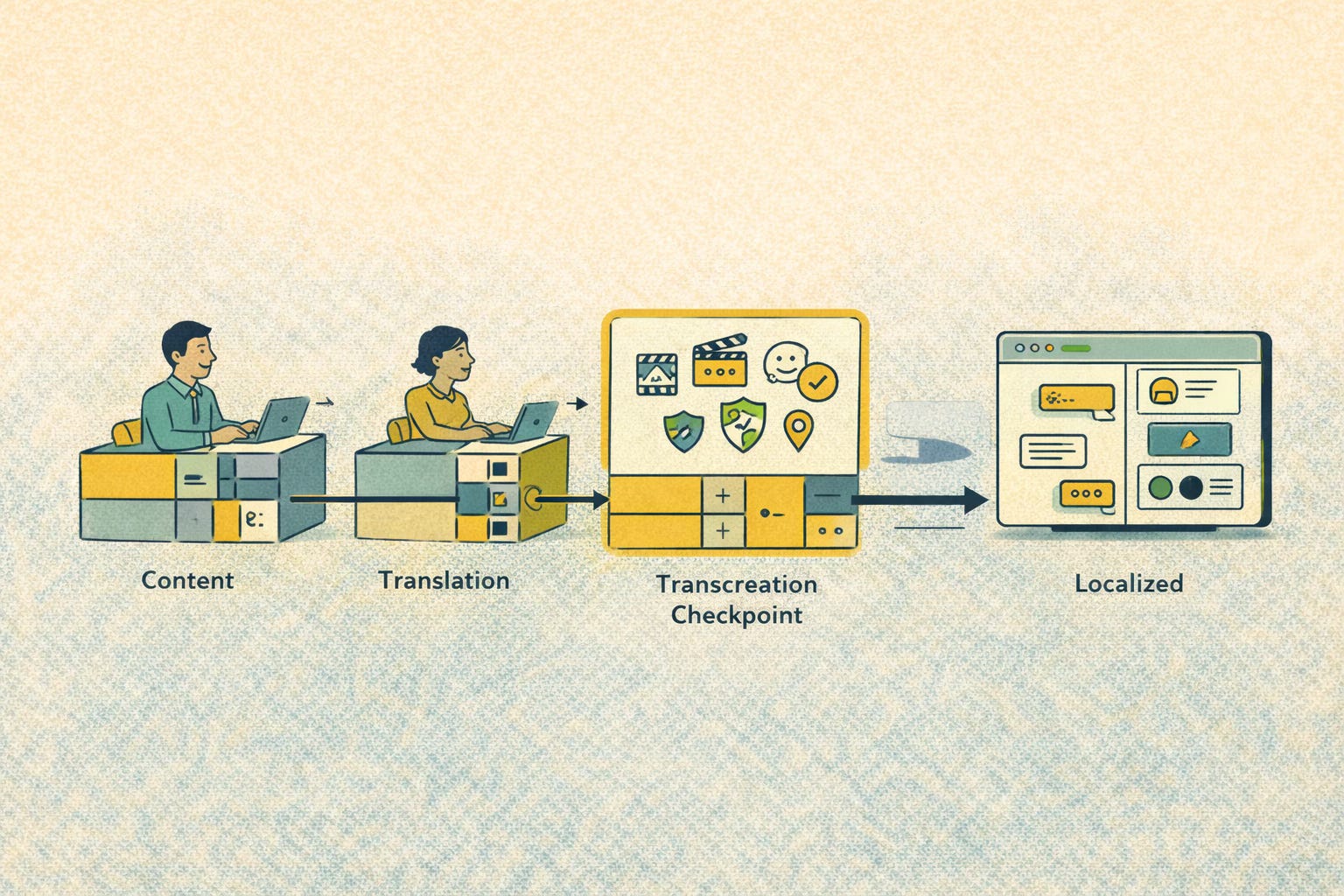
If you want a simple workflow, add a transcreation checkpoint to your content pipeline: flag high-risk strings (taglines, CTAs, UI prompts, safety messages), provide a short “intent note” for translators (“what this should make the user think/feel/do”), and require an in-market review for connotation and cultural collisions. That extra step costs far less than shipping a “correct” translation that creates the wrong meaning. 🤠
Why use term "transcreation," if there is already a term "localization"?