

There are few phrases in the world of technical communication more durable, more tidy, and more completely short-sighted than this one: metadata is data about data.
People say it with the calm confidence of someone handing you a brochure at a hotel check-in desk, as though the matter has now been settled. But the minute you try to apply that definition to real work, it falls apart. It doesn’t tell you why metadata matters, what it does, or why so many systems turn feral when metadata is missing.
It just sits there, sounding official.
For tech writers, that definition is too lazy to earn its keep. Yes, metadata is, technically, information about other information. Fine. So is a Post-it note that says “important,” and nobody’s building a content strategy around that.
What metadata actually does is far more useful. Metadata tells systems and people how to understand, sort, trust, filter, reuse, and deliver content. It gives content context. It makes important distinctions visible and helps us determine what a piece of information means, who it applies to, when it should appear, and whether anyone should rely on it in the first place.
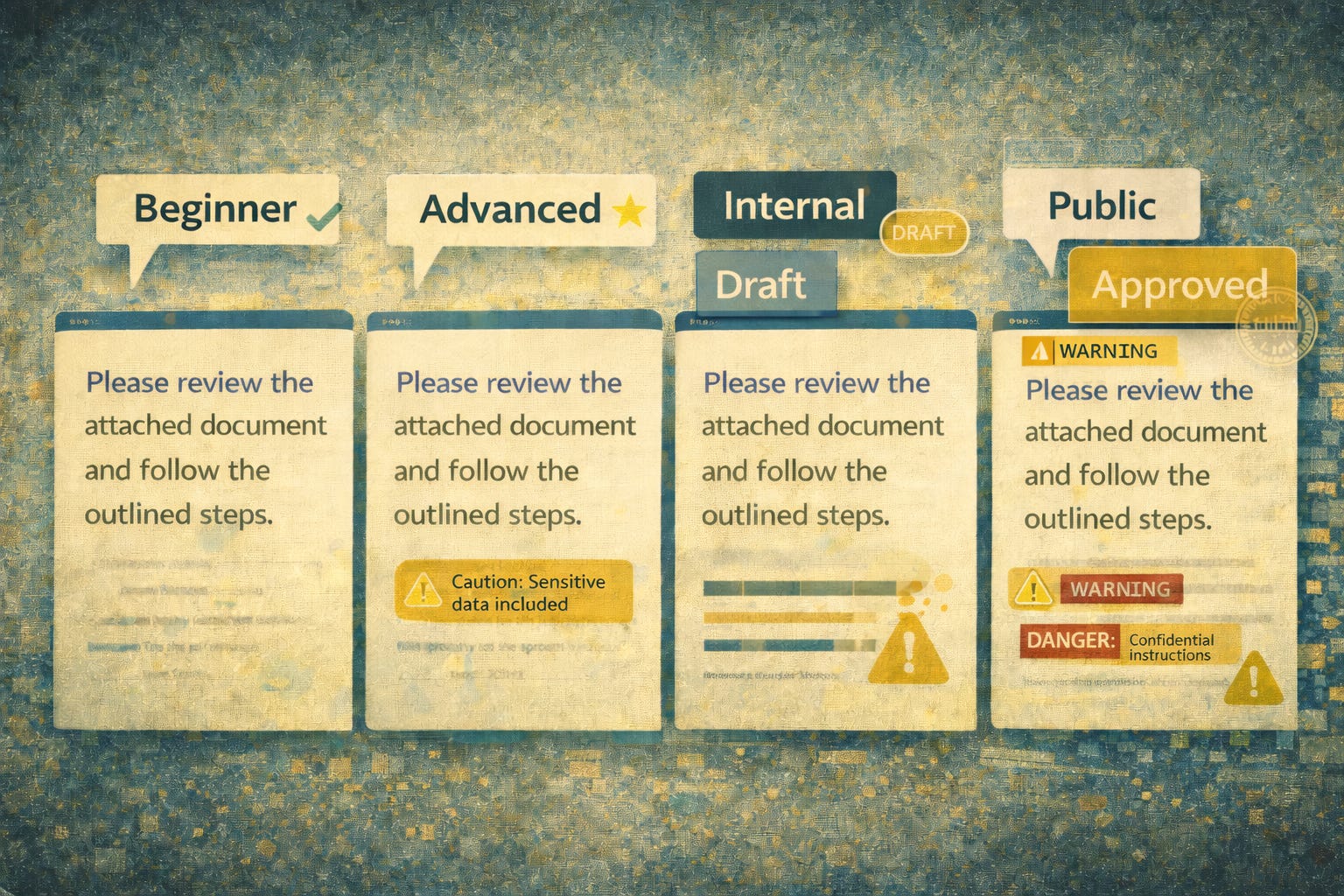
Metadata Examples
A title is metadata. So is version number, audience label, status (e.g., draft, approved, or obsolete), security classifications, region tags, content types, languages, and indications that something is a warning (or caution or danger — all slightly differnt things) rather than suggestions.
In other words, metadata doesn’t just describe content from the outside like a museum placard beside a painting. It helps content function. It tells the machinery what this thing is and what should happen next.

That matters even more now because machines are increasingly part of the audience. Search engines, recommendation systems, chatbots, and AI-powered answer tools don’t read with human intuition. They don’t squint at a paragraph and think, “Ah, this seems to be meant for administrators using version 4.2 in regulated environments.” If that info isn’t explicit, the machine may not treat it as real. And then everyone gets a beautifully worded answer assembled from the wrong parts, which is always exciting in the least fun way possible.
This is why the old definition feels so flimsy to me. It makes metadata sound optional, academic, even decorative. In practice, metadata is operational. It’s the layer that helps content behave properly. Without it, our documentation may exist, but it won’t work nearly as well as it should or could. It becomes harder to find, more challenging to govern, nearly impossible to personalize, challengng to reuse effectively, and much far easier to misuse.
So no, metadata is not just “data about data.” Metadata is the information that makes content usable in the systems upon which we rely to do our work. It’s how we make context explicit — which is how we help people and machines know what they’re looking at and what they should do with it.
Yes, that’s a much less catchy definition, I realize. But unlike the old one, it might actually be worth something. 🤠