

One of the books that’s been rattling around in my head lately is World Wide Waste: How Digital Is Killing Our Planet—and What We Can Do About It by Gerry McGovern.
If the phrase “killing our planet” immediately caused you to mutter something about alarmists, hang with me for a minute.
Patrick Bosek and I invited Gerry to be a guest on our talk show, Coffee and Content, in 2023 to discuss digital waste, content management, and the hidden environmental costs of the information organizations create and store. Gerry isn’t interested in scoring political points. He’s interested in waste, and he makes his case with research.
As it turns out, unused slide deck presentations don’t care who you voted for. 😎
One statistic in this book stopped me. McGovern argues that as much as 90 percent of digital data is never used. In an interview with Nexer Digital, his advice was simple:
“If you have data that you no longer need that is stored on your phone or laptop, get rid of it.”
In a separate conversation with Silicon Republic, he put the underlying problem more bluntly:
“Digital is not green. Digital is electrical, meaning that everything we do in digital consumes energy and creates pollution.”
I remember nodding along when Gerry talked about this during our interview. Then I spent the next couple of years faithfully preserving slide deck presentations I hadn’t opened since before the Obama administration.
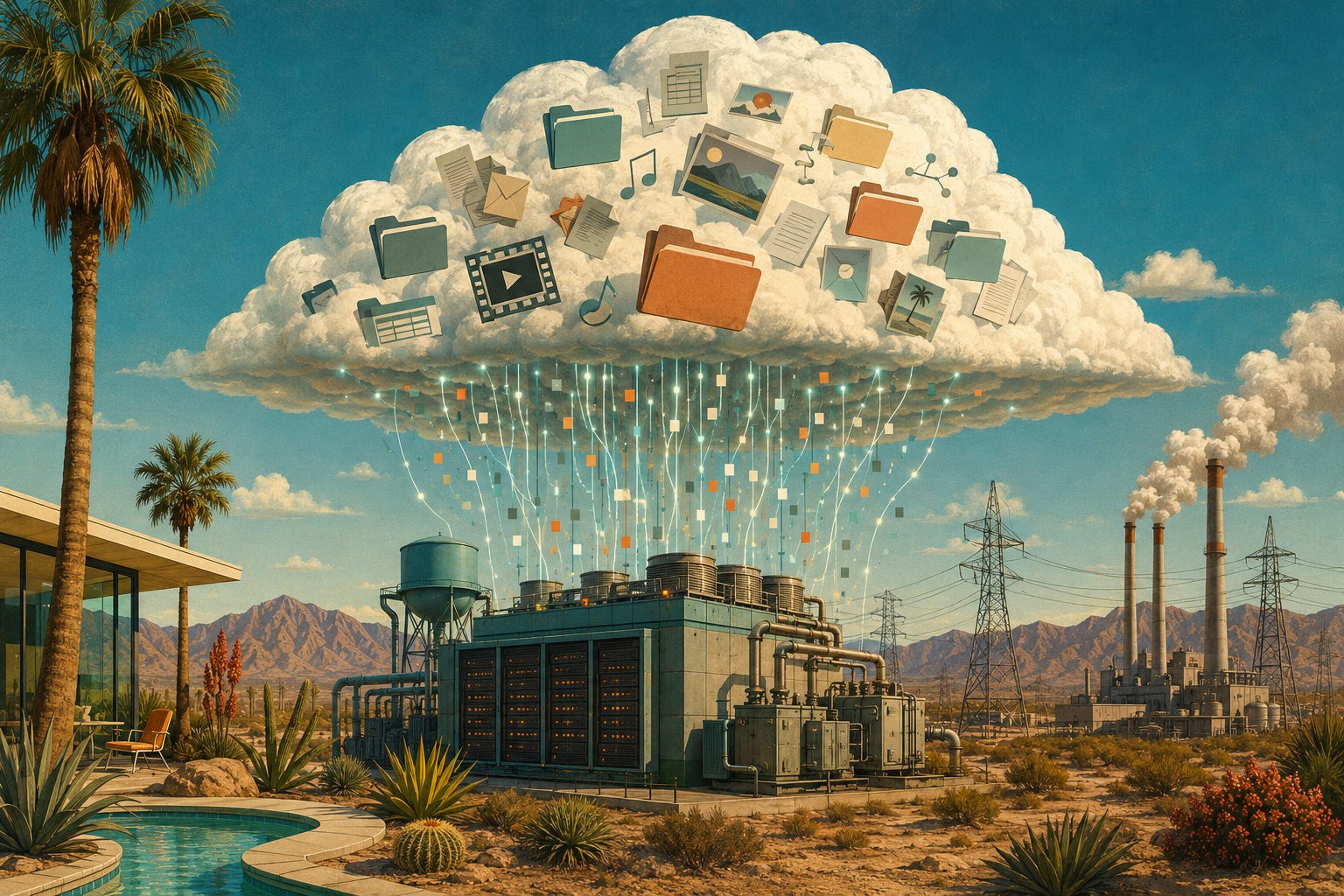
The Cleanup
Eventually I decided Gerry deserved at least one obedient reader. 😎 So I started cleaning: old hard drives, cloud folders, archived conference materials, photographs, music, presentation decks I’d accumulated over the better part of three decades. My goal was simple — delete the ones nobody would ever miss and stop contributing quite so enthusiastically to the digital landfill.
Like most cleanup projects, this one wandered off the original assignment.
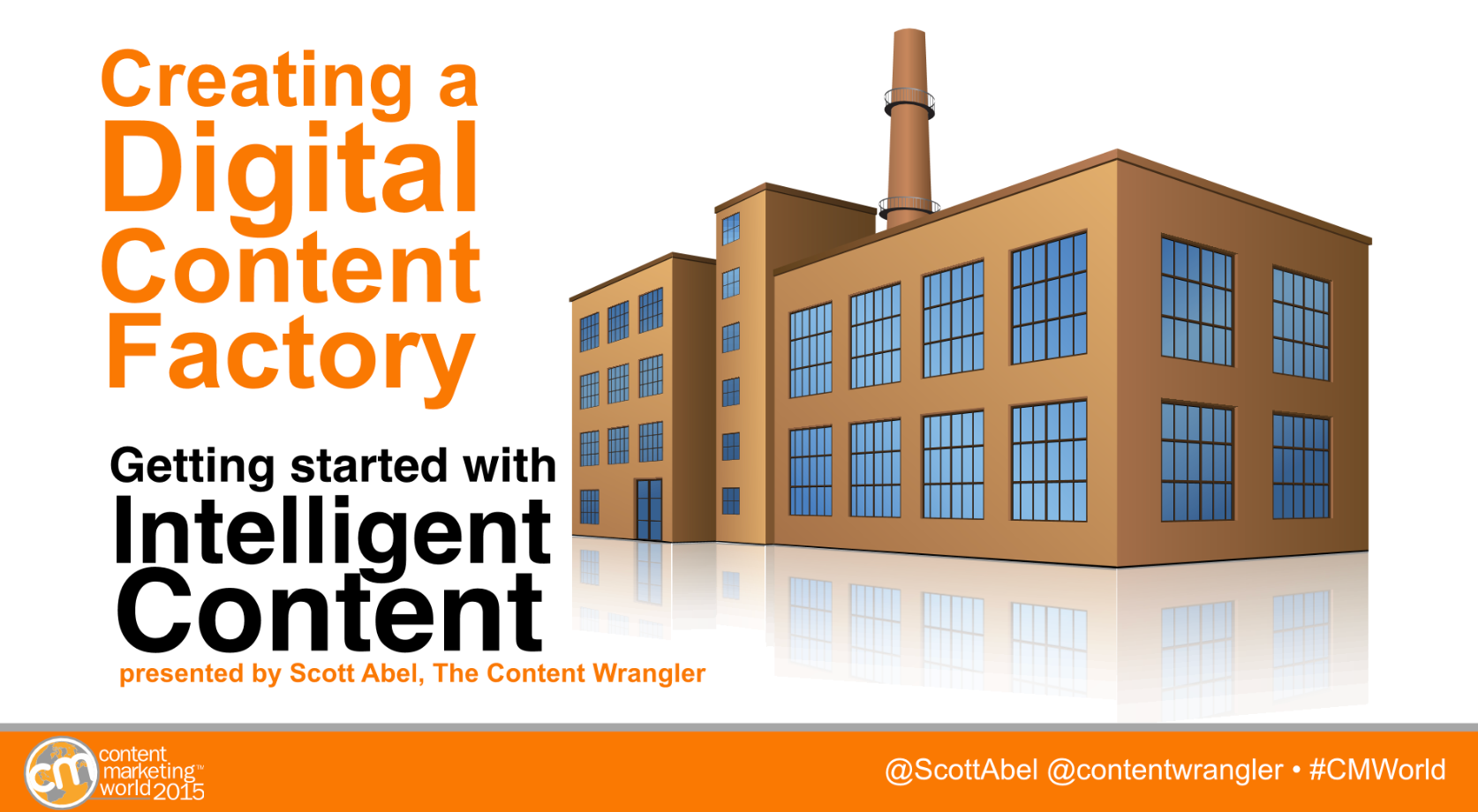
I found a 2013 talk from tcworld India called “It’s All About Structure,” a September 2015 Content Marketing World session in Cleveland called “Creating a Digital Content Factory: Getting Started with Intelligent Content,” and a 2017 Meetup talk in San Francisco I delivered called “The Cognitive Era and the Future of Content.”
Different years, different audiences, different vocabulary. Opened side-by-side, none of them were about content, really. They were about whether an organization could keep making sense of what it knew as the volume of what it knew kept growing.
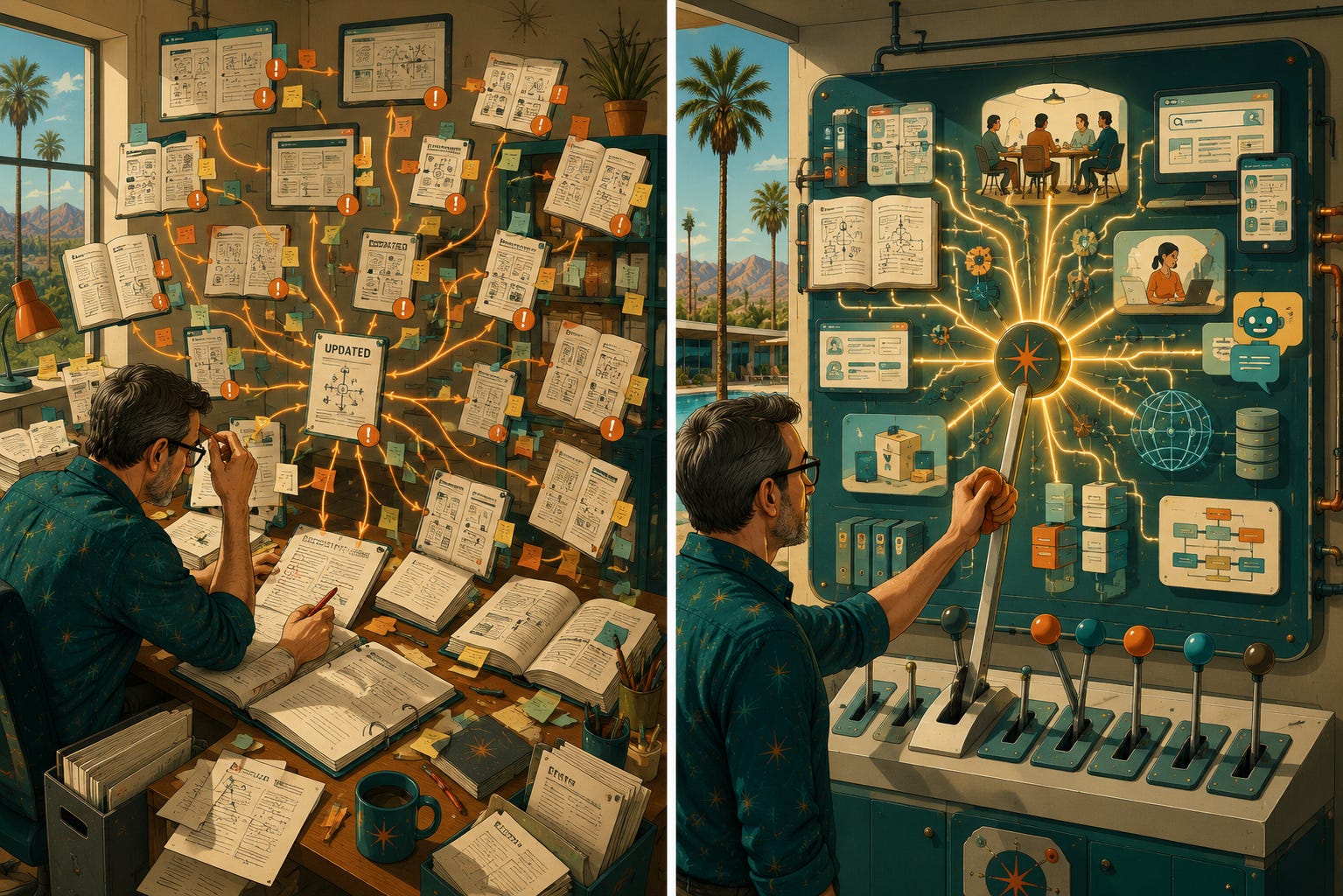
The Scalability Problem
One of the oldest presentations took me back to work I did with the “mother of content strategy,” Ann Rockley, at a pharmaceutical company. For years I’ve described that project as documentation work. Looking at those old slides, I’m not sure that’s the best description anymore. The docs weren’t even the actual problem. The business kept changing, and the information had to change with it just to stay accurate. That’s not a writing problem.; it’s a scalability issue.
The 10x Lens
A few years later, another influence sharpened the question. In 2018, I joined OpenExO as Interim Director of Content. The organization was founded by Salim Ismail, whose work on exponential organizations was built around a simple provocation: stop asking how to get 10% better and start asking how to get 10 times better. Patrick and I later interviewed Salim on Coffee and Content, and through that work I found myself reading Peter Diamandis, Ray Kurzweil, and others writing about exponential growth.
Most of those conversations were about organizations scaling exponentially. Mine kept drifting toward information. If a company could get 10 times better, could its knowledge? Could the systems it used to create, store, and make sense of information grow the same way — without quality, meaning, and trust collapsing under the weight of it?
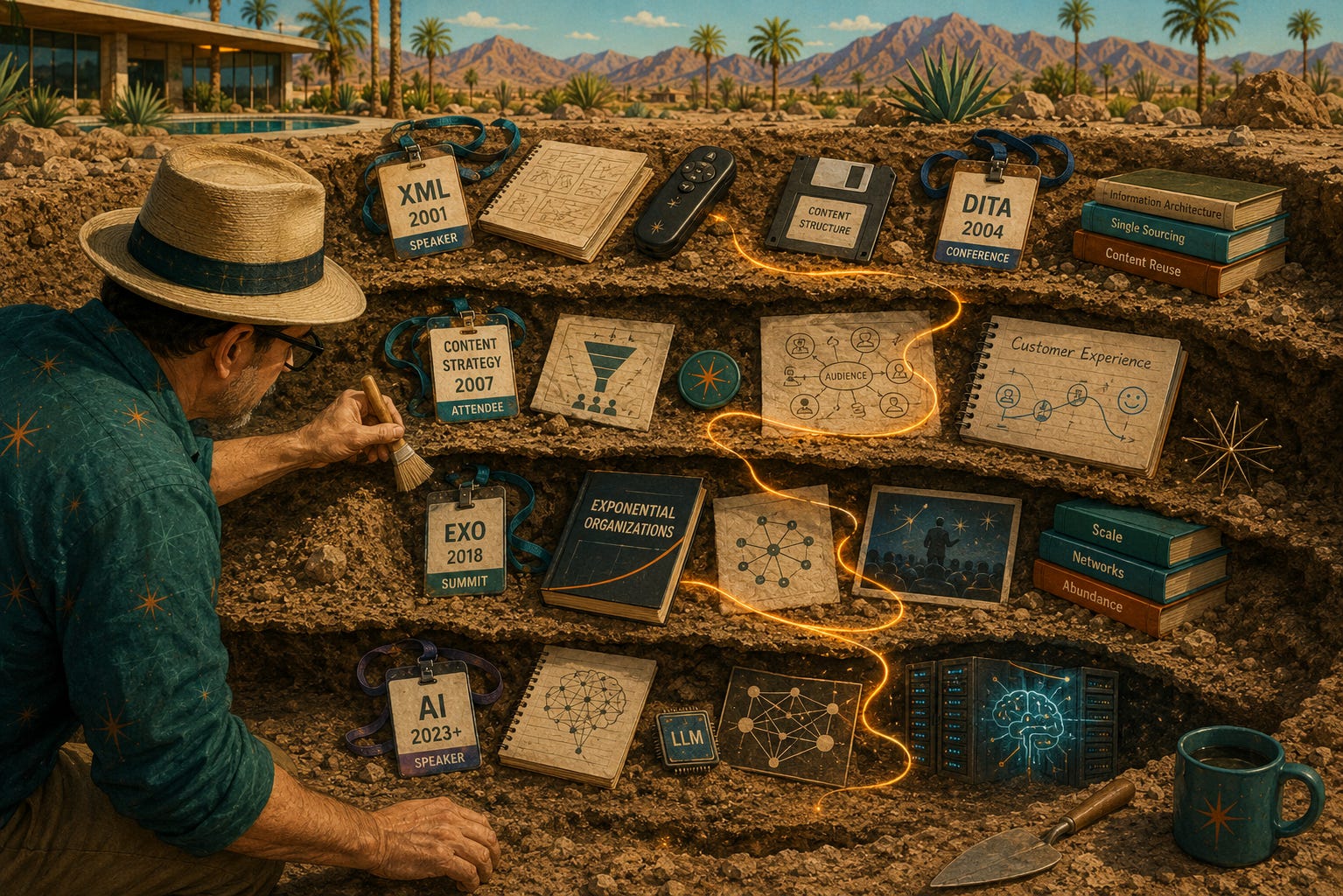
The Same Question, Different Vocabulary
I thought my career had moved through a series of different subjects: structure, marketing, customer experience, exponential organizations, and now AI. The old slide decks showed me something else. I’d been examining the same scalability problem from different angles the whole time.
I started that afternoon trying to reclaim a little storage space. What I found instead was a paper trail showing the same question asked in different vocabularies, going back further than I’d realized.
Why It Matters Now
That’s probably why AI has never felt like a dramatic career pivot to me. I was calling it “the cognitive era” back in 2017, when most of the industry was still talking about big data.
For twenty-five years, I’ve been asking how organizations can scale the production and use of information without letting quality, meaning, and trust collapse. AI didn’t create that interest. But it certainly expanded the audience for the information, and it raised the stakes.
A machine reasoning over inaccurate or ungoverned documentation doesn’t just produce one bad answer for one person. It produces the same bad answer for everyone who asks, instantly, at scale.
I don’t know that I’ll ever stop asking that question. 🤠
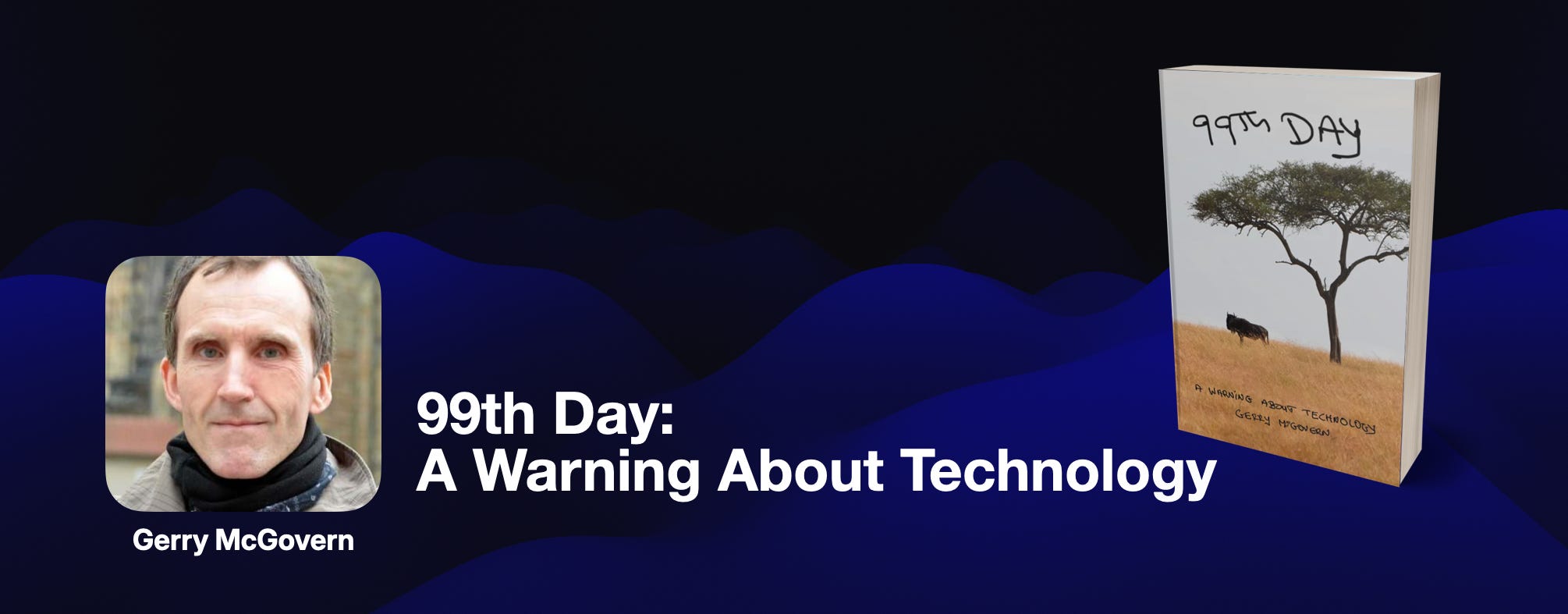
In his most recent work, 99th Day: A Warning About Technology (February 2026), Gerry McGovern examines the human and environmental damage hidden beneath our digital economy. Through research and stories from affected communities, he connects AI, data centers, cryptocurrency, mining, and electronic waste to a culture of unchecked growth and extraction. The book challenges promises of a “green” technological future and asks what must change if we’re to leave a livable planet for future generations.
Excellent insight and a hurry-up for me. At 86 I have a new policy which I'm implementing step by step. As I cull redundant files, I'm also curating a few essential folders for my digital executor when the time comes. Pretty soon, everything else can go. I try to identify active files. My computer has numerous Trash Soon folders that get emptied faster and faster. A simultaneous hard drive and backup crash taught me that truly important things like a current playscript exist elsewhere.
I've been using Claude Cowork to merge multiple archives, organize folders, and delete as much as possible. I think this is one of the boons of AI ... clear out digital waste.
Of course, it must be done carefully. 😆