

There are few corporate experiences more spiritually enriching than being asked to produce accurate technical documentation without access to the people who know how things work. It’s one of modern work’s great faith-based initiatives.
Some writers still cling to the quaint idea that documentation should be based on facts. These people are precious. They still believe “collaboration” means talking to engineers instead of receiving a vague ticket, two screenshots from a deprecated build, and a cheerful note from product saying, “This should be pretty straightforward.”
Straightforward. Ha! A marvelous word, usually deployed by someone who won’t be doing the work.

If we want to build a truly world-class documentation set without ever speaking to a subject matter expert, we must release ourselves from outdated burdens such as certainty, verification, and dignity.
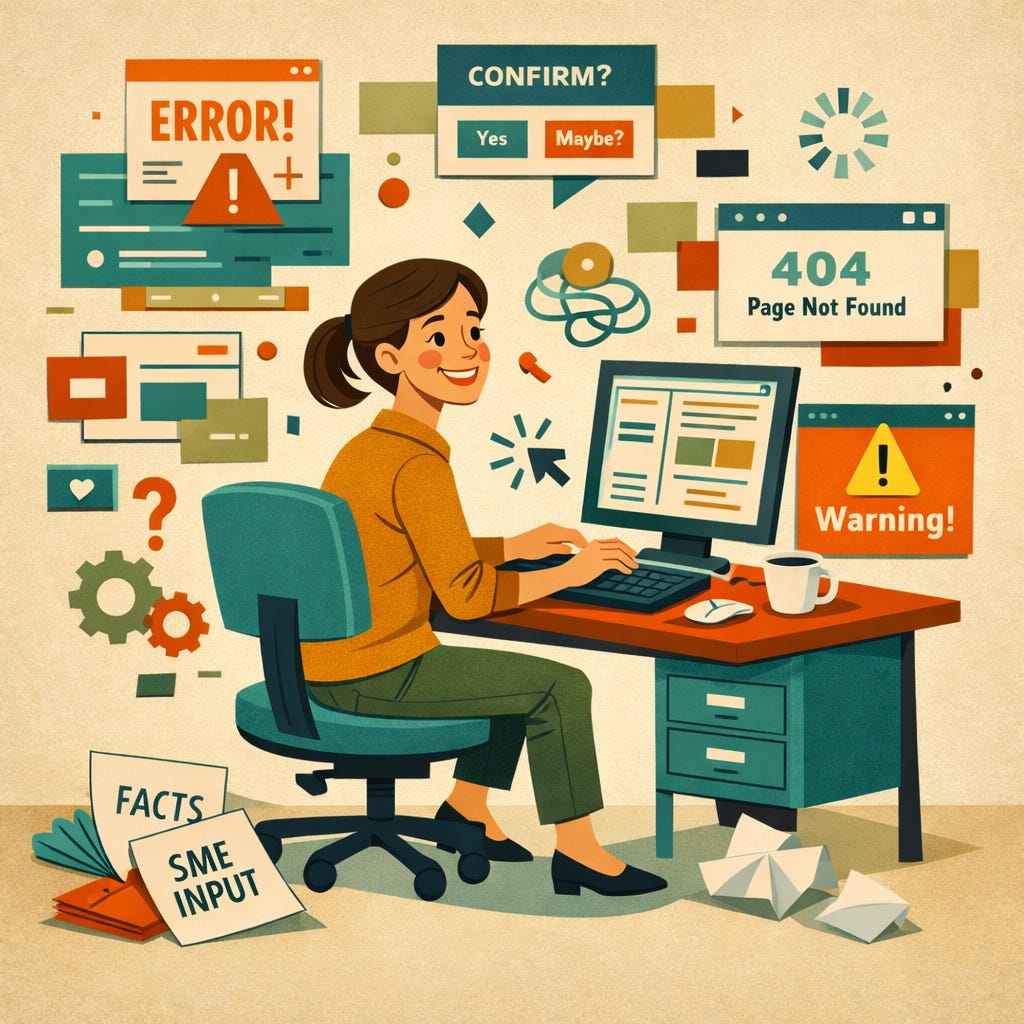
Start With The Interface And Your Imagination
Open the product and begin clicking around with confidence. Not knowledge. Confidence. If a panel opens, document the panel. If an error appears, document the happy path anyway. Users enjoy optimism.
Don’t ask what a feature is supposed to do. That only invites facts, and facts are where timelines go to die. Instead, infer the product’s business logic from button labels, breadcrumbs, and whatever happened when you clicked Save. Think of yourself as an archaeologist reconstructing a civilization from a broken spoon and a warning message.

Use Old Screenshots Proudly
A lesser writer might insist on current screenshots because the interface has “changed completely” and “no longer resembles the documentation.” This sort of perfectionism is why projects slip.
Old screenshots have stability. They come from a simpler time, before someone moved every important function behind an unlabeled icon shaped like a nervous hexagon. If users can’t find the button, they will at least enjoy the thrill of personal discovery.
Documentation shouldn’t rob people of adventure.
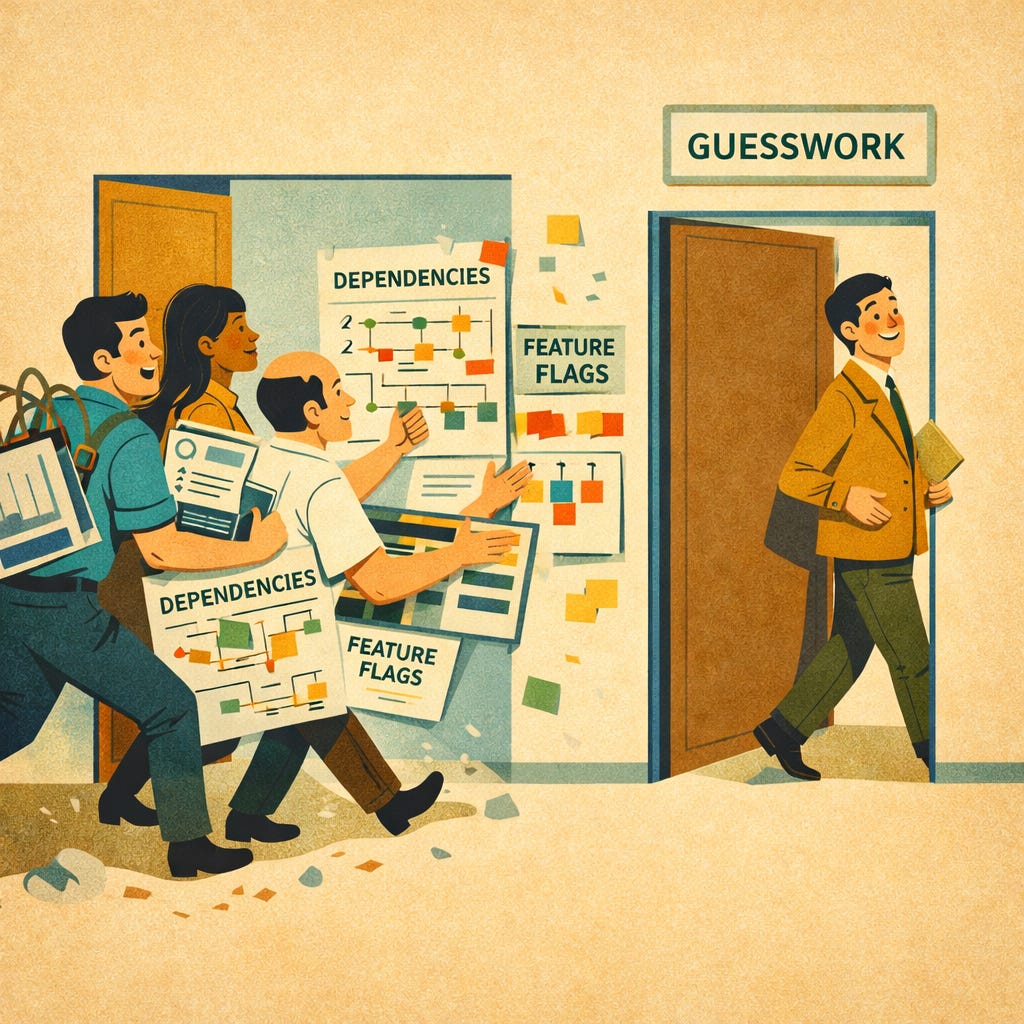
Replace Interviews With Elegant Guesswork
Subject matter experts are forever cluttering the conversation with exceptions, dependencies, permissions, and other deeply inconvenient realities. You ask one innocent question and suddenly someone is explaining feature flags, environment variables, and why the workflow only succeeds if Mercury is in retrograde.
This is exhausting.
A better approach is strategic vagueness. Phrases like “if applicable,” “depending on your configuration,” and “contact your administrator” can carry astonishing amounts of institutional confusion. Passive voice helps too. “The necessary updates are made” is a lovely sentence because it avoids the awkward question of who, exactly, makes them.
Assume Every Workflow Is Linear and Beautiful
Real systems are messy. They branch. They fail. They depend on roles, conditions, approvals, and obscure prerequisites no one mentioned until the second draft. Subject matter experts love these details. It gives them a reason to live.
You, however, are writing world-class documentation. Your workflows should glide forward with the serene confidence of a swan and none of the frantic paddling underneath. The user clicks Save. A confirmation appears. Everyone is transformed.
Leave out the part where the integration token expires and the customer needs a permission no one knows how to grant.
Reuse Old Content As Sacred Text
Nothing speeds production like copying last year’s guide and changing only the nouns that now seem litigious. If the old content refers to menus that no longer exist or terminology abandoned three reorganizations ago, keep it. Legacy language builds character.
Some say outdated content erodes trust. I say it teaches users resilience.
Skip Meaningful Review
You could ask knowledgeable people to review the documentation, but that would require knowledgeable people to reply. Far better to send the draft to twelve stakeholders, give them two business days, and treat silence as approval. If someone complains later, note that the review window was open.
This is not blame redistribution. This is process maturity.
Be Wrong With Confidence
Above all, never sound uncertain. State everything firmly, as though the workflow has been handed down on stone tablets from the mountain of Product Truth. Users may forgive an incorrect step. They will not forgive hesitation.
And that, really, is the secret. Great documentation without subject matter experts is not about accuracy. It is about posture.
Of course, outside the spirit of April Fool’s Day, the truth is painfully obvious: good documentation requires conversation, verification, and access to the people who actually understand the product. But for one glorious holiday, we may honor the fantasy that screenshots, vibes, and nerve are enough.
They are not. But it is a charming delusion.🤠
Scott, this piece is sheer brilliance. It resonates for me particularly because I was recently (I believe the term is) released from a project after one month for planning to do requirements by interviewing those pesky SMEs.
And for writing requirements as user stories ! I must have had rocks in my head.
But the former client’s project manager (and I use the term loosely) elected to go with an external firm who are experts in corporate consulting MSU (make sh1t up) technology.
These folks also promised to have the requirements completed by yesterday or sooner.
So I’m eternally grateful for your sage advice. I have learned my lesson. 🤣