

If you’re a tech writer (if you’re reading this, chances are pretty good that you are), you’ve probably noticed a change over the past year in how we talk about AI. Previously, most conversations about AI focused on prompt engineering, productivity hacks, and future-predictions about whether AI would replace writers or not. Those conversations are. certainly important, but they’ve taken a back seat to more practical questions like:
👉🏾 How do we create content AI can reliably understand?
👉🏾 How do we reduce hallucinations?
👉🏾 How do we ensure AI-generated answers are accurate, trustworthy, and consistent?
👉🏾 How do we adapt the practices we’ve spent years developing (structured authoring, taxonomy, terminology management, content reuse, and governance) to an AI-powered world?
For the uninitiated, Lavacon is the annual conference on content strategy and technical documentation management.
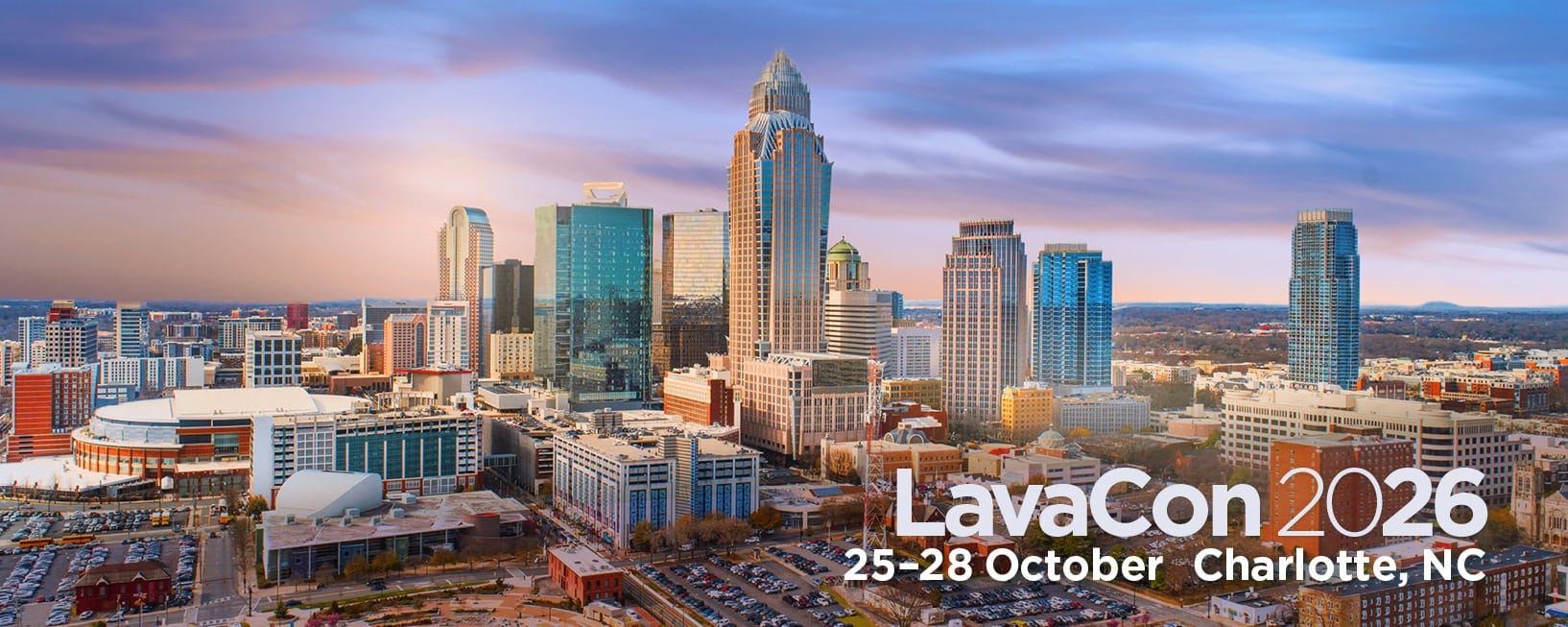
This year the conference offers an AI track built around the theme “From Experimentation to Execution: Scaling AI in Content Ops.” While the title references content operations, the sessions themselves are highly relevant to tech writers, regardless of whether they are involved in operational decision-making. In fact, many of the presenters at this year’s event will explore techniques and tactics technical communicators have been practicing for decades, and they’ll explain why those skills have become even more valuable as organizations attempt to deploy AI.
Tech Writers Already Possess The Skills Required To Produce AI-Ready Documentation
One of the strongest messages running through this year’s conference program is that trustworthy AI depends on well-managed content.
Lavacon offers sessions on governed vocabularies, ontologies, taxonomy, structured authoring, workflow management, content modeling, terminology management, content reuse, and global content. Most of these topics aren’t new to tech writers. What’s important to note in today’s fast-changing technology landscape is that these tried-and-true tech writer capabilities are also core competencies that are essential building blocks for trustworthy AI.
A few sessions of interest:
Brendon Paucek, Senior Content Strategist at Teradata, will show how organizations can establish governed vocabularies and ontologies using tools they already own
Rob Hanna, CEO of Precision Content, will explain why moving from long topics to modular microcontent makes DITA more AI-ready
Christi Guzik, Lead Content Operations Manager at Rocket, will discuss building scalable taxonomies
Collectively, these presenters make an important point: AI doesn’t eliminate the need for structured content. It raises the value of producing it well.
LavaCon 2026 runs October 25–28 in Charlotte, North Carolina, with both in-person and virtual attendance options. It’s the 24th year of a conference built around one idea: helping content professionals reduce costs and generate revenue using state-of-the-art publishing technologies.

AI Is Changing How We Produce Docs
Lavacon also helps attendees better understand the AI tools landscape. And, more importantly, that AI platforms aren’t fully-fledged content creation and management tools. They lack the governance, workflow, quality assurance, localization, publishing, and cross-team collaboration capabilities that documentation teams rely on to get work done right.
Here’s a few of the presenters to check out:
Dawn Stevens, President of Comtech Services, will look at why organizations need operational maturity before scaling AI.
Luis Fernandez, Executive Director at VML, will argue that poor content models (not content management systems) often are the biggest obstacle to AI adoption
Karen Brothers, Content Manager at Scott Safety, will discuss what it takes to build an AI-ready content culture
Amanda Patterson, Senior Consultant at Comtech Services, will examine what organizations can learn from human resources when managing AI agents
Taken together, these sessions move past the novelty of AI and into the operational realities of adopting it responsibly.
Our Docs Are The Knowledge Layer For AI
Perhaps the biggest difference between this year’s program and those of just a few years ago is the number of sessions devoted to AI agents. Rather than asking whether AI agents are useful, presenters are showing how to build them, support them, and supply them with trustworthy knowledge.
Highlights include:
Emma Pindera, Content Strategist at PointClickCare, presents Creating Content AI Agents That Actually Work
Patrick Bosek, CEO, Heretto and Megan Gilhooly, Sr. Director Global Content & Intelligence, OneTrust, present Beyond the Bot: How Structured Content Drives an Agentic Ecosystem Across Your Entire Content Stack
Aman Goyal, Agentic AI Product Manager at T-Mobile, presents Show Me the Agents! Decision Framework for Content Operations AI
Theresa Daudier, Senior Knowledge Management Engineer at ServiceNow, presents How ServiceNow Used Agentic AI to Reduce Costs and Improve Customer Experience
For tech writers, these sessions reinforce the emerging reality of our profession: our docs are no longer consumed only by people. Increasingly, they’re the trusted knowledge that AI systems retrieve, interpret, and use to answer customer questions.
Trust Matters
If there’s one word that appears repeatedly throughout the schedule, it’s trust.
Speakers explore how organizations can reduce hallucinations, verify AI-generated knowledge, improve translation quality, manage terminology, and preserve human oversight.
Klaus Fleischmann, CEO of Kaleidoscope GmbH, presents, Terminology: The Clever Cure for Hallucinations
Kay Conerly, Director of Content Strategy at McGraw Hill, presents, Maintaining Trust in the AI Era: The Enduring Value of Human Expertise in Content
Ben Cohen of Localize and Nick Wyatt of Aras, present AI Translation in the Real World: Lessons from the Team at Aras on Building Scalable Global Content Workflows
Sandi Markle of Blueberri, presents, Structure Starts with Trust: Building Cultures That Support Content Systems
These sessions recognize that trust isn’t created by technology alone. Instead, it it earned when we produce well-designed information.
What Skills Will Matter Most?
That question is likely on the minds of nearly all LavaCon attendees. The opening keynote speakers topic selection illustrate how much expectations are changing.
Maria Romanovsky, Director of Content Design and Strategy at TikTok, presents AI Didn’t Replace You—It Promoted You to Manager
Keith Boyd, Senior Director at Microsoft, presents Content is Still King: Thriving in the Era of AI
Half-Day Training Workshops
In addition to presentations, Lavacon also offers optional pre- and post-conference workshops (for an additional fee).
2026 Workshops
Daniel Schomer, How to Build a Content Governance Model
David Hobbs, Effective Content Inventories and Analysis
Susan Kelley, From Notes to Knowledge: Learning Faster with Notebook LM (An Interactive Lab for Communicators)
Gaetan Chretiennot, The “Translate” Button is a Trap: Mastering Translation Risk in an Era of Generic AI
Sarah Johnson, Operationalizing the Content-First Framework: Diagnose Meaning Drift, Align Teams, and Scale Content with Confidence
Carol Hattrup, They Already Sent a Poet, and It’s You!
Leann Long, MythBusters Lab: Let’s Test What Really Works for Remote Content Teams
Rebecca Schneider, Creating Taxonomies for Your Organization in the Age of AI
Melanie Davis, Tech Stack Lift-and-Shift: A Tag-Team Approach to Success with Limited Resources
Dipo Ajose-Coker, Inclusive Content In The AI Era: Bias, Culture, And Who Gets Left Behind
Rhyne Armstrong, From Shadow to Servant: Confronting the AI Beast
Amanda Patterson and Brianna Stevens-Russell, Stop Building Bots. Start Hiring AI Employees: How HR Thinking Makes AI Agents Safer, Smarter, and Easier to Manage
Why I’m looking forward to LavaCon
What excites me most about this year’s program is that it reflects where our profession is today.
We’re no longer being asked whether we should pay attention to AI. We’re being asked to help our organizations make AI work. That’s a very different challenge, and it calls on many of the capabilities technical communications pros have spent years refining: creating clear, structured, high-quality, reusable, well-governed content that people can trust.
If you want to see how those skills are being applied across organizations like yours, LavaCon 2026 offers an exceptional opportunity to learn directly from the people doing the work.
LavaCon 2026 runs October 25–28 in Charlotte, North Carolina, with both in-person and virtual attendance options. It’s the 24th year of a conference built around one idea: helping content professionals reduce costs and generate revenue using state-of-the-art publishing technologies.
Register at lavacon.org, and use discount code TCW at checkout to save 10% on the cost of registration.
I hope you’ll join us in Charlotte this October. I look forward to seeing you there. 🤠
Thanks for the mention! It's going to be a great conference!
Thanks for the mention! Excited to be there! 😊