

If you work in tech docs, you’ve probably heard of Docs-as-Code, the idea that documentation should be created, managed, versioned, and maintained with the same discipline used for software source code. More recently, you may have run into Docs-as-Tests, the idea that documentation can be treated as testable code and automatically checked against a product so accuracy doesn’t depend on crossed fingers, stale screenshots, and somebody muttering, “I thought we updated that.”
Both are real. Both are useful. Both sound like they arrive at work on time. ⏰
Docs-as-a-Hot-Mess is different.
👉🏾 It isn’t a methodology.
👉🏾 It isn’t a best practice.
👉🏾 It isn’t a movement anyone should claim in public.
It’s simply a label for a condition many organizations already have: docs produced by multiple internal groups, for multiple purposes, with multiple assumptions, and with no governing framework strong enough to reconcile any of it.
The naming convention is really the only thing these categories have in common.
They all start with “Docs-as-,” which gives them a faint air of professionalism, much like putting a blazer on a bad decision. But where Docs-as-Code suggests rigor and Docs-as-Tests suggests verification, Docs-as-a-Hot-Mess describes what happens when nobody’s clearly modeled the logic underneath the content and then acts surprised when an AI answer engine turns that confusion into customer-facing prose.
That’s why we need the term.
A lot of documentation that looked “good enough” in the old world isn’t ready for AI retrieval in the new one. A help topic written for support engineers sits next to an onboarding guide written for customers. A release note we produced assumes context the reader doesn’t have. A troubleshooting article we crafted skips the event that starts the workflow. A procedure we carefully worded says “the user” does something, but never explains which user, in what role, under what conditions, or whether the system was supposed to handle it automatically instead.
That isn’t guidance. That’s improv with screenshots.
And AI answer engines, bless their tireless little hearts, are very good at finding disconnected scraps, flattening their differences, and serving them back as one smooth, confident answer. Which is great when your content is governed, structured, and semantically clear. If it isn’t, the machine doesn’t fix the mess. It scales it. Publicly.
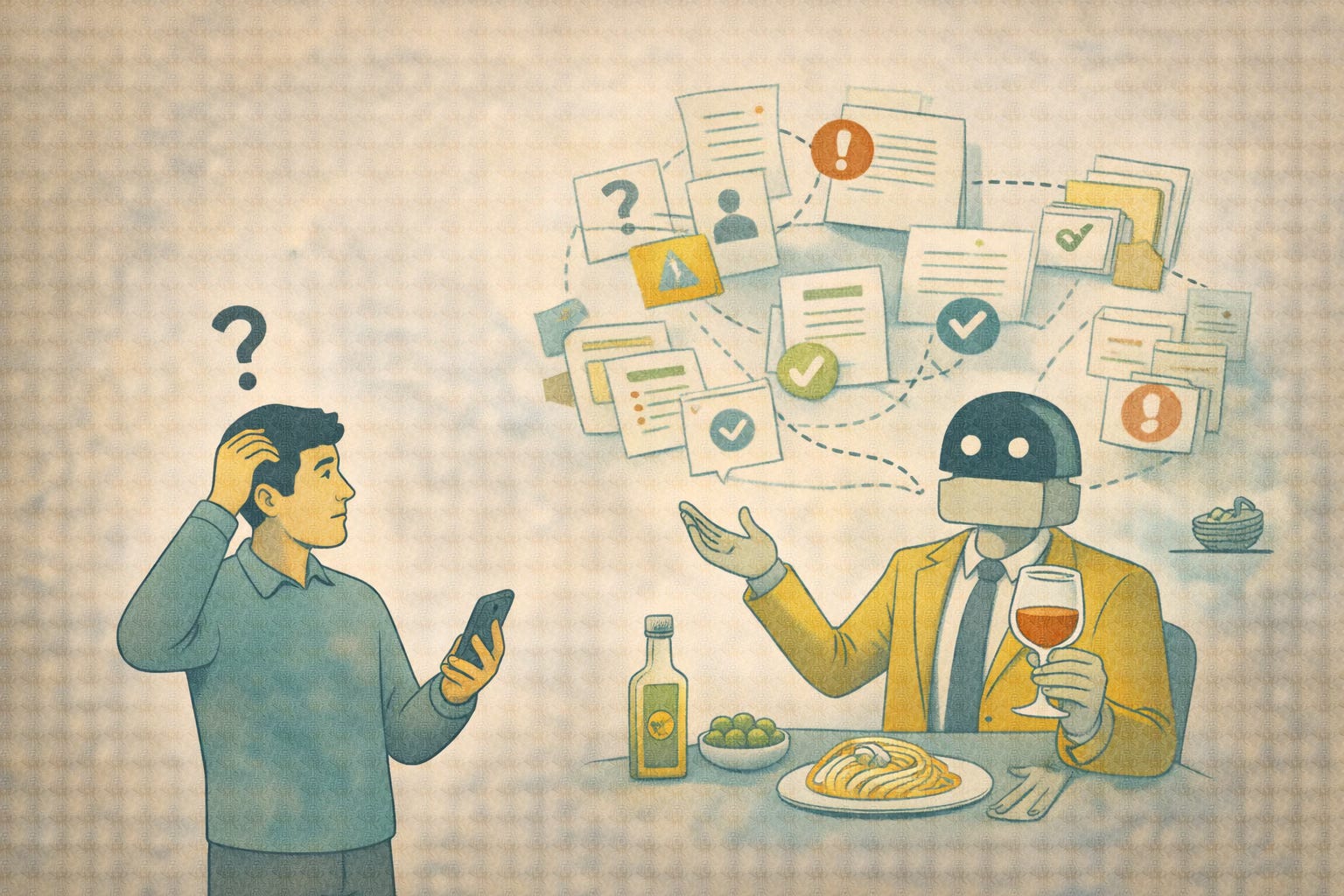
AI Didn’t Create Our Mess, But Turned On The Lights So We Couldn’t Help But See It
A customer asks a simple question. The AI assistant replies in seconds with the confidence of a man explaining olive oil at a dinner party. It has found a setup topic from the help center, a support note meant for internal use, a few release-note fragments, and an onboarding PDF that appears to have been updated during a period of low morale. It blends them into one polished answer. The answer is clear, direct, wrong in at least three ways, and just plausible enough to cause trouble.
This is usually the part where someone says, “Well, the AI hallucinated.”
Sometimes it did. But often it’s doing something worse and far more understandable: it’s retrieving exactly what you gave it.
