

[TL;DR] Findings from the 2026 AI In Technical Documentation Survey provide tech docs leaders a useful reality check: “AI adoption” is not the same thing as “AI operationalized.”
Your team may have plenty of AI activity — people experimenting, prompting, and sharing tips — while very little of it shows up in repeatable, governed production work. That gap is where leaders can create leverage.
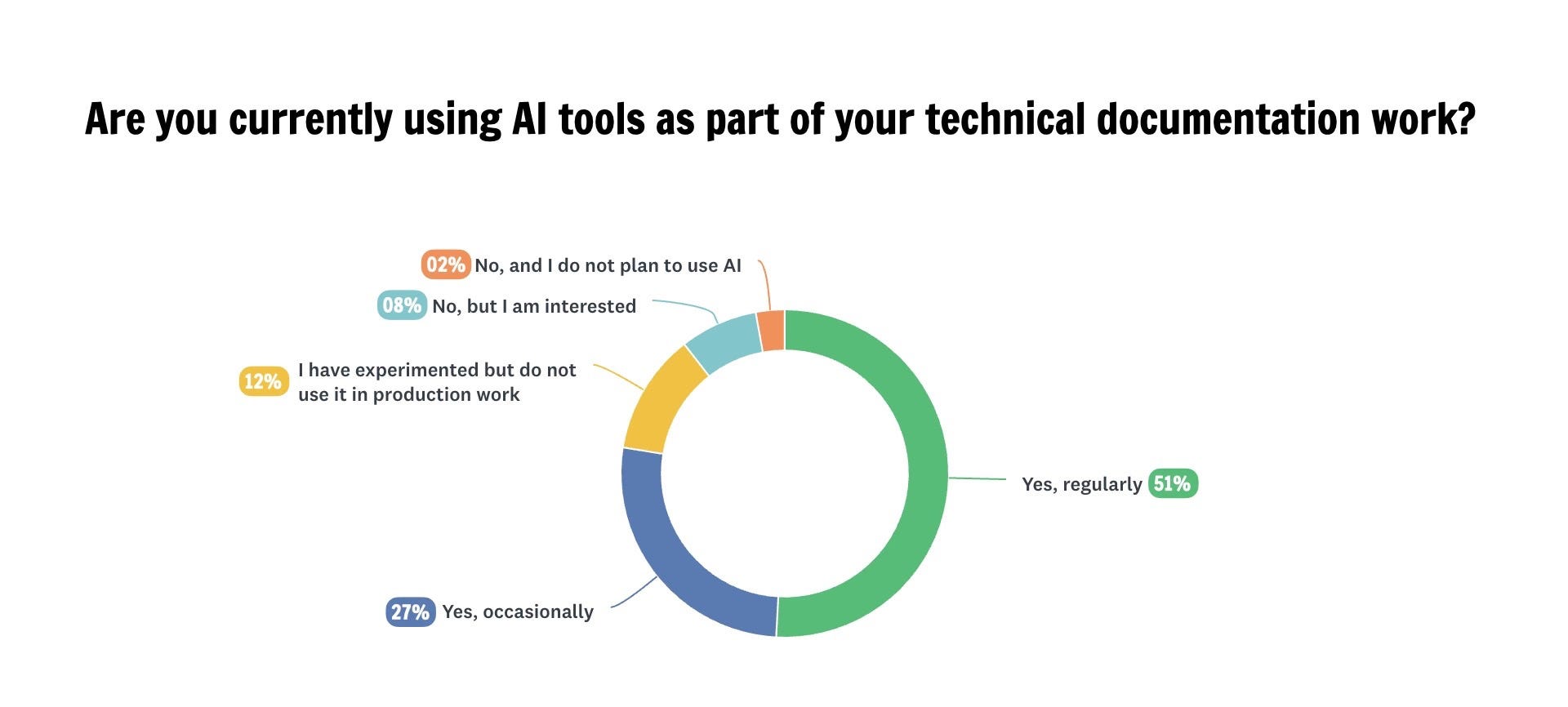
Are you currently using AI tools as part of your technical documentation work?
Respondents to the 2026 AI In Technical Documentation Survey were asked whether they were “currently using” AI tools in their tech writing work.
Here’s what we found
AI has already moved into the technical documentation toolbox in a big way.
78%% of respondents said they use AI either in production or as part of ongoing experiments
If you are not using AI at all, you are now officially “in the minority,” which is a weird place to be for a profession built on standards and best practices.
Nearly half of respondents (50%) use AI tools regularly, and another 27.76% use them occasionally
AI is no longer the quirky side project someone tries on a Friday afternoon when the build finally stops failing.
But the numbers also show a meaningful pause at the edge of real production dependence. About one in five respondents are not using AI as a true production tool.
12% are experimenting but not putting AI into production workflows, 8% are not using it yet but are interested, and 2% do not plan to use it at all
Bold stances in 2026 — like refusing to adopt spellcheck because you prefer the thrill of raw, unfiltered typos.
The takeaway is not “everyone is all-in.” It’s that many teams are still in the awkward middle stage: testing what works, figuring out what is safe, and negotiating where AI belongs in a process that already has enough ways to go sideways without adding a probabilistic text generator to the mix.
How Leaders Encourage AI Adoption
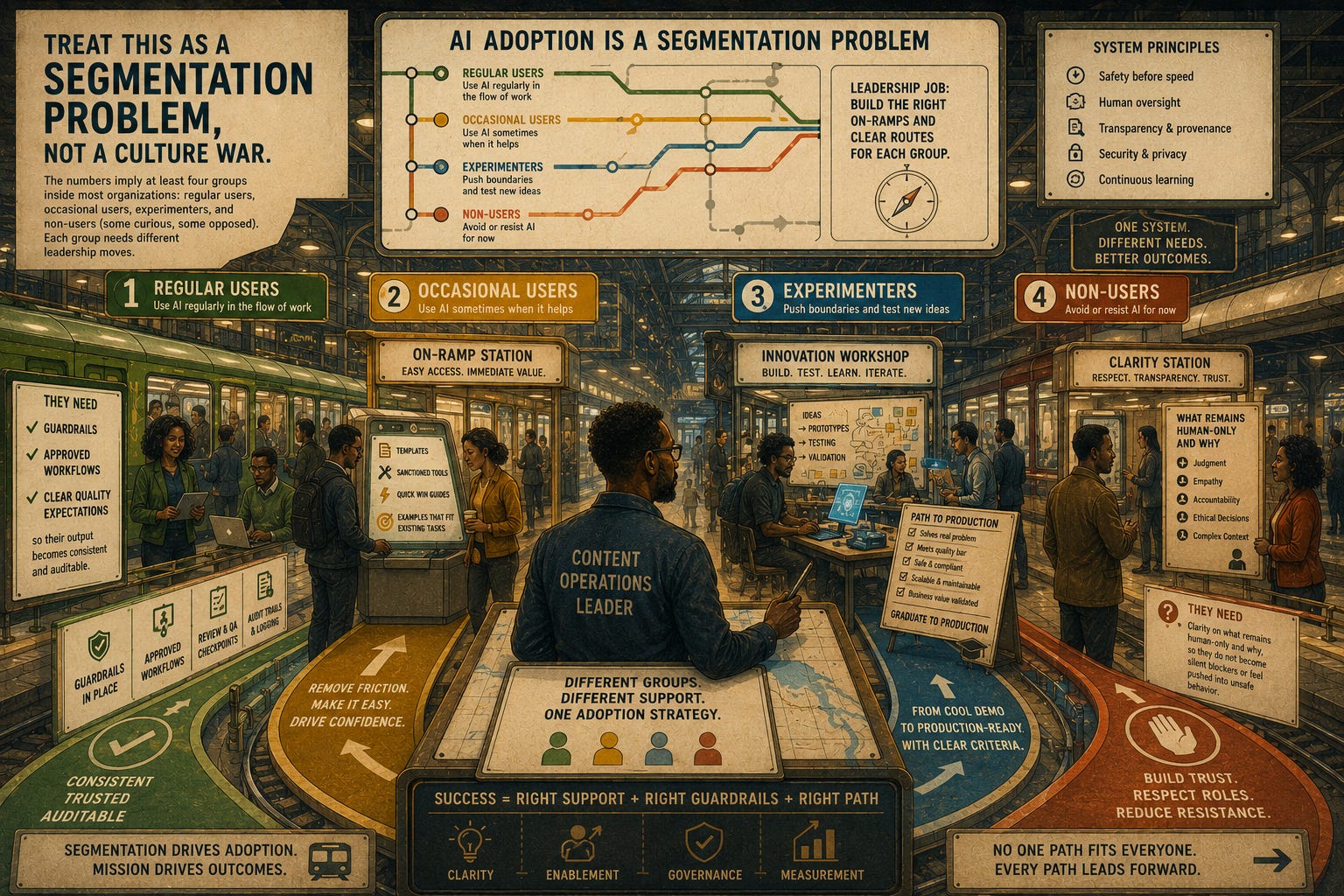
1. Recognize This Is A Segmentation Problem
The numbers imply at least four groups inside most tech docs organizations: regular users, occasional users, experimenters, and non-users (some curious, some opposed). Each group needs different leadership moves.
Regular users need
guardrails
approved workflows, and
clear quality expectations so their output becomes consistent and auditable
Occasional users need
friction removed — templates, sanctioned tools, and quick wins that fit existing tasks
Experimenters need
a path from “cool demo” to “production-ready,” with criteria for when something graduates
Non-users needs
clarity on what remains human-only and why, so they do not become silent blockers or feel pushed into unsafe behavior
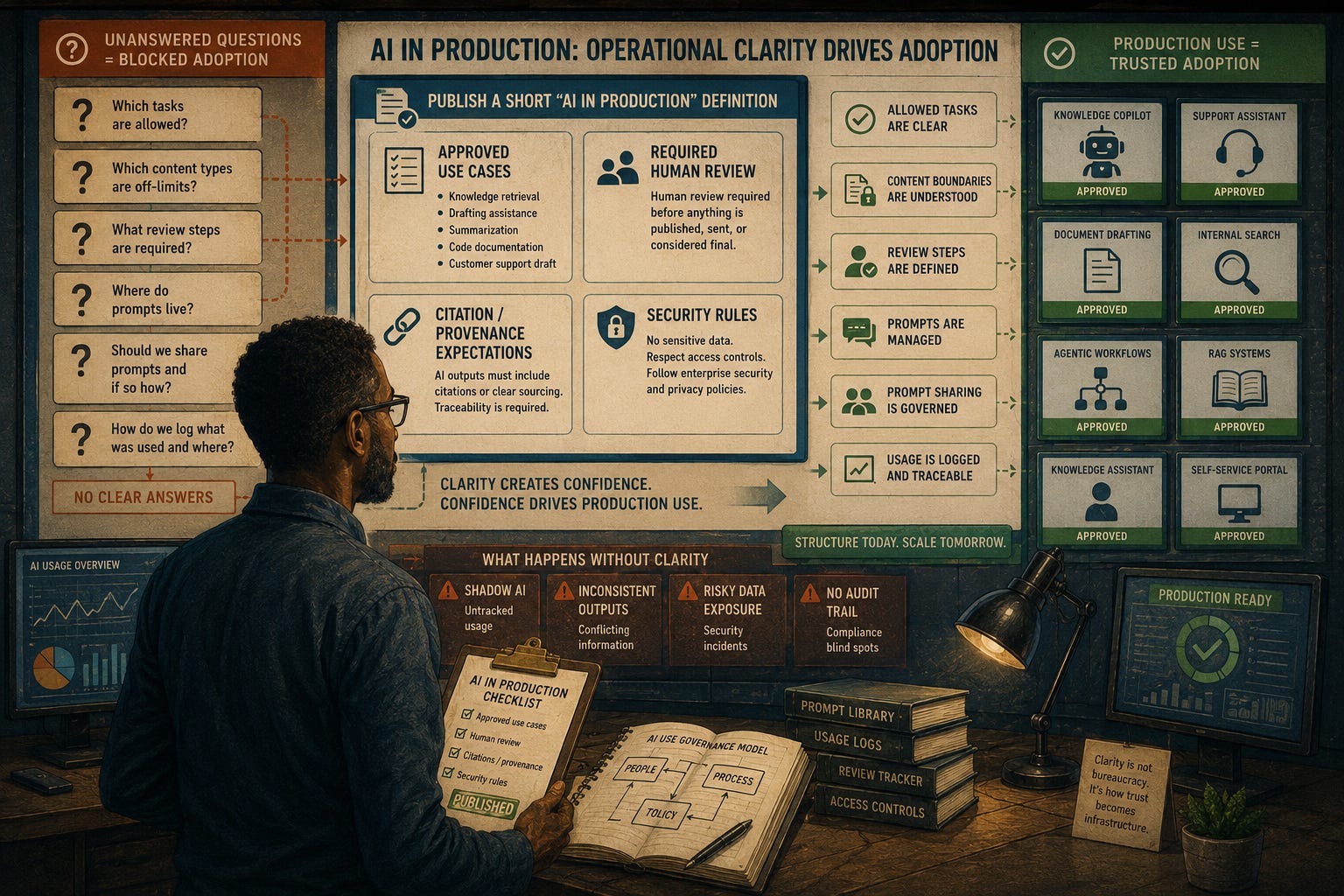
2. Define What “Production Use” Means On Your Team
Many tech docs teams never cross the threshold because they cannot answer basic operational questions:
👉🏼 Which tasks are allowed?
👉🏼 Which content types are off-limits?
👉🏼 What review steps are required?
👉🏼 Where do prompts live?
👉🏼 Should we share prompts and if so how?
👉🏼 How do we log what was used and where?
Leaders of these teams can move the needle quickly by publishing a short “AI in production” definition that includes: approved use cases, required human review, citation/provenance expectations, and security rules. Without that, people keep AI use personal and unofficial — exactly what our survey result reflects.
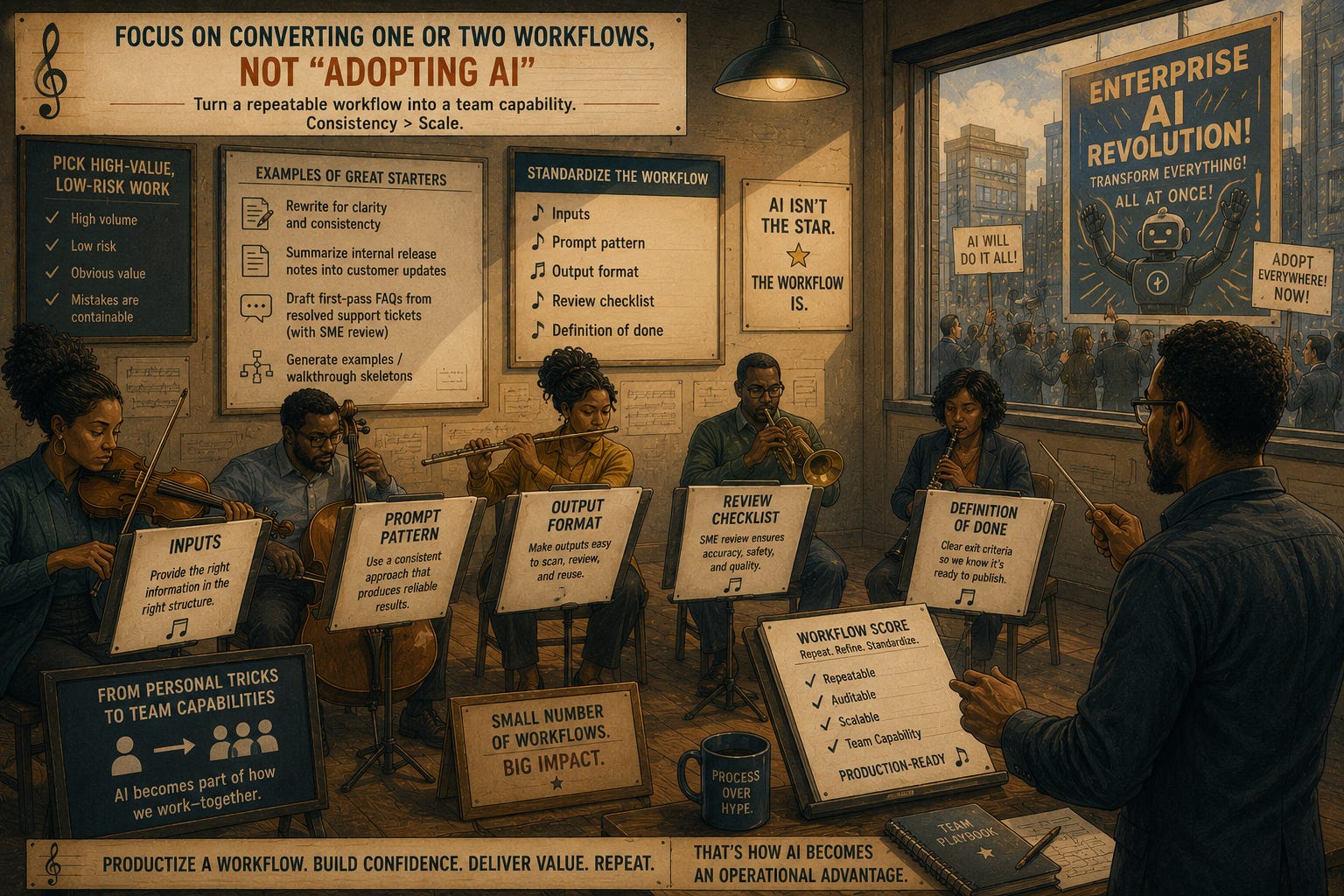
3. Focus On Converting Workflows, Not “Adopting AI”
Pick high-volume, low-risk work where the value is obvious and mistakes are containable.
Examples: rewriting for clarity and consistency, summarizing internal release notes into customer-facing updates, drafting first-pass FAQs from resolved support tickets (with SME review), or generating examples/walkthrough skeletons.
Then standardize the workflow: inputs, prompt pattern, output format, review checklist, and a definition of done.
When leaders productize a workflow like this, AI stops being a personal trick and becomes a team capability.
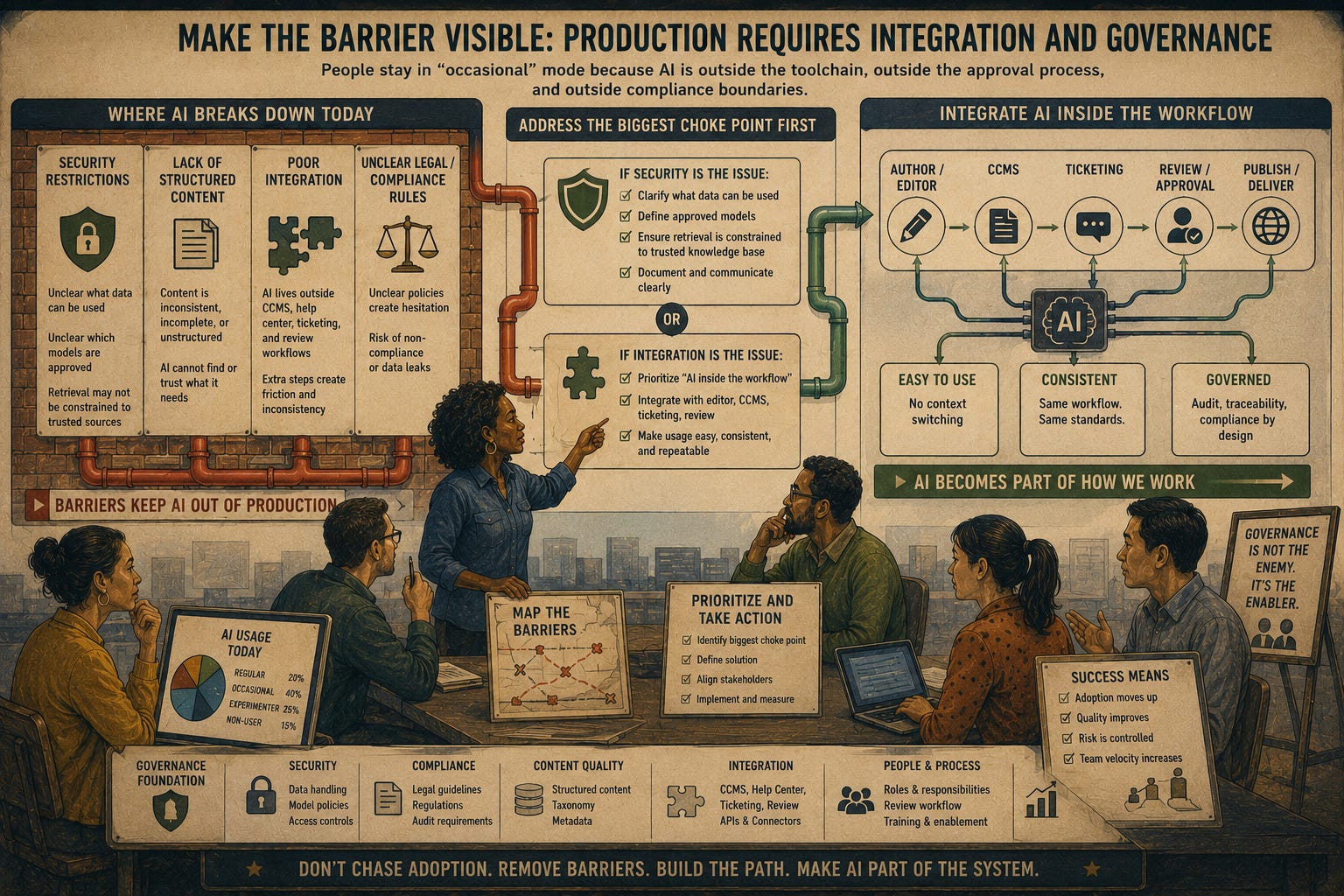
4. Make The Barrier Visible: Production Requires Integration And Governance
People often stay in “occasional” mode because AI is outside the toolchain, outside the approval process, and outside compliance boundaries.
Leaders should map where AI breaks down today: security restrictions, lack of structured content, poor integration with CCMS/help center/ticketing, and unclear legal/compliance rules.
Then address the biggest choke point first. If security is the issue, clarify what data can be used, which models are approved, and whether retrieval can be constrained to a trusted knowledge base.
If integration is the issue, prioritize “AI inside the workflow” (editor, CCMS, ticketing, review) so usage becomes easy and consistent.

5. Treat Adoption As Change Management With Measurement, Not Vibes
The survey suggests many teams feel AI is helpful, but only about half are using it in production. Leaders can close that gap by tracking a few simple indicators: percentage of writers using approved workflows, time-to-first-draft for targeted content types, editorial rework rates, and defect signals (support escalations, doc inaccuracies found post-release).
If you cannot measure it, you cannot defend it — and leaders need defensible results to justify expanding use.
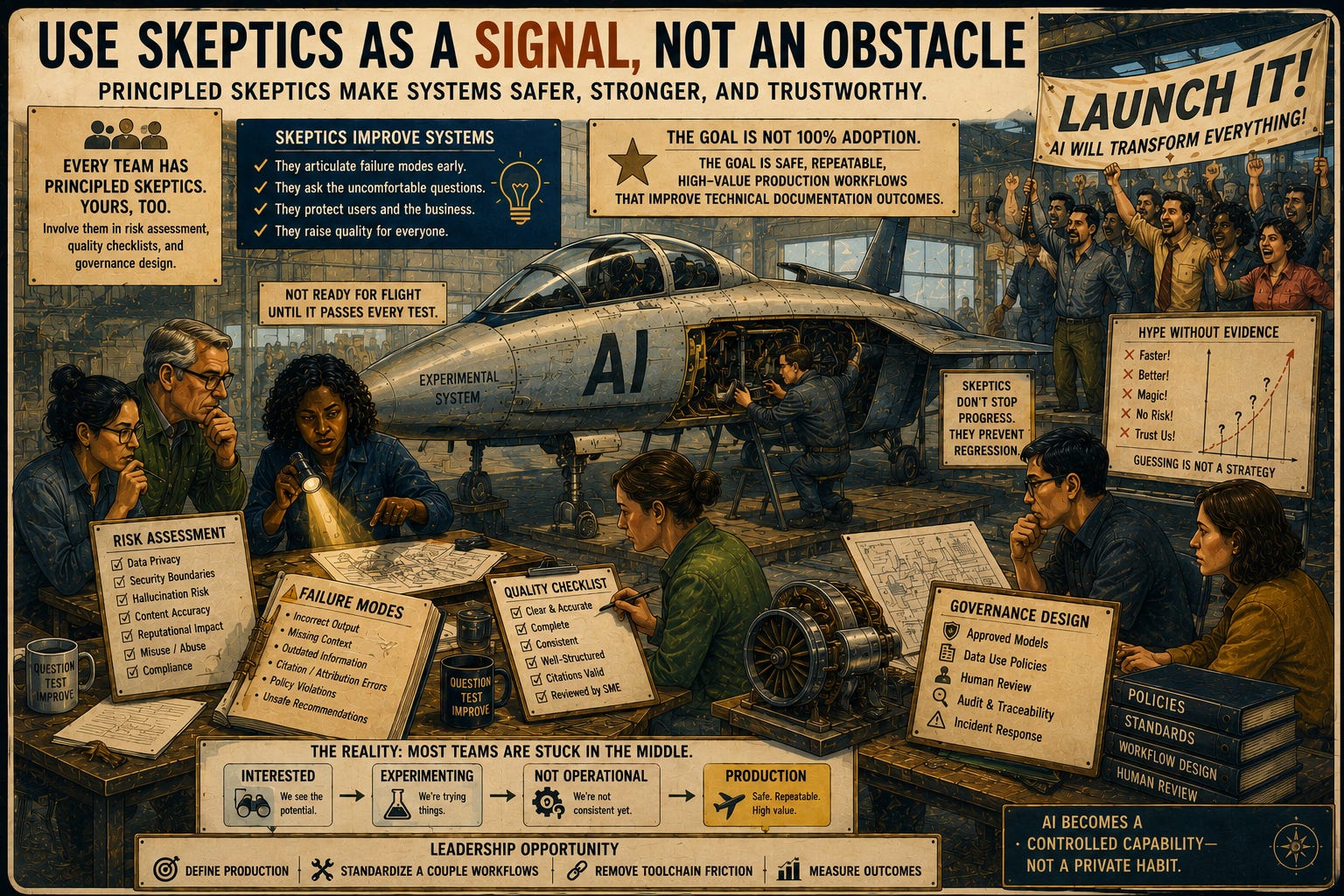
6. Use Skeptics As A Signal, Not An Obstacle
Every team has principled skeptics. Yours, too. Leaders can harness skeptics by involving them in risk assessment, quality checklists, and governance design.
It’s important to recognize that skeptics often improve systems because they articulate failure modes early. The goal is not 100% adoption; the goal is safe, repeatable, high-value production workflows that improve technical documentation outcomes.
The story here is not “half the field resists AI.” The story is that many experienced teams are stuck in the middle — interested, experimenting, but not operational. That’s a leadership opportunity: define production, standardize a couple workflows, remove toolchain friction, and measure outcomes so AI becomes a controlled capability rather than a private habit. 🤠