

Artificial intelligence (AI) has made it much easier and significantly less expensive to produce words. But producing more content introduces a familiar problem:
How do we make sure that what gets published is accurate, appropriate for the intended audience, and safe to use?
As we introduce AI into our product information and technical documentation workflows, we need trustworthy ways to verify AI-generated content, track changes, manage approvals, and ensure that both human customers and AI agents receive relevant information.
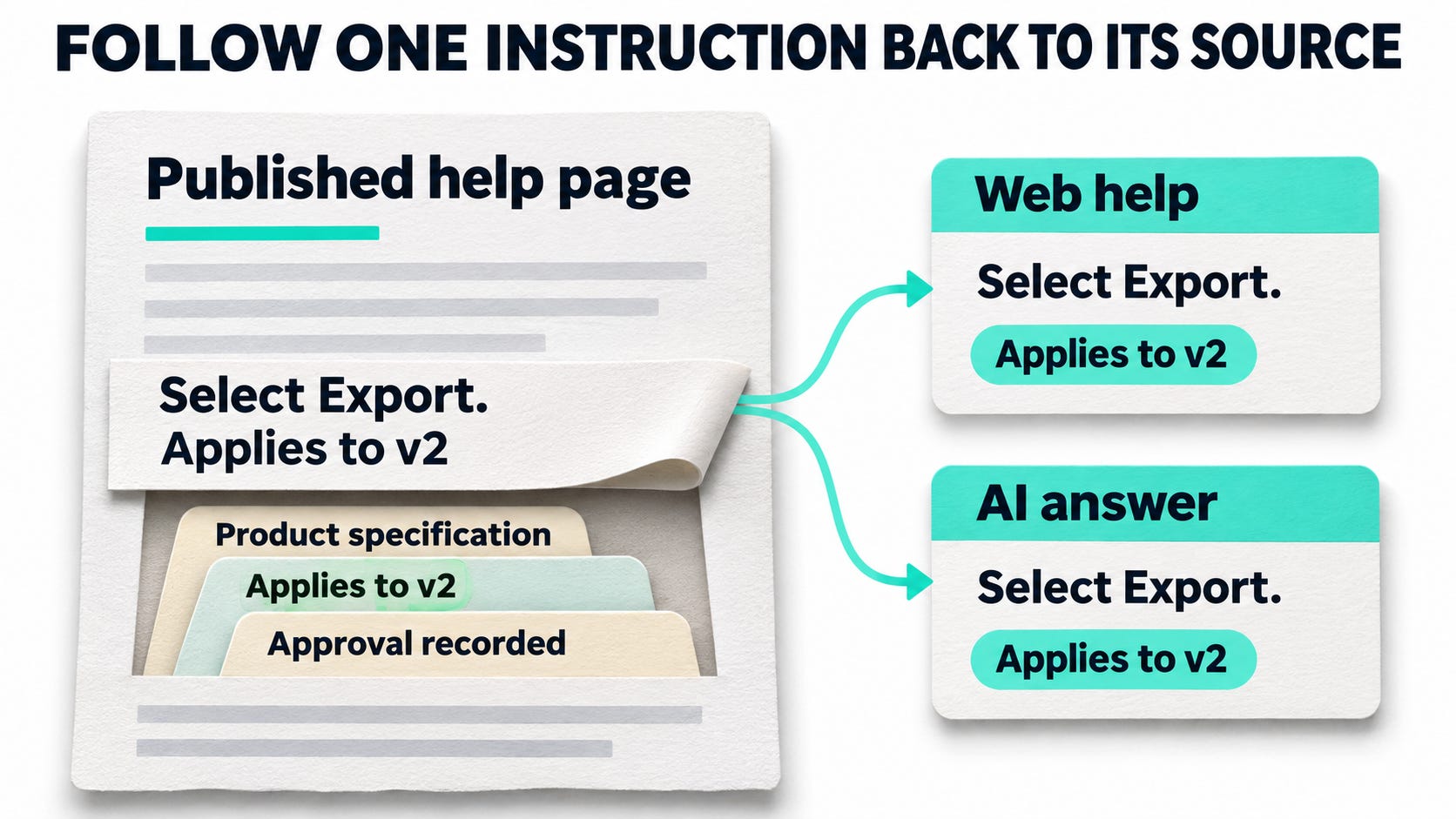
In Trusted Documentation for AI Agents and Humans at Scale (video below), Heretto explores how semantic structured content and component content management can help us address challenges like these.
The video examines how structured content makes information easier to trace, review, approve, and reuse. It also explains why maintaining a reliable system of record — a single source of truth — matters when we want to automate our documentation processes without sacrificing our editorial oversight.
For tech writers, there’s another important consideration: delivering the correct information for a particular product, version, audience, language, locale, or channel. Those distinctions become increasingly important when we allow AI agents retrieve documentation and answer questions or perform tasks on behalf of our customers.
If you’re exploring AI-assisted documentation production, or wondering how your existing content infrastructure will support AI agents, this video offers a useful look at the capabilities you’ll need. 🤠