

Content Powers AI, a new podcast from Content Science, is live. I've been waiting for it since Colleen Jones, president of Content Science and author of The Content Advantage, told me it was coming during one of our conversations. Jones hosts the show and uses it to help us understand what has to be true inside an organization for AI to work effectively, especially at scale.
The Launch Episode
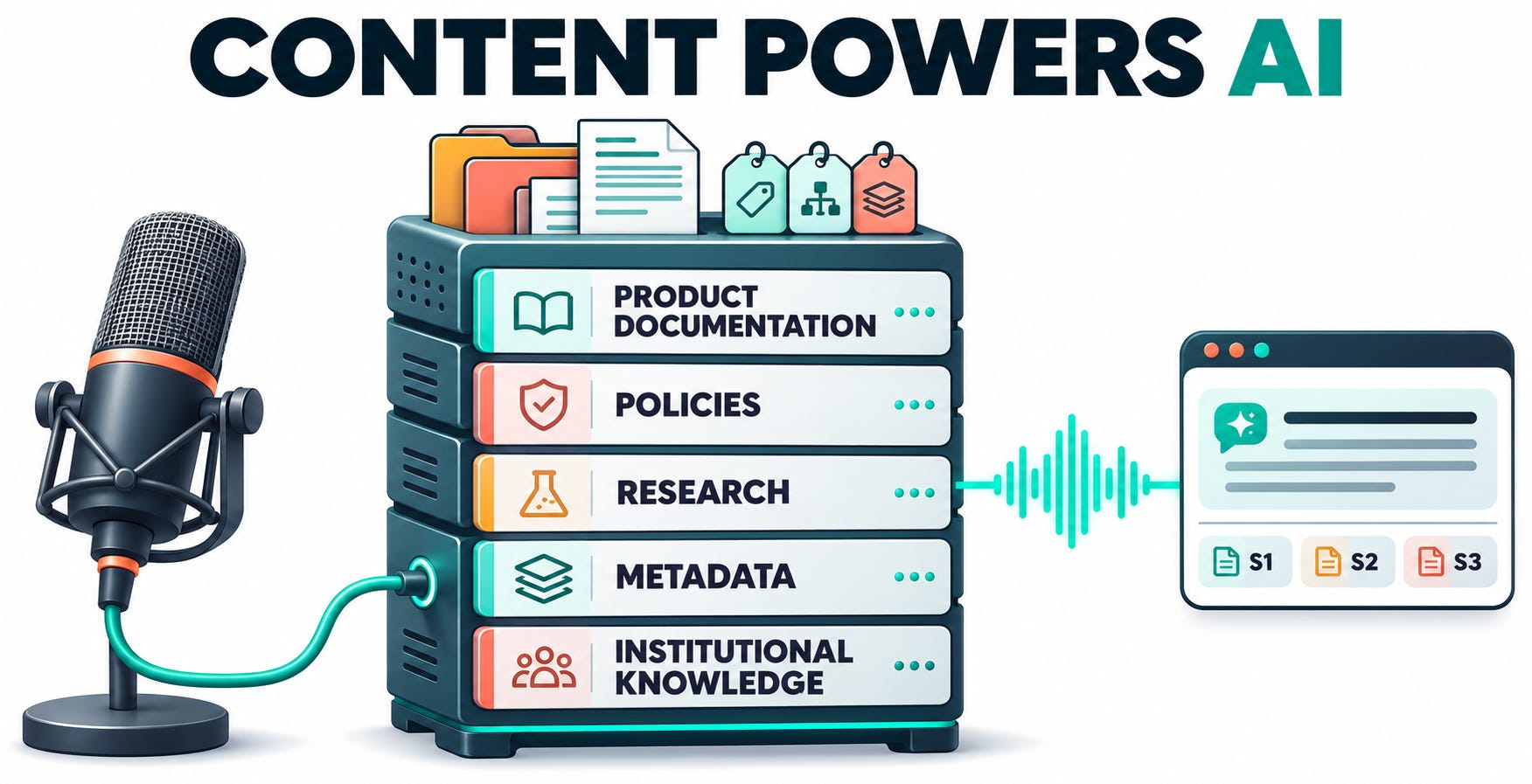
In the 9-minute opening episode, Jones argues that enterprise AI needs content strategy, operations, and governance to get past demos and pilots. The content she has in mind includes product information, policies, research, metadata, documentation, and institutional knowledge, along with web pages and marketing copy.
She previews upcoming conversations with people from organizations including The Home Depot and Mayo Clinic, and Content Science’s list of planned topics includes content architecture, structured content, AI readiness, and agentic workflows.
Jones cites Content Science’s 2025 content operations study, in which 86% of participants report using AI in at least some areas of ContentOps with 29% reporting moderate or fast progress scaling adoption. One cause of that gap is a problem tech docs teams deal with routinely. An AI assistant can retrieve the right installation topic and still give a wrong answer (incorrect instructions) if the topic never says which product version it covers or fails to connect the topic to pre-requisites, warnings, and other contextually relevant facts.
Waiting for a newer language model to be released cannot overcome this missing information.
What The First Guests Say That Should Matter To Technical Documentation Teams
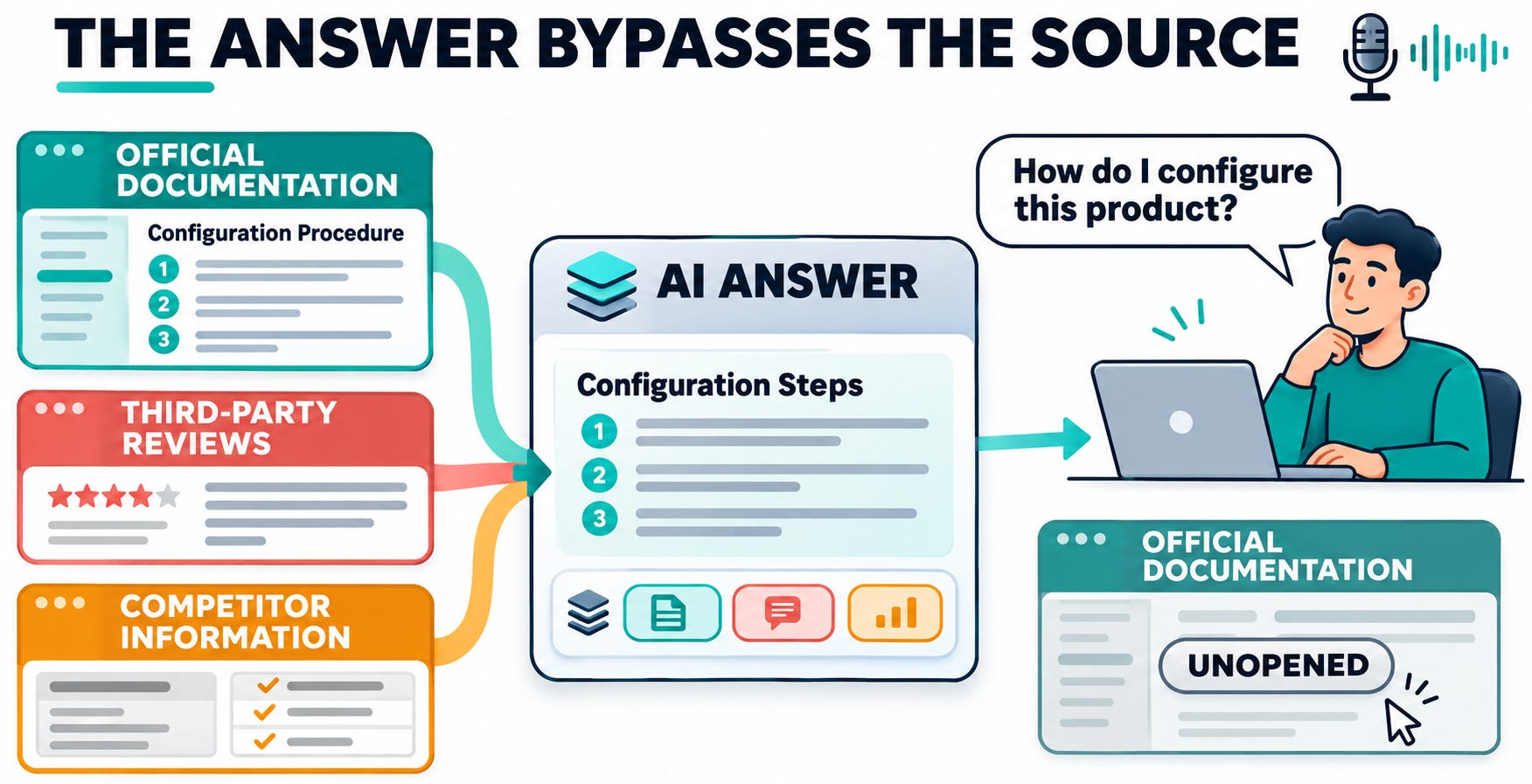
Chuck Gahun, a principal analyst at Forrester, is the guest on episode 2. During this show he says AI adoption is moving more slowly than tech leaders’ claims suggest. According to Gahun, “published content is not the last mile anymore,” because a machine now sits on top of it and generates a response tailored to whoever asked, drawing on third-party reviews and competitor information along with the content itself.
A customer who asks an answer engine how to configure a product may rely solely on the engine’s response and never see the help topic or documentation portal it came from.
Episode 3 features Laura Barnes, senior director of global content at Red Hat. Her group began its AI work by asking which content tasks people wanted to stop doing, and one result is a metadata assistant that reads a page and suggests tags. Her team reports it saves 20 to 30 minutes per page.
Barnes says research on what powers AI points to semantic structured content. She also describes how Red Hat’s documentation team began mapping docs to specific jobs to be done, with jump links, so customers can easily find what they need. Her marketing team is now aligning its own jobs-to-be-done mapping with the documentation team’s.
Why Tech Writers Should Listen 🎧
The problems these episodes describe come down to questions documentation teams settle for every release, such as which version applies to a given customer, what has to be true before a procedure works, which exceptions matter, and who updates the source docs when the product changes.
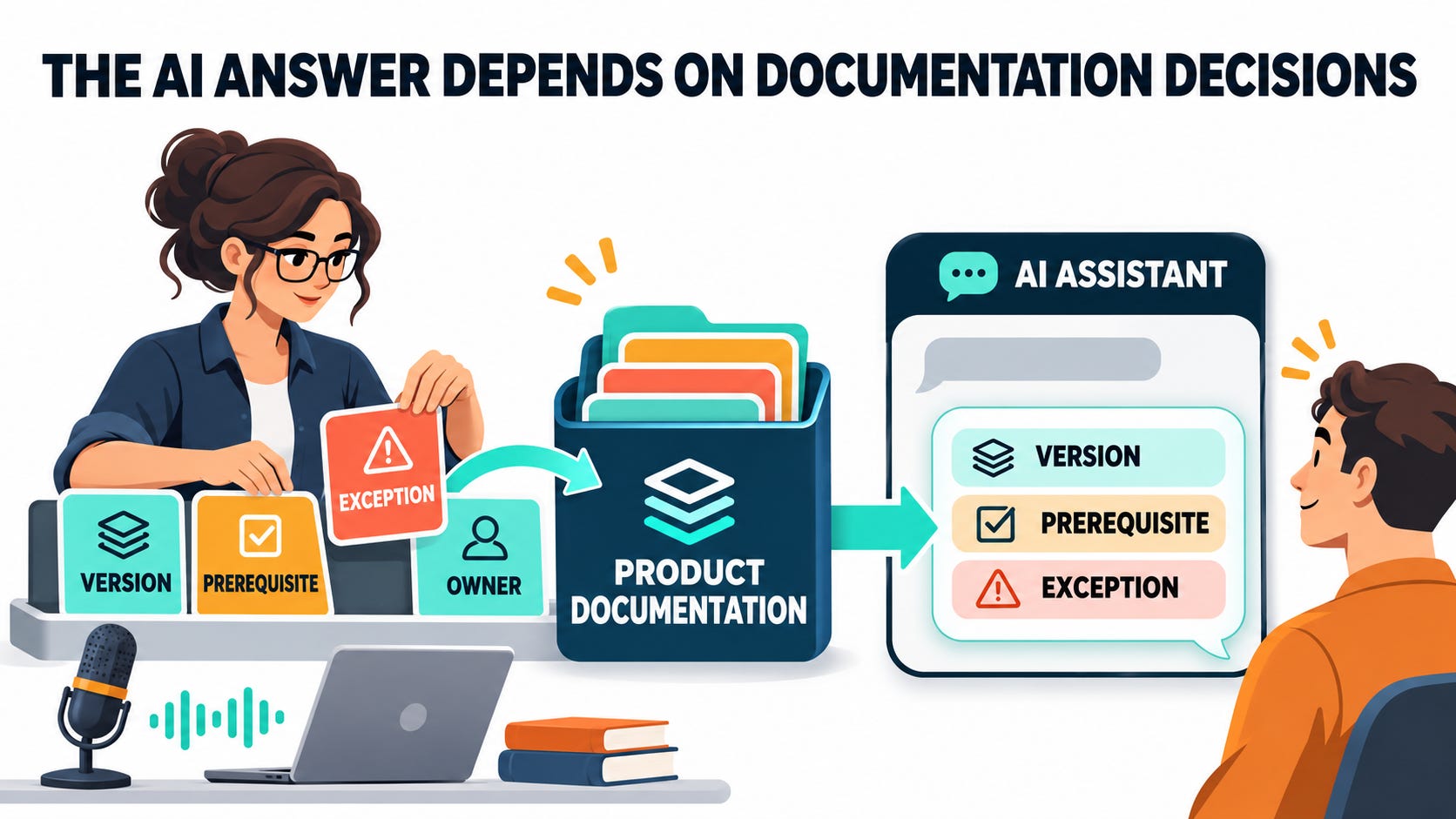
An AI system can use those answers only if they’re in the content it reads, and documentation teams usually write that content.
If Gahun is right that published content is no longer the last mile, page views on a help site no longer show whether documentation reached the person who needed it. Documentation teams will need different measures of performance success.
Content Powers AI is available now. Watch or listen to the launch episode on Content Science Review, or find the show on Apple Podcasts. 🤠